UNITED STATES — A courtroom exchange is attracting attention online after a man standing before a judge announced that he intended to exercise his Fifth Amendment rights, leading to an unusual conversation that ended with an unexpected offer from the bench.
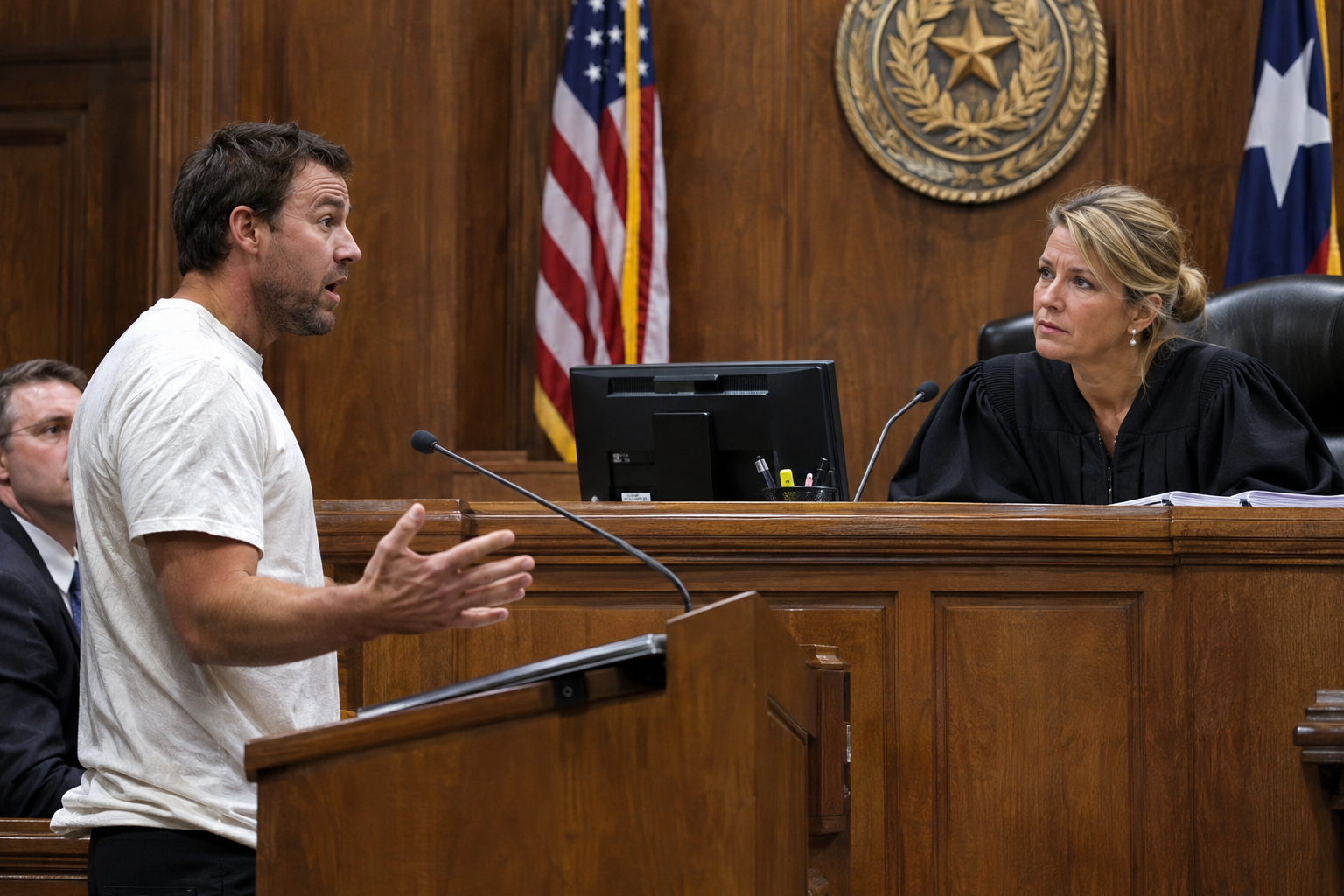
The short video, titled “Pleading the Fifth Goes SURPRISINGLY GOOD,” captures a male courtroom participant speaking with a female judge during what appears to be a court proceeding. The exchange quickly becomes interesting when the judge questions him about how he arrived at court.
A Question Triggers an Unexpected Response
At the beginning of the recording, the judge asks the man how he got to court that day. She appears frustrated and tells him not to lie, referencing what sounds like a previous interaction.
The man responds by saying he is going to “plead the Fifth.”
His response introduces a constitutional issue into an already unusual courtroom conversation.
The Fifth Amendment protects individuals from being compelled to provide testimony that could incriminate themselves. Rather than answering a question that could potentially expose him to criminal liability, the man appears to invoke that protection.
The judge continues the exchange, while the man attempts to explain his position. At several points, he appears uncertain about how to respond to the questions being raised.
The Judge Makes an Unexpected Offer
The conversation takes another surprising turn when the judge tells the man she is going to give him a gift.
The man appears confused but continues listening.
According to the video’s edited captions, the judge then references 60 days in jail before saying she will suspend that jail time.
The man’s reaction is immediate. He appears surprised by what he hears, responds with a question, and then thanks the judge.
The judge also comments that he seems apprehensive, while the man acknowledges that he is nervous.
The exchange ends on a noticeably calmer note than the tension at the beginning of the clip.
What Does Pleading the Fifth Actually Mean?
The Fifth Amendment is one of the most important protections in the U.S. Constitution.
Its self-incrimination clause states that no person shall be compelled to be a witness against themselves in a criminal case.
The protection can also apply to certain official questioning outside a criminal trial when an answer could expose someone to future criminal prosecution.
However, invoking the Fifth Amendment does not automatically end a court proceeding or guarantee that every possible question can be avoided. Its application depends on the circumstances and the nature of the question.
The protection exists to prevent the government from forcing individuals to provide evidence against themselves.
Important Details Remain Unconfirmed
Although the video captures an unusual courtroom exchange, it does not establish the man’s identity, the court’s location, the underlying charge, or the date of the hearing.
The edited captions also do not substitute for an official sentencing order. Therefore, the reported 60-day jail term and its suspension should not be treated as independently verified case details.
Nevertheless, the moment offers viewers an interesting look at how constitutional rights, courtroom communication, and judicial discretion can intersect.
The biggest takeaway is that knowing your constitutional rights matters, but understanding how those rights apply in court matters just as much.