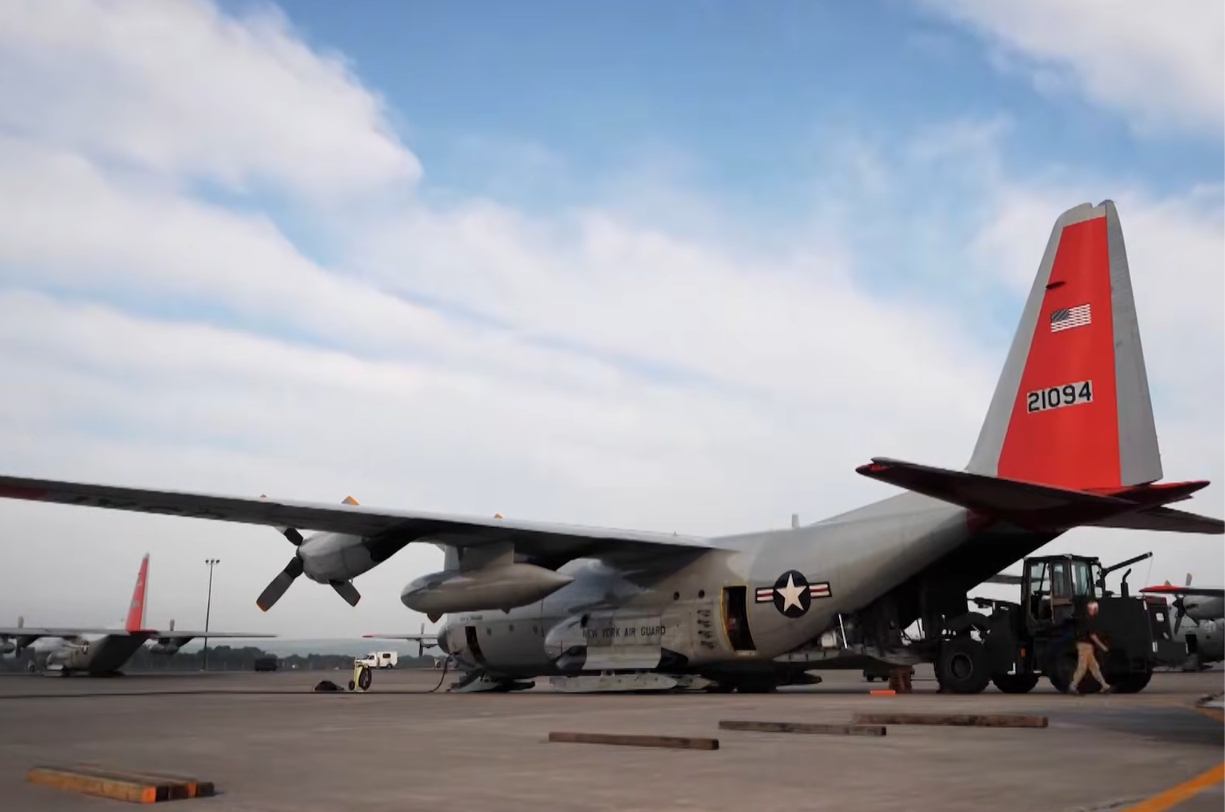
When winter approaches Greenland’s vast ice sheet, a routine flight can become a race against changing weather, limited visibility, and the physical challenges of landing on snow. For researchers working far from conventional airports, the U.S. Air National Guard’s LC-130H Hercules “Skibird” provides a critical connection to the outside world.
Featured in the 2012 episode of Mighty Planes, the aircraft and its crew undertake a mission to evacuate climate scientists, collect research equipment and ice cores, and deliver supplies for the following research season. The episode reflects the real work of New York’s 109th Airlift Wing, which supports scientific research in Greenland and Antarctica.
1. Why the LC-130 Is Different
The LC-130H is a specialized version of the Lockheed C-130 Hercules, the military transport aircraft recognized for its ability to carry cargo and personnel into remote locations.
Its defining feature is a set of retractable ski-equipped landing gear, allowing it to operate from suitable snow and ice surfaces as well as conventional runways. The U.S. military identifies the LC-130 as the world’s largest aircraft capable of landing on snow and ice using skis.
The 109th Airlift Wing, based at Stratton Air National Guard Base in New York, operates these specialized aircraft. Its mission includes transporting researchers, fuel, scientific equipment, and other cargo to remote research locations across the Greenland ice sheet.
2. The Ski System: Turning a Transport Plane Into an Ice-Cap Workhorse
The LC-130’s skis are much more than ordinary landing gear attachments. According to a U.S. National Guard report, its main skis measure approximately 20 feet long and 5.5 feet wide, while the nose ski is approximately 10 feet long and 5.5 feet wide. The complete ski set weighs around 2.8 tons.
The broad surfaces distribute the aircraft’s weight over snow, helping it land on prepared skiways that cannot support conventional wheels in the same way. The ski-wheel arrangement also gives the aircraft flexibility when operating at facilities with conventional runway surfaces.
However, the system does not make every patch of snow safe for landing. The surface must be assessed, and crews need specialized training to judge snow conditions, visibility, runway markings, and stopping distance.
3. Four Engines and Specialized Propellers
The LC-130H belongs to the C-130H family, which uses four Allison T56-A-15 turboprop engines. A turboprop uses a gas turbine to turn a propeller, combining turbine-engine operation with the propulsive efficiency of a large propeller at the aircraft’s operating speeds.
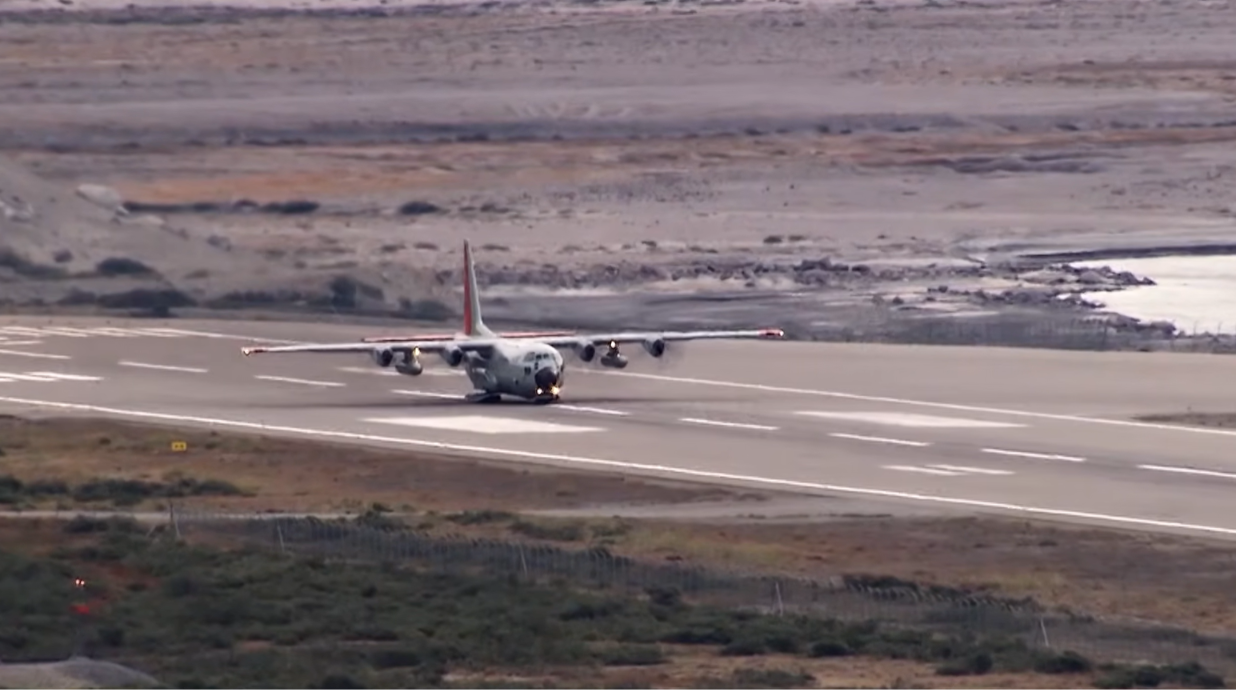
The 109th Airlift Wing has also modernized its legacy aircraft. Its propulsion upgrades include the T56 3.5 engine modification and the NP2000 eight-bladed propeller system, replacing the older four-bladed propellers. The improvements were intended to enhance takeoff performance in snow and ice conditions, improve fuel efficiency, and reduce maintenance demands.
These upgrades address an especially important challenge: an aircraft carrying a heavy load may struggle to accelerate from an icy surface when friction under the skis limits its movement. Better propulsion helps, but the aircraft must still operate within its approved weight and environmental limits.
4. How the Greenland Evacuation Works
In the Mighty Planes episode, three Hercules aircraft travel approximately 2,000 miles from New York to Sondrestrom Air Base, now Kangerlussuaq Airport, Greenland. From there, the crews support remote research sites and move scientists, equipment, and ice-core samples at the end of the Arctic summer.
The mission also delivers supplies intended for the next research season. This creates a demanding logistics problem: the aircraft must move people and cargo in both directions while working within a limited seasonal window.
The cargo ramp is especially valuable. It allows bulky equipment and palletized loads to be moved without specialized passenger-terminal facilities. The Smithsonian’s Air & Space Magazine account of the episode describes crews using a rapid “combat off-load” technique for supplies—terminology that refers to a military cargo-handling procedure, not a claim that the Greenland flight was a combat mission.
5. The Arctic’s Hidden Hazards
The ice sheet presents problems beyond cold temperatures. Snow and overcast skies can blend into a nearly featureless white environment, making visual judgment difficult during an approach. Sudden changes in weather can also leave crews with fewer safe options for landing or departing.
The weight of a parked aircraft can cause snow or ice beneath its skis to melt and refreeze, potentially locking the skis to the surface. Smithsonian reporting on the episode describes crews periodically raising and lowering the ski system to help prevent the aircraft from becoming frozen in place.
The 109th Airlift Wing also trains its personnel in Arctic survival, recognizing that aircraft and crews can become stranded in remote terrain. Those preparations matter because recovery and resupply may be difficult when weather restricts flying.
6. Why the Skibird Still Matters
The LC-130 is not a fighter or weapons platform. Its military value comes from reliable access, tactical airlift, and logistical support in places where conventional transport aircraft cannot easily land.
The 109th Airlift Wing continues to support scientific work in Greenland and Antarctica. Its experience operating on ice also provides specialized training for polar missions, where equipment performance, crew judgment, and weather awareness must work together.
The Skibird’s greatest achievement is not speed or firepower. It is the ability to move scientists, fuel, cargo, and essential equipment into remote environments—and bring people and valuable research back out when the seasonal window is closing.
In Greenland’s frozen wilderness, the LC-130 turns an otherwise difficult journey into a carefully planned airlift operation.