By U.S. Politics Desk | October 7, 2026 | Politics & World News
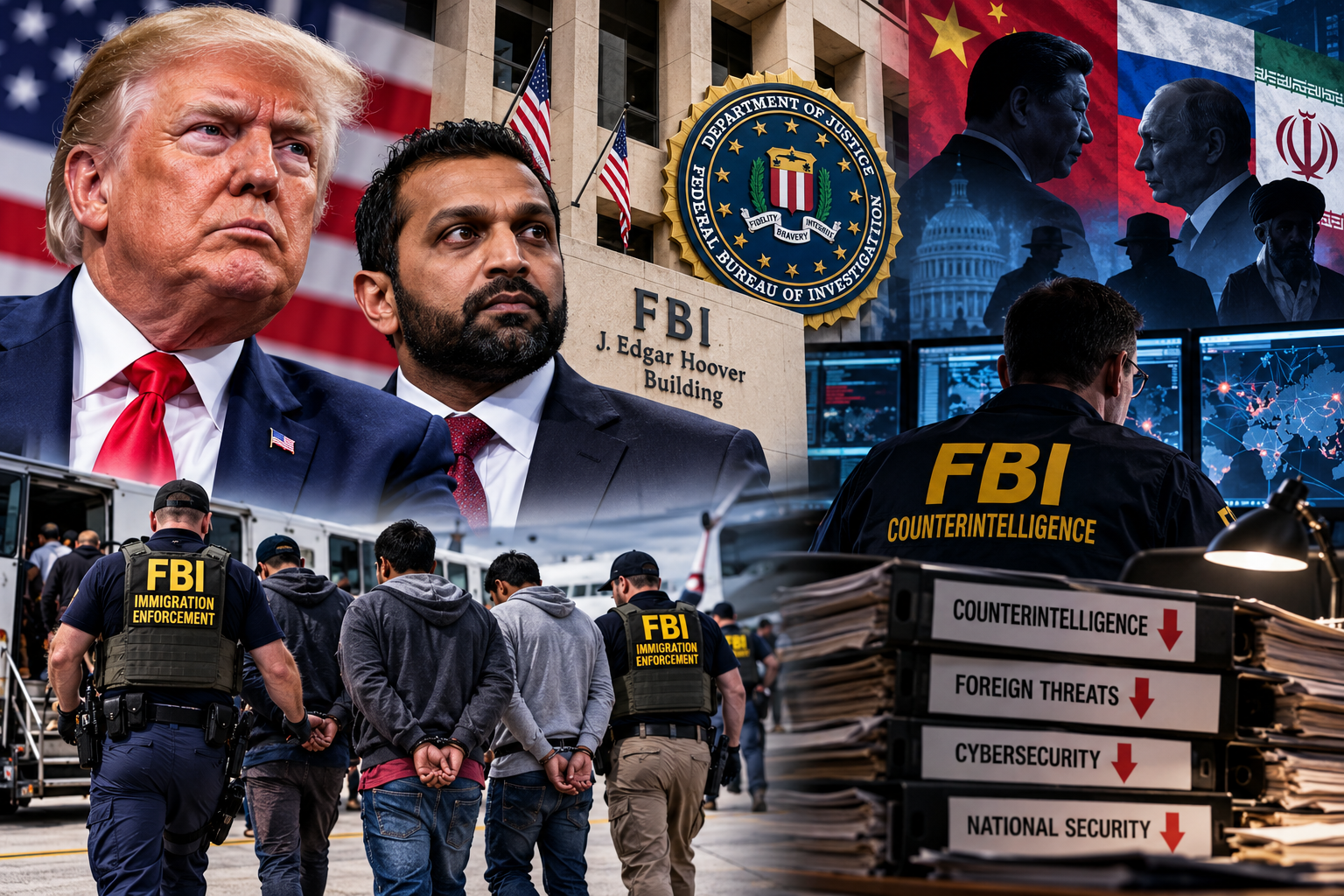
WASHINGTON — The FBI is confronting a growing staffing problem inside one of its most sensitive missions: tracking foreign spies and protecting U.S. secrets.
A new report indicates that counterintelligence squads in FBI field offices around the country have suffered deep personnel shortages as bureau leadership has shifted agents and analysts toward violent crime, gangs, drug trafficking and immigration enforcement.
The staffing changes come as the United States faces increasingly active intelligence operations from China, Russia and Iran, making the timing particularly significant for national-security officials.
According to reporting by NPR published October 6, counterintelligence units in many of the FBI’s 56 field offices now have only about 50% to 60% of authorized positions filled. In several offices, the number of squads assigned to counterintelligence work has reportedly been reduced by half. KPBS Public Media
The FBI disputes the characterization that its counterintelligence operation has been weakened.
FBI Says Counterintelligence Remains Strong
An FBI spokesperson told NPR that the report was false and said the bureau maintains a “robust counterintelligence operation” across the country.
The bureau said it has expanded counterintelligence task forces to more than 1,500 personnel, including agents and officers from federal, state and local partner agencies. KPBS Public Media
That creates a sharp disagreement over how to measure the bureau’s capability.
The administration points to arrests, task forces and investigations as evidence that the FBI remains active against foreign intelligence threats. Critics, however, argue that counterintelligence cannot be measured simply by the number of arrests.
Some of the most important operations may involve quietly identifying an espionage network, stopping a transfer of sensitive technology or removing a foreign intelligence officer without ever producing a headline-making prosecution.
Immigration and Violent Crime Are Now Major Priorities
FBI Director Kash Patel has openly emphasized violent crime and border-related enforcement as central priorities for the bureau.
The FBI’s current strategic framework places “Crush Violent Crime” first and “Defend the Homeland” alongside it. Homeland defense specifically includes foreign intelligence, espionage, terrorism and cyber threats. FBI
In testimony to Congress in May, Patel highlighted the bureau’s results against violent crime, reporting 34,000 violent-crime arrests in 2025, along with major operations against gangs and criminal enterprises. He also said counterintelligence arrests increased by 42% in 2025. FBI
The issue is not necessarily that the FBI has abandoned counterintelligence.
Instead, people familiar with the staffing changes told NPR that personnel are being moved toward the administration’s highest-priority areas, while vacant counterintelligence positions are not always being refilled. KPBS Public Media
Why Counterintelligence Requires Experienced People
Foreign-spy investigations are often unusually complicated.
Unlike a conventional criminal case, a counterintelligence investigation may run for years and involve surveillance, intelligence analysis, international partners and confidential sources.
Experienced agents and analysts are especially valuable because they understand how foreign intelligence services recruit people, conceal communications and move sensitive information.
NPR reported that the FBI has lost more than 1,500 special agents since President Trump returned to office, according to people familiar with the bureau’s staffing. The agency is also described as being down by more than 650 agents compared with January 2025 levels. KPBS Public Media
Those numbers illustrate a potential institutional problem: hiring new personnel does not immediately replace the expertise of investigators who may have spent decades working espionage cases.
China, Russia and Iran Remain Major Threats
The staffing debate is happening against a challenging international backdrop.
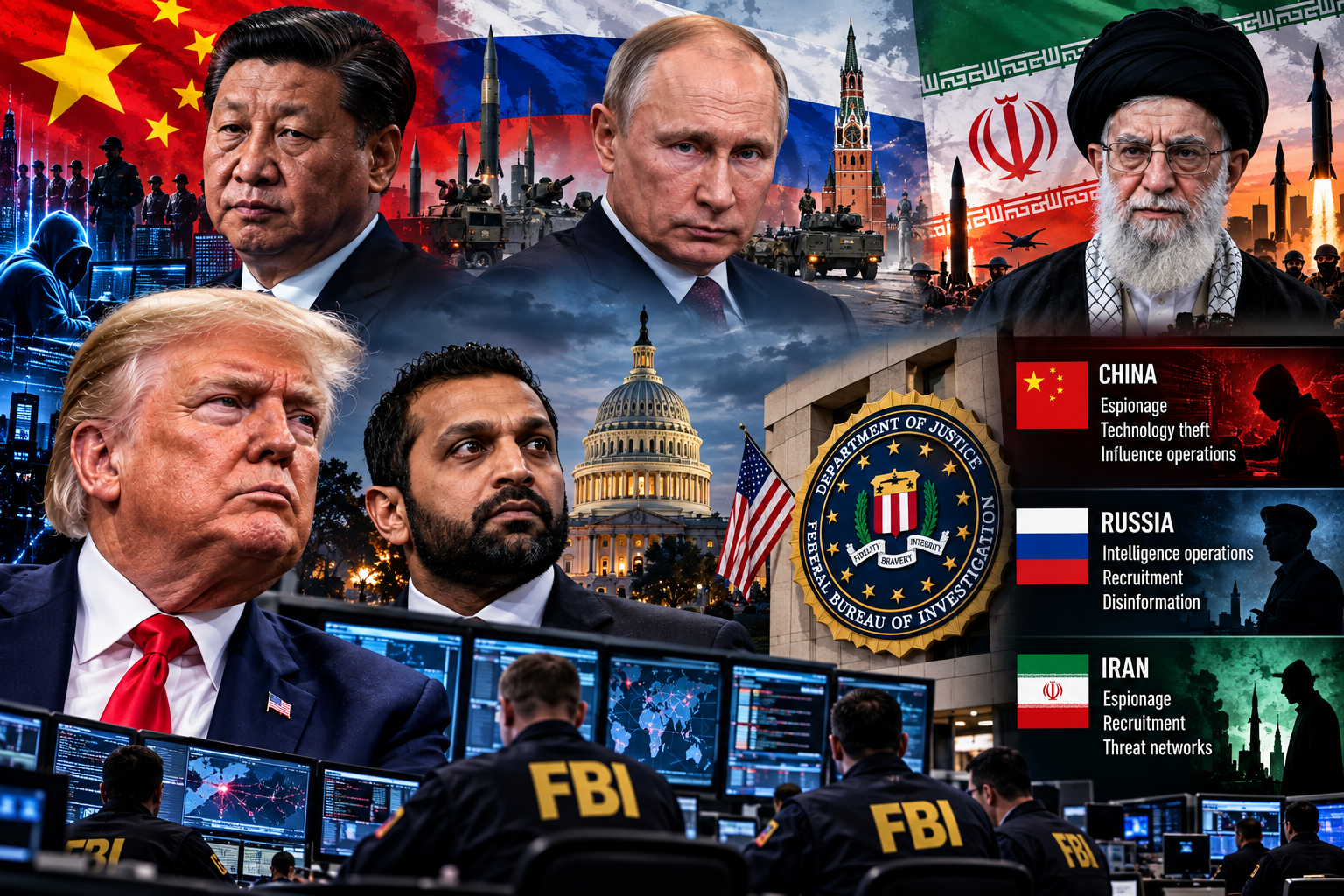
U.S. officials continue to describe China as a major long-term intelligence competitor, with efforts targeting government information, research and advanced technology. Russia remains a capable intelligence adversary, while Iran has also become a significant concern for U.S. counterintelligence officials. KPBS Public Media
Patel himself told lawmakers in May that Russia, China and Iran continue to pursue sensitive U.S. information and attempt to recruit current or former government employees and military personnel. He cited recent counterintelligence arrests and investigations as evidence of the threat. FBI
That makes a personnel shortage potentially consequential even when no immediate failure is visible.
Counterintelligence risks are often invisible until something goes wrong.
The FBI Says Its Broader Strategy Is Working
The bureau argues that its realignment is producing results.
Official FBI data released in August showed that U.S. violent crime fell 9.3% in 2025, the largest year-to-year decline since the agency began estimating national crime trends in 1936. Patel has credited law enforcement cooperation and the administration’s aggressive focus on violent crime. FBI
The administration’s supporters say shifting resources toward violent crime and immigration reflects what they believe voters want federal law enforcement to prioritize.
Critics respond that the FBI has a broader mission than street crime—and that foreign espionage does not disappear simply because agents are reassigned.
A Difficult Choice for America’s Top Law Enforcement Agency
The real challenge may be balancing two legitimate demands.
Americans expect the FBI to investigate violent criminals and protect communities. At the same time, the bureau is one of the country’s primary agencies for identifying foreign espionage and protecting national secrets.
The administration insists it can do both.
Former FBI and intelligence officials cited by NPR are less confident, warning that counterintelligence work can be quietly weakened long before the public notices.
The Bottom Line
The FBI’s counterintelligence mission is facing a significant staffing debate as Director Kash Patel places greater emphasis on violent crime, gangs and immigration enforcement.
The bureau says its counterintelligence operation remains robust and points to more than 1,500 personnel in its task forces. But people familiar with field-office staffing told NPR that many dedicated squads are operating far below full strength.
With China, Russia and Iran continuing to pose major intelligence challenges, the question for Washington is not whether the FBI should fight violent crime or foreign espionage.
It is whether the bureau has enough experienced personnel to do both at the same time.