Subheadline: President Donald Trump presented the National Medal of Science to Elon Musk, Sergey Brin, Jensen Huang and Lisa Su, while Microsoft CEO Satya Nadella and Dell Technologies CEO Michael Dell received the National Medal of Technology and Innovation. The ceremony came amid growing debate over artificial intelligence, immigration policy and federal science funding.
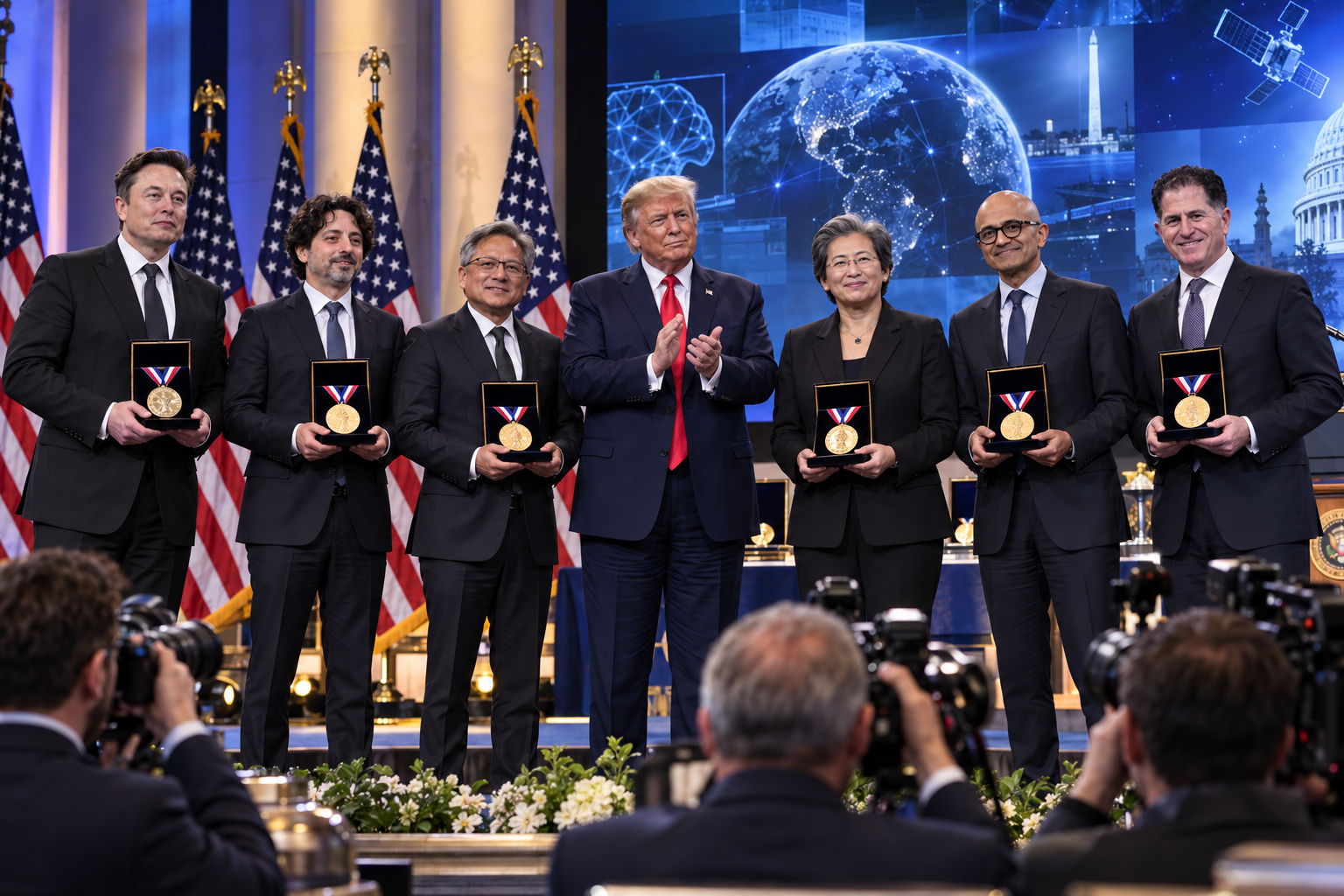
WASHINGTON — October 9, 2026 — President Donald Trump honored six prominent technology executives on Thursday, October 8, presenting some of the United States’ highest awards for scientific and technological achievement during an event celebrating what his administration calls a new golden age of American innovation.
The recipients included Elon Musk, Sergey Brin, Jensen Huang and Lisa Su, who received the National Medal of Science, as well as Satya Nadella and Michael Dell, who received the National Medal of Technology and Innovation.
The ceremony took place during the administration’s “Science: A New Golden Age” summit at the U.S. Institute of Peace in Washington, D.C. Trump praised the recipients for advancing American technology, computing infrastructure, artificial intelligence and innovation. (White House; Associated Press)
The awards highlighted the growing influence of the technology industry in the administration’s economic and scientific agenda. However, the event also drew attention to a potential contradiction: five of the six honorees were born outside the United States, while the administration continues to pursue tighter immigration policies affecting skilled foreign workers.
Six Technology Leaders Receive Major National Honors
The National Medal of Science is one of the country’s highest honors for achievements in science and engineering. It recognizes contributions that advance scientific knowledge and benefit the United States.
According to the White House, each recipient was recognized for a distinct contribution to technology and scientific progress.
Elon Musk, the Tesla and SpaceX chief executive, was honored for engineering achievements spanning space exploration, intelligent systems, communications and manufacturing.
Sergey Brin, Google’s co-founder, was recognized for developing foundational algorithms for information retrieval and data processing that transformed how people access information.
Jensen Huang, the CEO of Nvidia, received the medal for advancing graphics processing units into powerful general-purpose computing systems used in scientific computing and artificial intelligence.
Lisa Su, CEO of Advanced Micro Devices (AMD), was honored for her leadership in semiconductor engineering, processor architecture and high-performance computing.
Meanwhile, Satya Nadella of Microsoft and Michael Dell of Dell Technologies received the National Medal of Technology and Innovation.
The White House cited Nadella’s leadership in cloud computing and the development of large-scale computing infrastructure, while Dell was recognized for expanding access to personal and enterprise computing and supporting future generations of American scientists and engineers. (White House)
Trump Calls Honorees “National Treasures”
During the ceremony, Trump described the recipients as “national treasures” and praised their role in shaping America’s technological future.
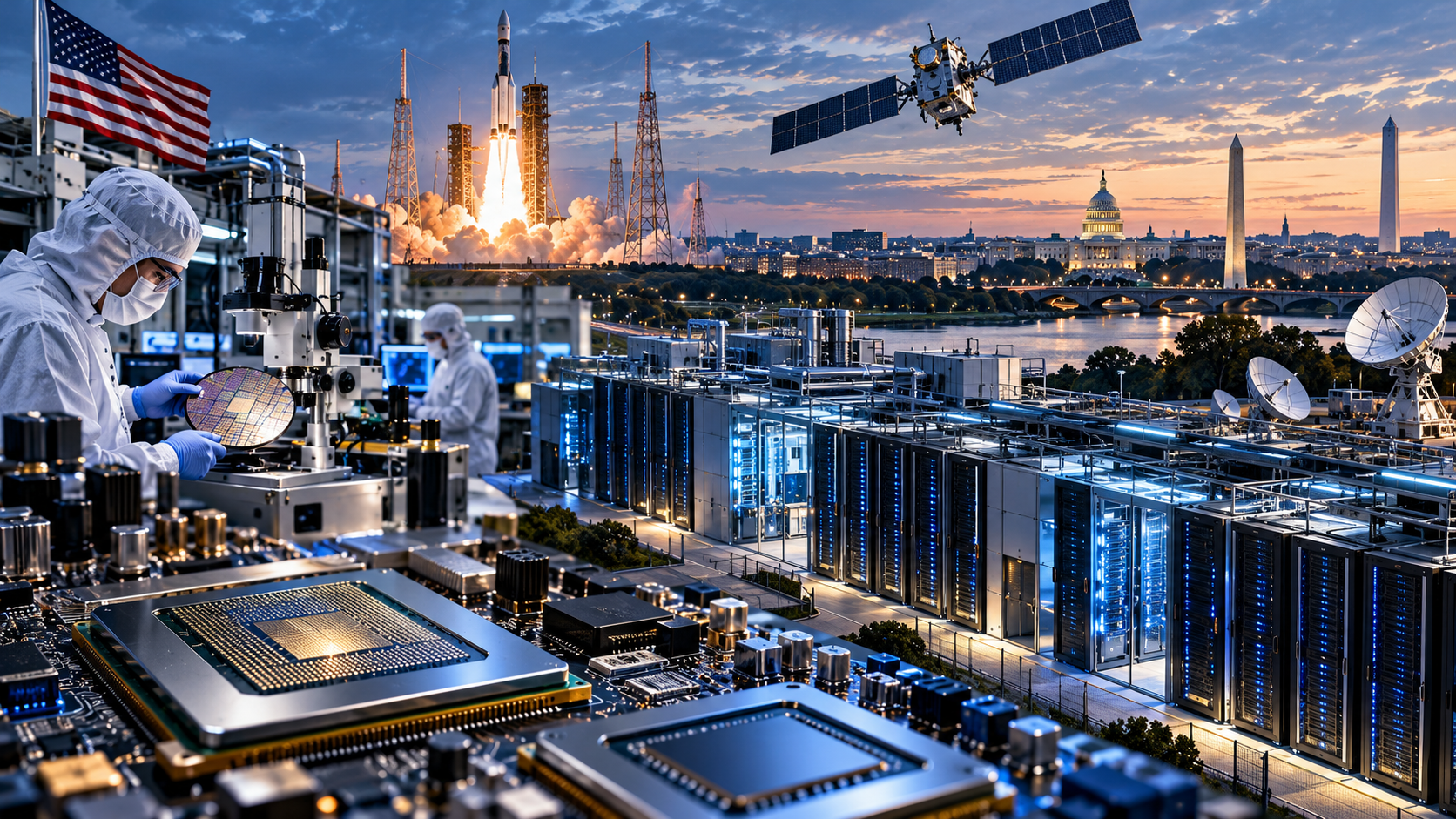
The president has increasingly emphasized artificial intelligence, advanced computing, semiconductor development and space technology as priorities for maintaining American competitiveness.
The awards fit within that broader strategy. The administration has argued that stronger cooperation between government and the private sector can accelerate scientific breakthroughs and strengthen the country’s position against international competitors.
The distinction between the two medals is significant. The National Medal of Science recognizes contributions to scientific research and engineering, while the National Medal of Technology and Innovation focuses on technological advancement and its economic and societal impact.
Although the National Medal of Science has historically been awarded largely to academic researchers and scientists, this year’s selection placed several prominent business leaders at the center of the country’s scientific recognition program. (Associated Press)
Five Honorees Were Born Outside the United States
One of the most notable aspects of the ceremony was the international background of most recipients.
Musk was born in South Africa, Brin in Russia, and Huang and Su in Taiwan. Nadella immigrated from India, while Dell was born in Texas, according to the Associated Press.
Their careers illustrate how international talent has helped build major American technology companies and strengthen the country’s role in global computing, semiconductor manufacturing and artificial intelligence.
The recognition also comes as immigration policy remains a contentious issue for the Trump administration.
Earlier on Thursday, Vice President JD Vance announced that Microsoft was being suspended from a program used by companies to apply for green cards for skilled foreign workers holding H-1B visas. The administration accused Microsoft of misusing the immigration system, while the company said most of its H-1B applications in the previous fiscal year involved extending or changing the status of existing employees.
Later that day, Trump presented Nadella with the technology and innovation medal without publicly addressing the dispute during the ceremony. (Associated Press)
The contrast highlighted the administration’s effort to promote technological excellence while enforcing stricter rules on foreign-worker immigration.
Artificial Intelligence Takes Center Stage
Artificial intelligence was another central theme surrounding the awards.
Nvidia and AMD develop chips essential to advanced computing, while Microsoft, Google and Musk’s companies operate across cloud computing, software, communications and AI-related infrastructure.
The administration has portrayed these technologies as crucial to future economic growth, national security and scientific discovery.
However, rapid AI development has also raised concerns about employment, energy consumption, data-center expansion and the pace of technological change. The Associated Press reported that public concerns about AI’s speed of development remain part of the broader economic and political debate.
The recognition of prominent technology executives therefore serves both as an acknowledgment of private-sector achievements and as a signal of the administration’s preferred approach to technological development.
What the Awards Signal for American Innovation
The ceremony underscores the administration’s decision to place leading private-sector technology figures at the center of its vision for American scientific advancement.
Supporters of this approach argue that private companies possess the capital, engineering talent and infrastructure needed to accelerate breakthroughs in computing, space exploration and advanced manufacturing.
Critics have raised concerns about the administration’s broader approach to scientific funding, research institutions and immigration policies that affect the talent pipeline.
The awards themselves do not resolve those policy debates, but they demonstrate how strongly the White House is emphasizing technology companies as partners in America’s future.
With AI, semiconductor competition and advanced computing becoming increasingly important to the global economy, the contributions of these six executives are likely to remain part of discussions about America’s technological leadership.
For now, Trump’s presentation of the national medals sends a clear message about his administration’s priorities: private-sector innovation, advanced computing and artificial intelligence will remain central to its vision for the next era of American science and technology.