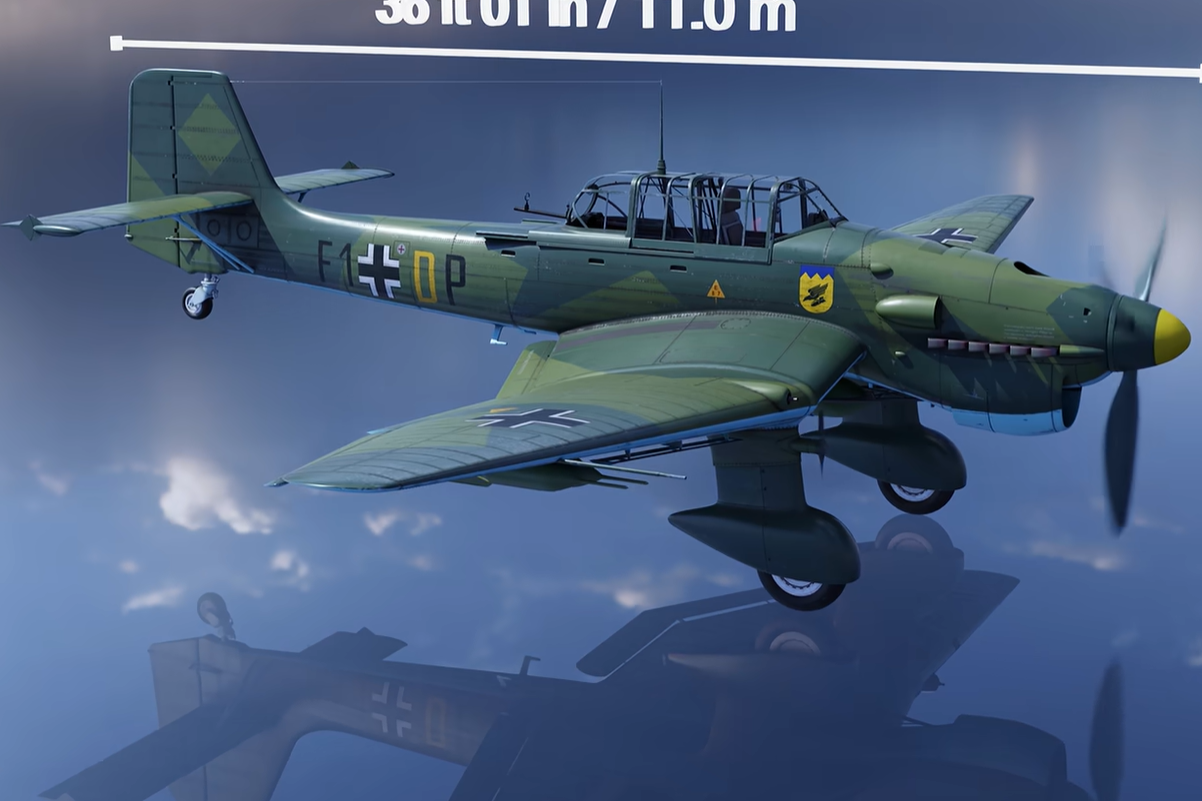
The Junkers Ju 87 Stuka became one of Nazi Germany’s most recognizable aircraft during World War II. Its distinctive inverted-gull wings, fixed landing gear, steep dive attacks, and infamous wailing siren made it a symbol of the German Luftwaffe’s early campaigns. Yet behind its frightening reputation was a specialized aircraft with clear technical strengths—and serious weaknesses.
The Stuka was highly effective when German forces controlled the skies. When opposing fighters challenged that advantage, its slow speed and limited defensive capabilities became dangerous liabilities.
1. Design and Development
Developed by the German manufacturer Junkers, the Ju 87 first flew in 1935 and entered operational service before World War II. It was designed to attack ground targets with greater accuracy than conventional level bombers could typically achieve.
Its most recognizable feature was its inverted-gull wing, which gave the aircraft a distinctive profile. The fixed landing gear, enclosed in streamlined fairings on many variants, also made it instantly recognizable. Although the configuration was less aerodynamically efficient than retractable landing gear, it was relatively straightforward to maintain in field conditions.
The aircraft normally carried a crew of two: a pilot and a rear gunner. Different versions received improvements to engines, armor, weapons, and equipment as operational requirements changed. Consequently, technical figures for one Ju 87 variant should not automatically be applied to the entire family. Source: American Heritage Museum
2. How the Dive-Bombing System Worked
The Stuka’s principal advantage was its ability to make a steep dive toward a target, helping the pilot maintain visual contact during the attack and release bombs with greater accuracy.
Dive brakes beneath the wings helped control the aircraft’s speed during the descent. The Ju 87 also incorporated an automatic recovery system intended to assist the pilot in pulling out of a dive if high acceleration or disorientation prevented normal recovery.
The attack demanded careful timing. The pilot had to approach the target, enter the dive, maintain control, release the bomb, and recover before reaching the ground. Dive-bombing could provide precision against suitable targets, but it exposed the aircraft to antiaircraft fire and required training, favorable conditions, and effective coordination with other forces.
The Ju 87 could carry different bomb combinations depending on its variant and mission. Its loadout was not fixed: aircraft assigned to ground attack, shipping strikes, or other specialized roles could differ in equipment and armament.
3. The “Jericho Trumpet”: Sound as a Weapon
The Stuka’s most famous psychological feature was the “Jericho Trumpet,” a wind-driven siren fitted to the landing-gear assemblies on some aircraft. During a dive, it produced a distinctive, piercing wail intended to intensify the psychological impact of an attack.
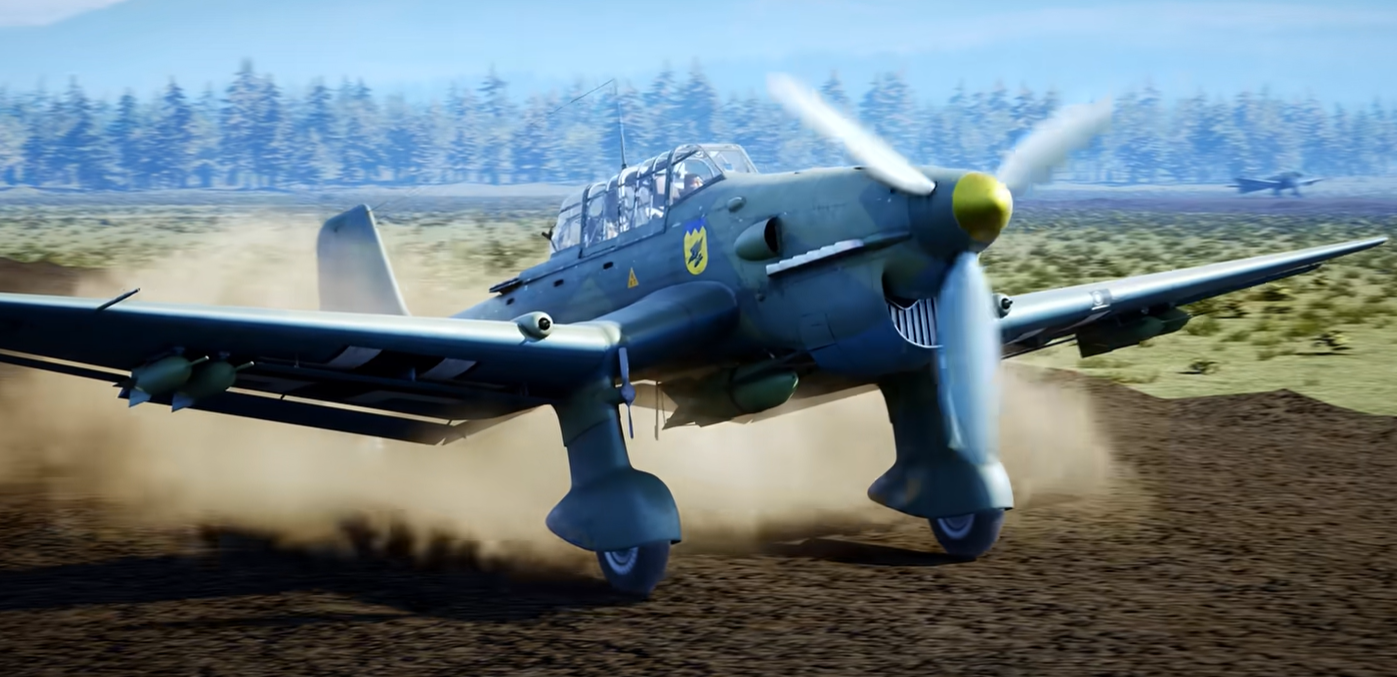
The sound became closely associated with German propaganda and the early Blitzkrieg campaigns. Its purpose was not to destroy a target directly, but to increase fear and confusion among people experiencing an attack.
However, the siren had a trade-off: it added aerodynamic drag and made an approaching aircraft easier to hear. As the war progressed, the devices were removed from many aircraft. The Stuka’s fearsome reputation therefore outlasted the widespread use of its most recognizable acoustic feature. Source: RAF Museum
4. Early Success—and the Battle of Britain
During Germany’s early campaigns in Poland and Western Europe, Stukas attacked artillery positions, transport networks, defensive positions, and other battlefield targets. Their effectiveness depended heavily on coordination with German ground forces and the Luftwaffe’s ability to suppress opposing air defenses.
The aircraft’s weaknesses became unmistakable during the Battle of Britain in 1940. Against modern British fighters such as the Hawker Hurricane and Supermarine Spitfire, the Ju 87 was slow, relatively cumbersome, and vulnerable during its approach and recovery from a dive.
Its rear gunner provided some protection, but defensive fire could not compensate for the aircraft’s limited speed and maneuverability. Heavy losses led the Luftwaffe to withdraw the Stuka from major operations over Britain.
The lesson was fundamental: an aircraft optimized for accurate ground attack could become highly vulnerable when enemy fighters controlled the airspace. Source: Air & Space Forces Magazine
5. Eastern Front: From Dive Bomber to Tank Attacker
On the Eastern Front, the Ju 87 continued serving in ground-attack roles. As battlefield conditions and Soviet air defenses evolved, specialized variants extended the aircraft’s usefulness.
The Ju 87G was particularly notable. It carried two 37 mm Bordkanone cannons in underwing gun pods for attacks against armored vehicles. This configuration transformed the aircraft from a conventional dive-bomber into a specialized anti-tank platform.
The cannon-armed version required different tactics from traditional steep dive-bombing. Its additional equipment also imposed performance penalties, while its survival remained dependent on the tactical situation and the opposition it faced. Source: Air & Space Forces Magazine
Conclusion
The Ju 87 Stuka was neither invincible nor obsolete from the beginning. It was a specialized aircraft that performed well when its design matched the battlefield conditions. Its dive brakes and attack profile supported precision bombing, while the siren added a psychological dimension to its reputation.
But the Battle of Britain exposed the cost of limited speed and defensive capability when enemy fighters could intercept it. Later adaptations, including the Ju 87G’s anti-tank cannons, demonstrated how the aircraft’s role evolved as the war changed.
The Stuka’s history illustrates a lasting military lesson: a weapon’s effectiveness depends not only on its design, but also on the conditions in which it must operate.