During the Cold War, the United States and the Soviet Union competed to reach new frontiers of science and engineering. Space became the most visible arena, but another extraordinary challenge unfolded much closer to home: drilling deep enough to reveal what lay beneath Earth’s surface.
The American Project Mohole and the Soviet Kola Superdeep Borehole pursued a similar scientific ambition through different approaches. Their engineers faced extreme temperatures, difficult rock formations, equipment failures, and enormous costs. Neither reached Earth’s mantle, but both helped scientists understand the planet in ways that ordinary surface observations could not.
1. Why Scientists Wanted to Drill So Deep
Earth’s crust is only the planet’s outermost solid layer. Beneath it lies the mantle, a vast region of hot rock that behaves over geological timescales in ways that drive processes such as plate tectonics.
Scientists wanted direct samples from deep underground to investigate the composition, temperature, pressure, and structure of Earth’s interior. One major target was the Mohorovičić discontinuity, commonly called the Moho, which marks the boundary between the crust and mantle.
The challenge was that continental crust can be tens of kilometers thick. Drilling through it from land would require equipment capable of surviving immense mechanical loads and rising temperatures. The ocean offered another possibility: oceanic crust is generally thinner than continental crust, potentially bringing the mantle within reach of a drill ship.
2. America’s Project Mohole
Launched in the late 1950s, Project Mohole was an American scientific initiative intended to penetrate Earth’s crust and obtain samples near or from the mantle. Rather than drilling through thick continental crust, its planners proposed drilling through the seafloor.
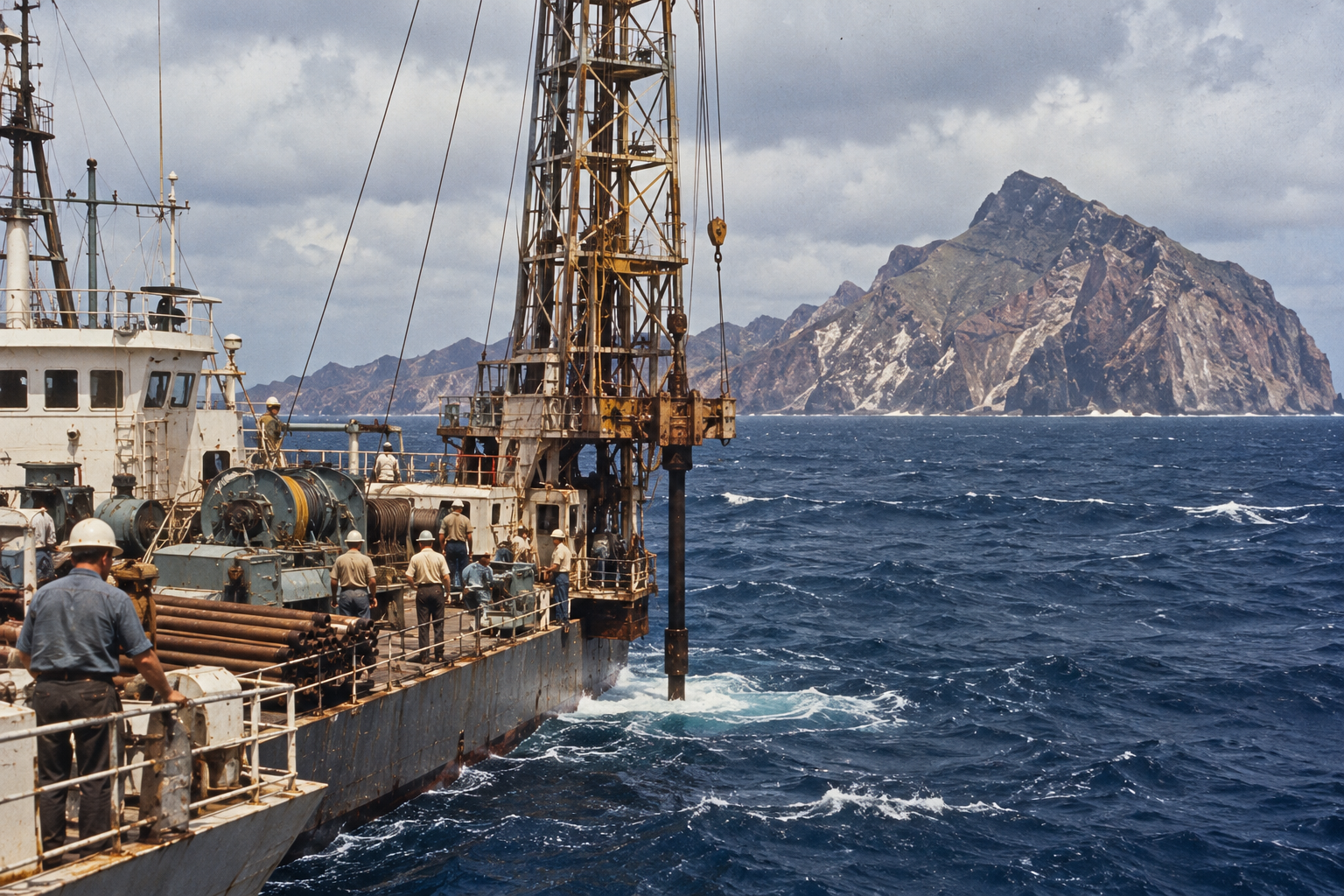
In 1961, a converted drilling vessel, CUSS I, conducted the project’s first phase off the coast of Guadalupe Island, Mexico. The team drilled five holes in water approximately 3,500 meters deep. The deepest hole extended about 183 meters beneath the seafloor.
That was nowhere near the mantle, but the expedition demonstrated that deep-ocean drilling from a floating, unanchored platform was feasible. It also recovered samples that helped characterize the underlying oceanic crust.
The project’s next phase was far more ambitious. However, escalating costs, management problems, and disagreements over the program undermined its future. Congress discontinued funding in 1966, before the proposed deep drilling could proceed.
Although Mohole failed to reach its ultimate target, its engineering work helped establish techniques that later contributed to scientific ocean drilling.
3. The Soviet Union Goes Deeper
The Soviet Union pursued a different strategy: drill deep into the continental crust itself. Work on the Kola Superdeep Borehole began on the Kola Peninsula in northwestern Russia in 1970.
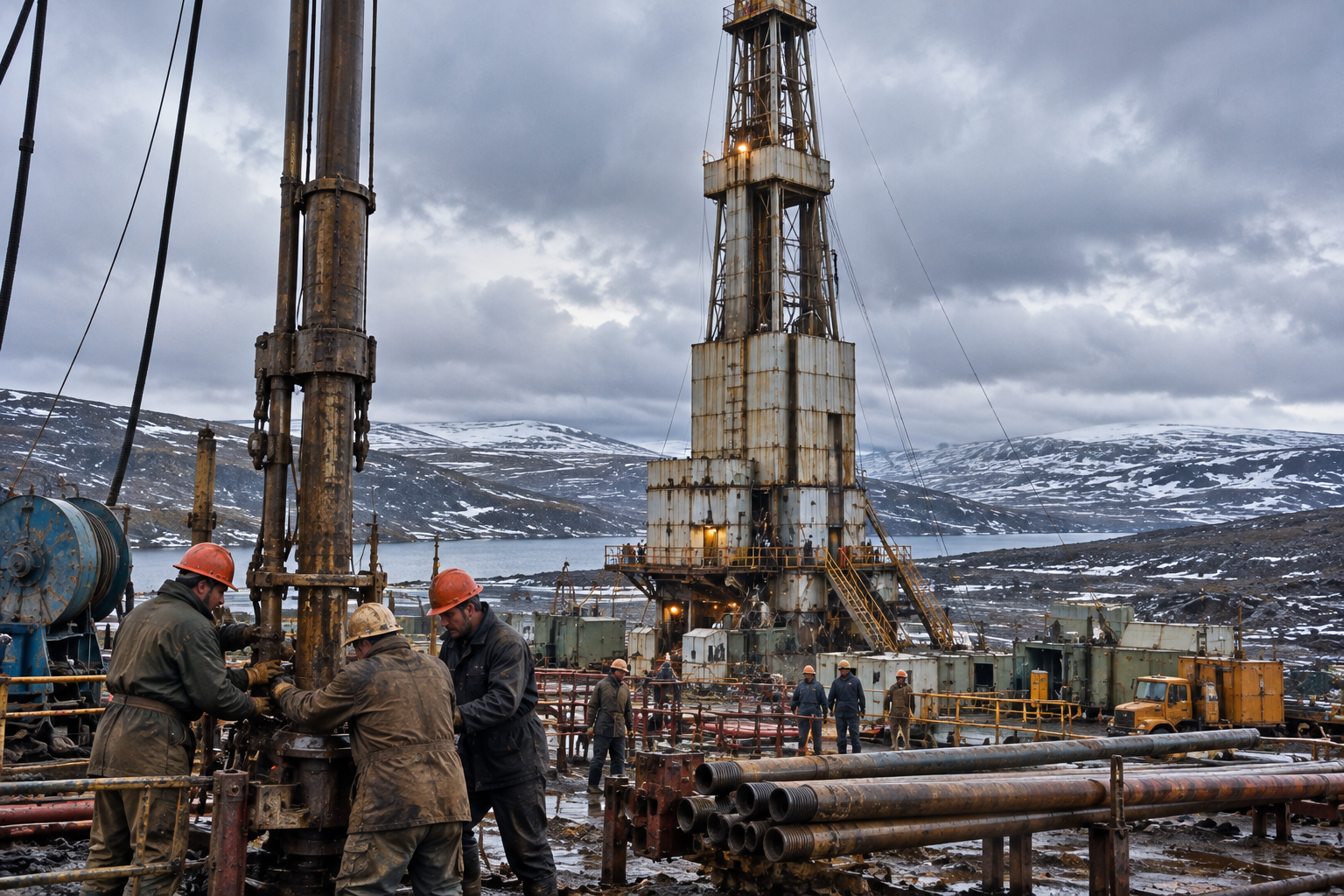
The project aimed to investigate ancient continental rocks and gather direct geological data from depths that had never been sampled. Engineers developed specialized drilling equipment to cope with the demands of an exceptionally deep borehole.
In 1989, the deepest branch, known as SG-3, reached 12,262 meters (40,230 feet). That is approximately 7.6 miles below the surface, making it the deepest borehole measured by vertical depth.
The hole was remarkably narrow compared with its depth. Its diameter was only around 23 centimeters (9 inches) in the deepest section, illustrating the precision and engineering required to maintain a borehole through kilometers of rock.
4. What Happened Far Below the Surface?
The Soviet project produced valuable scientific findings. Researchers discovered that the deep crust was more complex than some earlier models had suggested. They recovered rock samples, identified fractured formations containing fluids, and encountered microscopic fossils in deep rock layers.
Perhaps the most famous surprise was the temperature. At the deepest levels, temperatures reached roughly 180 degrees Celsius (356 degrees Fahrenheit)—hotter than anticipated when the project’s drilling plans were developed.
Heat made the work increasingly difficult. High temperatures affected drilling equipment and complicated efforts to keep the borehole stable. Deep drilling also involved mechanical stress, rock behavior, and the challenge of retrieving samples from extreme depths.
The borehole did not reach the mantle. Instead, it provided an unusually detailed look at the continental crust and demonstrated how difficult it is to predict underground conditions using indirect measurements alone.
5. Why the Projects Ended—and What They Left Behind
Drilling at Kola stopped in 1992, after decades of work, with the site subsequently falling into disuse. The project was not simply a race lost because one side drilled less deeply. The American and Soviet efforts used different geological settings, equipment, and research strategies.
Mohole showed how offshore drilling could expand scientific access to the ocean floor. Later programs, including the Deep Sea Drilling Project, developed these capabilities and contributed important evidence for understanding seafloor history and plate tectonics.
Kola, meanwhile, remains a landmark in continental scientific drilling. Its findings challenged assumptions about deep rock formations and showed that temperatures and geological conditions can differ substantially from predictions.
Conclusion
The Cold War’s race to understand Earth’s interior never produced a hole through the planet—or even a direct sample of the mantle. But Project Mohole and the Kola Superdeep Borehole pushed drilling technology into unfamiliar territory.
Their greatest achievement was not reaching the center of Earth. It was proving how much scientists could learn by going deeper, while revealing just how formidable the planet’s hidden environment can be.