By U.S. Politics Desk | October 6, 2026
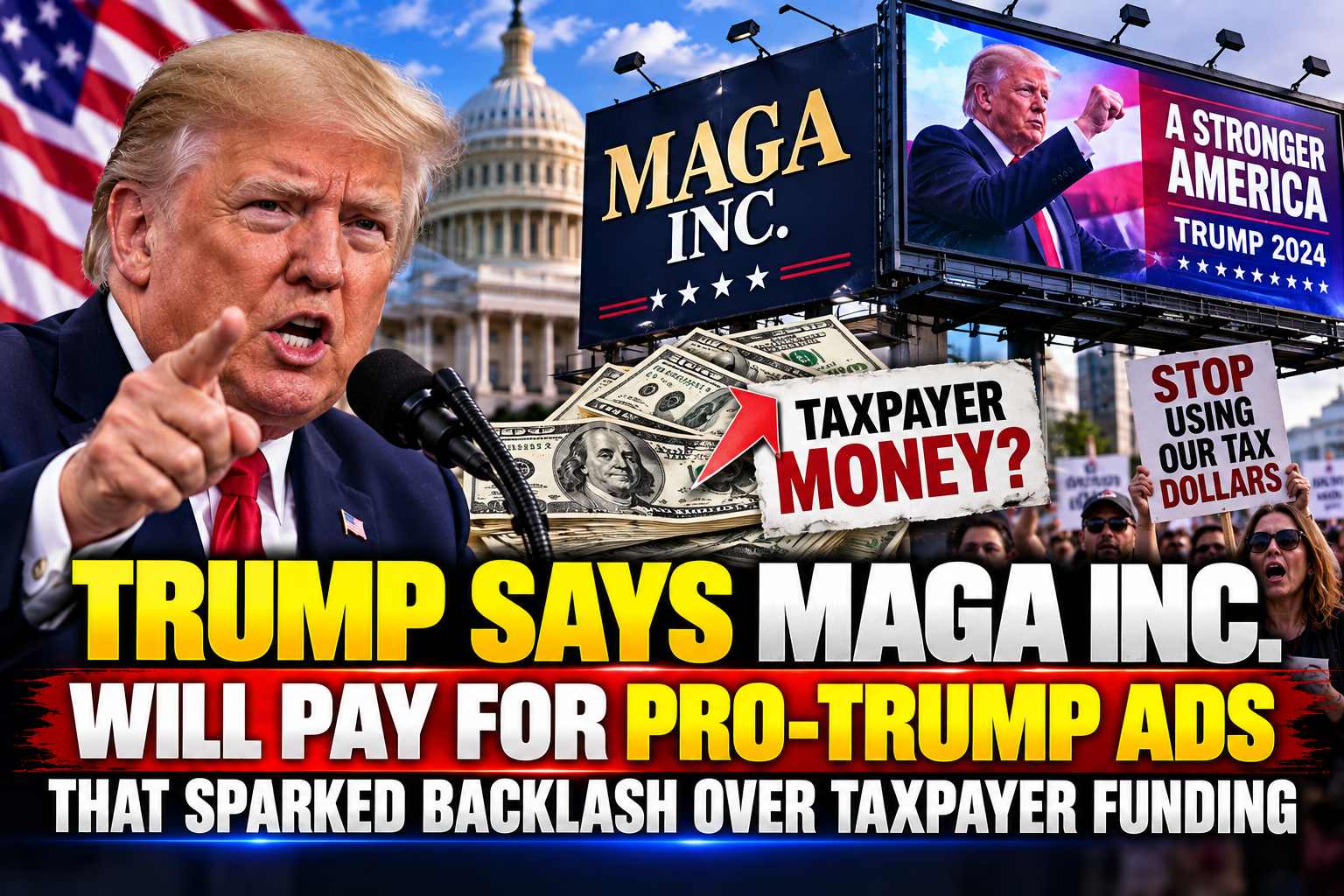
WASHINGTON — President Donald Trump says his political super PAC will take over the cost of television advertisements that have triggered bipartisan criticism because they were initially funded with taxpayer money and prominently promoted his administration.
In a post Monday, October 5, Trump defended the controversial ads as patriotic messages but said he had decided to pay for them himself using money raised for MAGA Inc., his political organization.
The abrupt shift comes after lawmakers from both parties and government-watchdog groups questioned whether federal money should be used for advertisements that resemble political campaign spots—especially with the November midterm elections just weeks away. AP News
Trump Defends the Ads, Then Changes Who Pays
Trump argued that the commercials were legitimate efforts to promote what he called a positive message about America.
But after days of criticism, he announced that future versions would instead be financed through MAGA Inc., his political war chest.
The White House later confirmed that MAGA Inc. would pay for such advertising going forward.
What remains unclear is whether Trump or the political committee will reimburse taxpayers for advertisements that have already aired.
The White House has not provided details on how any reimbursement might work or how the administration would document the separation between government-funded communications and political spending. AP News
That unresolved question could keep the controversy alive even after the funding arrangement changes.
How Much Taxpayer Money Was Used?
The Department of Homeland Security committed $20 million for the broader advertising campaign, according to congressional Democrats and reporting on the federal contract.
AdImpact, which tracks political and television advertising, estimated that more than $1.4 million had been spent on the spots by the end of September. The Associated Press later reported that the amount tied to the federal funding had reached at least $1.5 million, while noting that the final total could be higher depending on how broadcasters classified the advertisements. AP News
The distinction matters because the $20 million represents the amount committed to the campaign, not necessarily money already spent.
Three major ads have drawn particular attention.
One promoted Trump’s economic and political accomplishments, including tax cuts and manufacturing. Another used imagery connected to America’s 250th anniversary and featured Trump’s words. A third closely resembled a 2024 Trump campaign commercial and included his warning about a “final battle” against political enemies.
The spots ended with the disclosure: “Paid for by the U.S. Government.” AP News
Why the Ads Created a Political Firestorm
Government agencies routinely purchase public-service advertisements. The controversy is over whether these commercials cross the line from informing the public into promoting the president.
Critics argue that the ads look and sound more like campaign material than neutral government communications.
Several Republicans have also questioned the decision.
Senate Majority Leader John Thune said such advertising should not be paid for with taxpayer money. Republican Sen. Thom Tillis compared the spots with promotional advertising associated with Hungary’s authoritarian government under Viktor Orbán.
Democratic lawmakers have been even more forceful, accusing the administration of misusing federal resources.
The bipartisan criticism is notable because Trump’s political committee has access to hundreds of millions of dollars that could be used for explicitly political messaging.
MAGA Inc. had more than $400 million by the end of July, according to AP reporting. The organization has already begun spending heavily to support Republican candidates ahead of the midterm elections. AP News
Could the Ads Have Broken Federal Law?
Legal questions are now part of the controversy.
Experts cited by AP said the advertising campaign may raise issues under federal restrictions on the use of appropriated money for publicity or propaganda, as well as rules governing partisan political activity by government employees. AP News
But that does not mean a court or federal agency has determined that Trump or DHS violated the law.
The legal status of the advertisements remains unresolved, and the administration has continued to argue that they are legitimate public-service messages rather than campaign advertisements.
That distinction could become increasingly important if Congress or federal oversight bodies investigate how the campaign was authorized and funded.
The Midterm Election Clock Is Ticking
The timing has intensified the political stakes.
The 2026 midterm elections are scheduled for November 3, and Trump has been campaigning across the country in an effort to protect Republican control of Congress.
That means any government-funded message featuring the president is likely to receive more scrutiny than the same type of communication during a less politically sensitive period.
The administration argues that the ads promote government policies and patriotic themes rather than directly asking voters to support Trump or Republican candidates.
Critics say the question is not simply whether the ads contain a traditional “vote for me” message. They argue that repeated praise of a sitting president using public funds can still function as political promotion.
What Happens Now?
Trump’s decision to shift future funding to MAGA Inc. may remove one of the most immediate complaints: that taxpayers are footing the bill.
But it does not automatically settle the broader questions.
Lawmakers may still demand an accounting of how the original federal money was authorized, how much was spent, and whether taxpayers should be reimbursed.
The controversy could also influence the debate over how federal agencies communicate with the public during election seasons.
The Bottom Line
Trump says his super PAC, MAGA Inc., will pay for future television advertisements that previously relied on federal funding and sparked accusations of using taxpayer money for political promotion.
The White House has confirmed the change, but questions remain over the millions already spent and whether any reimbursement will occur.
For now, the dispute has become more than a fight over television commercials. It is a test of where Americans believe the line should be drawn between government communication, presidential publicity and political campaigning—just as voters prepare to head to the polls.