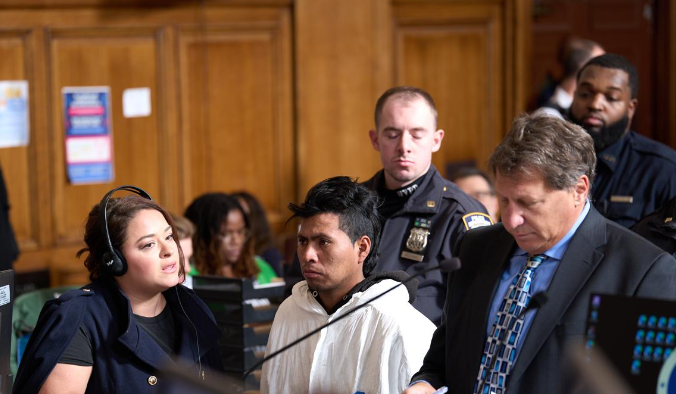
HOUSTON, TEXAS — A courtroom moment featuring Harris County Judge David M. Fleischer has attracted enormous attention online after a short video showing the judge speaking Spanish during court proceedings circulated across social media.
The video, titled “When the Judge Speaks Spanish #judgefleischer,” was originally published on October 4, 2024, by the YouTube account Allegedly Adrian – Daily Court Clips. The available YouTube listing recorded more than 18.7 million views and approximately 1.1 million likes at the time it was indexed, demonstrating the widespread interest in courtroom encounters involving the Texas judge.
However, the original video listing does not provide a written description identifying the defendant, the specific criminal charge, or the complete circumstances behind the Spanish-language exchange.
Who Is Judge David Fleischer?
Judge David M. Fleischer presides over Harris County Criminal Court at Law No. 5 in Houston, Texas. His courtroom handles misdemeanor criminal cases, including driving while intoxicated, assault, theft, and other offenses.
Fleischer became widely recognized online through courtroom livestreams and short video clips featuring his direct communication with defendants.
According to a December 22, 2024, report by the Houston Chronicle, Fleischer began livestreaming courtroom proceedings during the COVID-19 pandemic to maintain public access and promote transparency. His broadcasts continued afterward, attracting substantial online audiences.
The practice has generated mixed reactions. Supporters say the livestreams help the public understand the consequences of criminal behavior and allow people to observe courtroom proceedings. Critics, however, have questioned whether viral clips can embarrass defendants or expose individuals to lasting reputational harm before their cases are resolved.
Why Speaking Spanish in Court Matters
The use of Spanish in an American courtroom touches on an important issue: ensuring that people understand legal proceedings that could affect their freedom and future.
In Texas, language access is supported through established court interpretation procedures. Under Article 38.30 of the Texas Code of Criminal Procedure, a qualified interpreter must be appointed in applicable criminal proceedings when the court determines that a defendant or witness does not understand and speak English.
The Texas Judicial Branch also provides resources for courts to access licensed interpreters, including Spanish-language interpretation services.
These safeguards are important because understanding legal rights, criminal charges, court conditions, and potential consequences can significantly affect a person’s ability to participate meaningfully in a case.
A judge speaking directly in Spanish may help establish communication, but it should not be confused with the formal role of a qualified court interpreter when interpretation is legally required.
A Viral Moment With a Bigger Message
The popularity of Judge Fleischer’s courtroom videos highlights how ordinary court proceedings can become major social media conversations.
A brief exchange between a judge and a defendant can reach millions of viewers, encouraging discussions about accountability, fairness, language barriers, and the responsibilities of the justice system.
At the same time, a short social media clip rarely provides the complete context of a legal proceeding. Viewers may not know the full case history, the evidence presented, or what happened before and after the recorded exchange.
For that reason, the Spanish-language courtroom moment should be viewed as an opportunity to discuss communication and access to justice rather than as proof of any specific legal outcome.
Ultimately, justice requires more than simply delivering a ruling. People must also be able to understand the proceedings, their legal rights, and the consequences of decisions made in court.