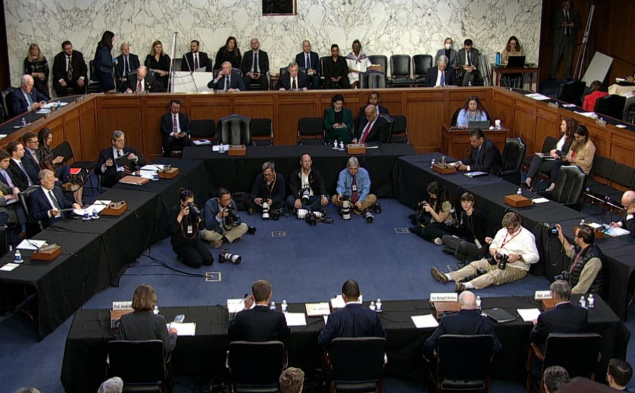
A new congressional proposal led by Senator Sheldon Whitehouse is reigniting a constitutional debate over lifetime judicial appointments. Supporters say 18-year terms could reduce political battles over Supreme Court vacancies, while critics warn the changes could threaten judicial independence and destabilize American law.
WASHINGTON, D.C. — November 8, 2026
A growing debate over the future of America’s highest court is gaining renewed attention as lawmakers consider a proposal that could fundamentally change how long Supreme Court justices participate in the nation’s most consequential legal decisions.
The proposal, introduced by Democratic Senator Sheldon Whitehouse, would establish an 18-year active service structure and create a predictable schedule for Supreme Court appointments.
The legislation, known as the Supreme Court Biennial Appointments and Term Limits Act of 2026, has attracted support from several Democratic senators but faces substantial constitutional and political questions.
Why Supporters Want 18-Year Terms
Under the proposal, presidents would appoint one Supreme Court justice during the first year and another during the third year of each presidential term, subject to Senate confirmation.
The goal is to establish a regular appointment schedule rather than allowing vacancies to depend on unexpected deaths or strategic retirements.
Supporters argue that the current system creates enormous political pressure whenever a Supreme Court seat becomes available.
A single vacancy can determine the Court’s ideological direction for decades, making nomination and confirmation battles increasingly contentious.
An 18-year structure could distribute appointments more evenly between presidential administrations, reduce the importance of individual vacancies, and make judicial turnover more predictable.
Supporters also argue that regular appointments would reduce incentives for justices to time their retirements around presidential elections.
Why Critics Are Concerned
Opponents raise a fundamental constitutional question: Does Congress have the authority to change the Supreme Court’s lifetime judicial tenure through ordinary legislation?
Article III of the Constitution provides that federal judges hold their offices during good behavior.
Historically, this protection has been understood to safeguard judicial independence by preventing presidents and lawmakers from removing judges simply because they disagree with their decisions.
Critics argue that limiting a justice’s ability to participate in the Supreme Court’s regular appellate decisions after a fixed period could undermine those protections.
They also warn that scheduling appointments around presidential election cycles could make the Court even more politically connected.
Another concern involves legal stability. More frequent changes in the Court’s membership could increase the possibility of major constitutional interpretations shifting between generations of justices.
What Would Actually Change?
The Whitehouse proposal contains an important distinction.
Justices would not necessarily lose their judicial office after 18 years. Instead, the legislation would limit appellate cases to the nine most recently appointed justices.
Justices no longer serving in that active group could retain certain other judicial responsibilities, including participation in original-jurisdiction cases.
The approach is designed to preserve important aspects of judicial tenure while establishing predictable turnover in the Court’s regular appellate work.
However, whether Congress can constitutionally impose this arrangement remains disputed.
Could the Constitution Block the Proposal?
This is one of the most difficult questions surrounding the legislation.
A 2023 Congressional Research Service analysis concluded that implementing term limits through ordinary legislation would likely require a constitutional amendment.
However, a July 2026 Brennan Center for Justice analysis reached the opposite conclusion, arguing that appropriately structured term limits could be established through legislation without violating Article III.
A September 2026 analysis published by Johns Hopkins University also examined the competing constitutional arguments, emphasizing that the issue remains unresolved.
There is no definitive Supreme Court ruling establishing whether the proposed statutory arrangement is constitutional.
What Happens Next?
Senator Whitehouse introduced S. 5076 on July 22, 2026, alongside Senators Cory Booker, Richard Blumenthal, Alex Padilla, and other Democratic colleagues.
The legislation was read twice and referred to the Senate Judiciary Committee. It has not become law.
For now, the debate remains centered on whether America should preserve lifetime participation in the Supreme Court’s full appellate docket or establish a more predictable system of judicial appointments.
Supporters see an opportunity to reduce political battles and modernize the institution.
Critics see a potentially dangerous change to one of the Constitution’s most important protections for an independent judiciary.
The question is bigger than 18 years. It is about how America can balance democratic accountability, constitutional stability, and judicial independence for generations to come.



