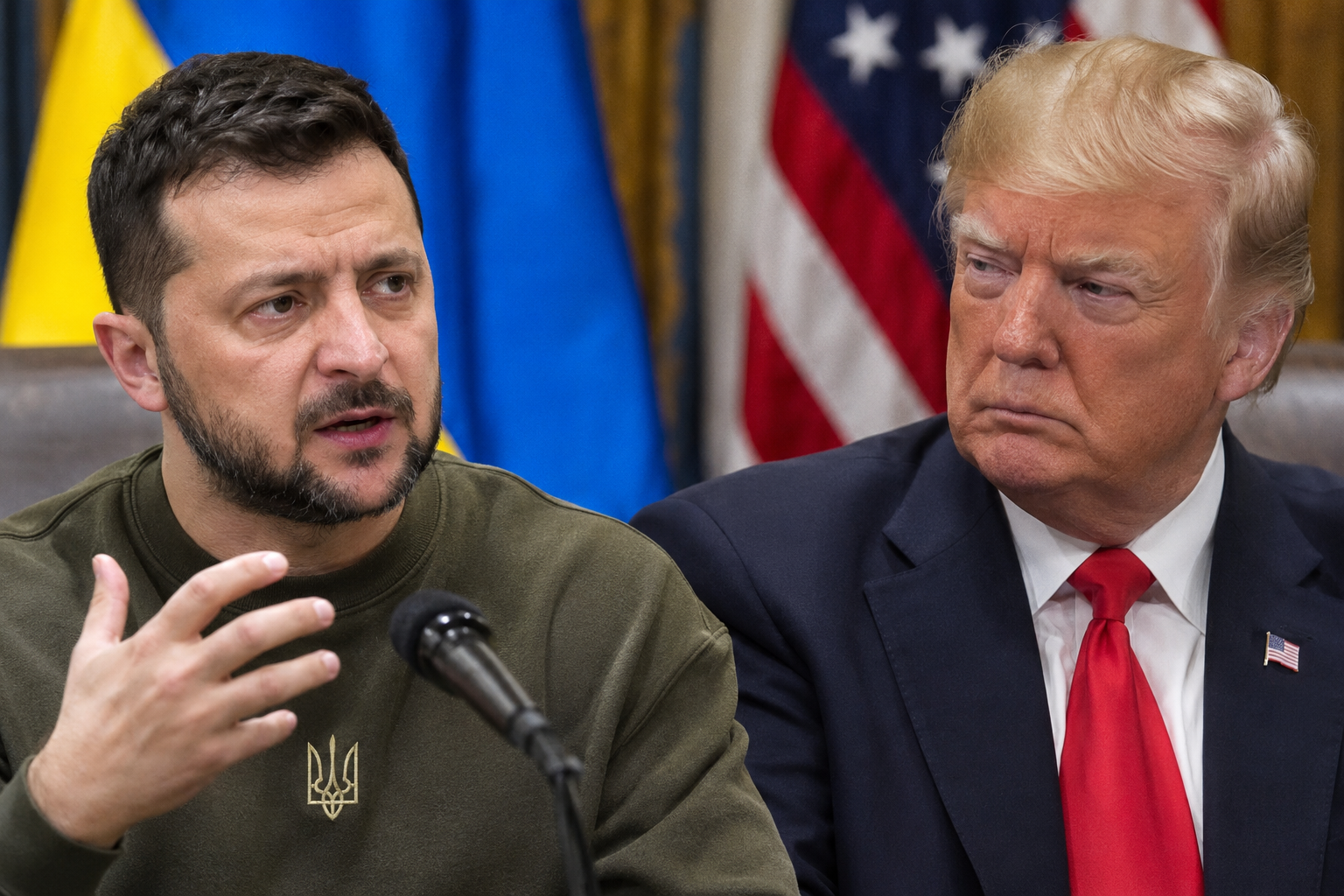
WASHINGTON — Ukrainian President Volodymyr Zelenskyy is signaling growing concerns about the Trump administration’s approach to Russia’s war against Ukraine, raising fresh questions about the future of American support as diplomatic efforts to end the conflict intensify.
The latest developments come as President Donald Trump pushes for a negotiated settlement while Ukraine continues to resist Russian demands involving occupied territory and long-term security guarantees.
On November 21, Zelenskyy revealed that Trump had spoken with European leaders earlier in the week and suggested that countries could redirect money currently being spent on Ukraine toward domestic priorities if a peace agreement brought the war to an end.
Zelenskyy said the comment did not sound like a threat. However, he expressed skepticism about whether Russian President Vladimir Putin was genuinely prepared to make the compromises necessary for a lasting peace agreement.
“I’m a little bit more skeptical than Americans that he’s ready for compromises,” Zelenskyy told reporters, according to Reuters.
Growing Differences Over the Path to Peace
The disagreement highlights a fundamental challenge facing Washington and Kyiv: how to end the war without leaving Ukraine vulnerable to another Russian invasion.
Putin has continued demanding that Ukraine surrender the entire eastern Donbas region as part of a potential peace settlement. Zelenskyy has rejected that condition, pointing to the Ukrainian soldiers who have died defending the territory since Russia launched its full-scale invasion in February 2022.
For Kyiv, accepting territorial concessions without strong security guarantees could create the conditions for another conflict in the future.
The latest diplomatic efforts have also produced limited progress. During U.S.-mediated negotiations in Abu Dhabi on November 10–11, Russian and Ukrainian representatives agreed in principle to a major prisoner exchange. However, the discussions ended without a major breakthrough on the central disagreements preventing a peace agreement.
Washington’s Russia Policy Raises Additional Concerns
Questions about Trump’s approach have been building for weeks.
In October, the administration moved to ease certain restrictions on Russian diesel exports, a decision that attracted criticism from American lawmakers and European allies who believe economic pressure on Moscow remains essential.
Zelenskyy also told NPR that Washington had warned it could suspend intelligence-sharing with Ukraine unless Ukrainian forces stopped long-range drone attacks against Russian oil refineries.
These developments have reinforced concerns in Kyiv that Washington could increasingly prioritize diplomatic and economic arrangements with Moscow over maintaining pressure on the Kremlin.
Could the Next Peace Talks Change Everything?
Despite the disagreements, Zelenskyy has not abandoned diplomatic efforts.
On November 21, he said Ukraine had accepted a U.S. proposal for another round of trilateral negotiations before Christmas, emphasizing that reaching a meaningful result as soon as possible would be preferable.
He also suggested the discussions could potentially take place alongside the December G20 summit in Miami.
However, a significant diplomatic complication remains: Trump has invited Putin to the summit, while Zelenskyy had not received an invitation as of November 21. German officials have urged Washington to include Ukraine, arguing that decisions about the country’s future cannot be made without Ukrainian participation.
Ukraine’s Future and America’s Role
The stakes extend far beyond the relationship between Trump and Zelenskyy.
Any agreement that leaves Ukraine without credible security guarantees could reshape Europe’s security landscape. Meanwhile, a breakdown in negotiations or a reduction in American support could create additional challenges for Kyiv as it continues defending its territory.
For the Trump administration, the challenge is equally significant: finding a diplomatic solution that ends the fighting without creating a settlement that encourages further Russian aggression.
The central question now is whether Washington can negotiate an agreement that both Ukraine and Russia will accept—or whether growing disagreements between Kyiv and Washington could complicate efforts to end the war.
As peace negotiations continue, the decisions made in Washington could have consequences for Ukraine, NATO, European allies, and international security for years to come.