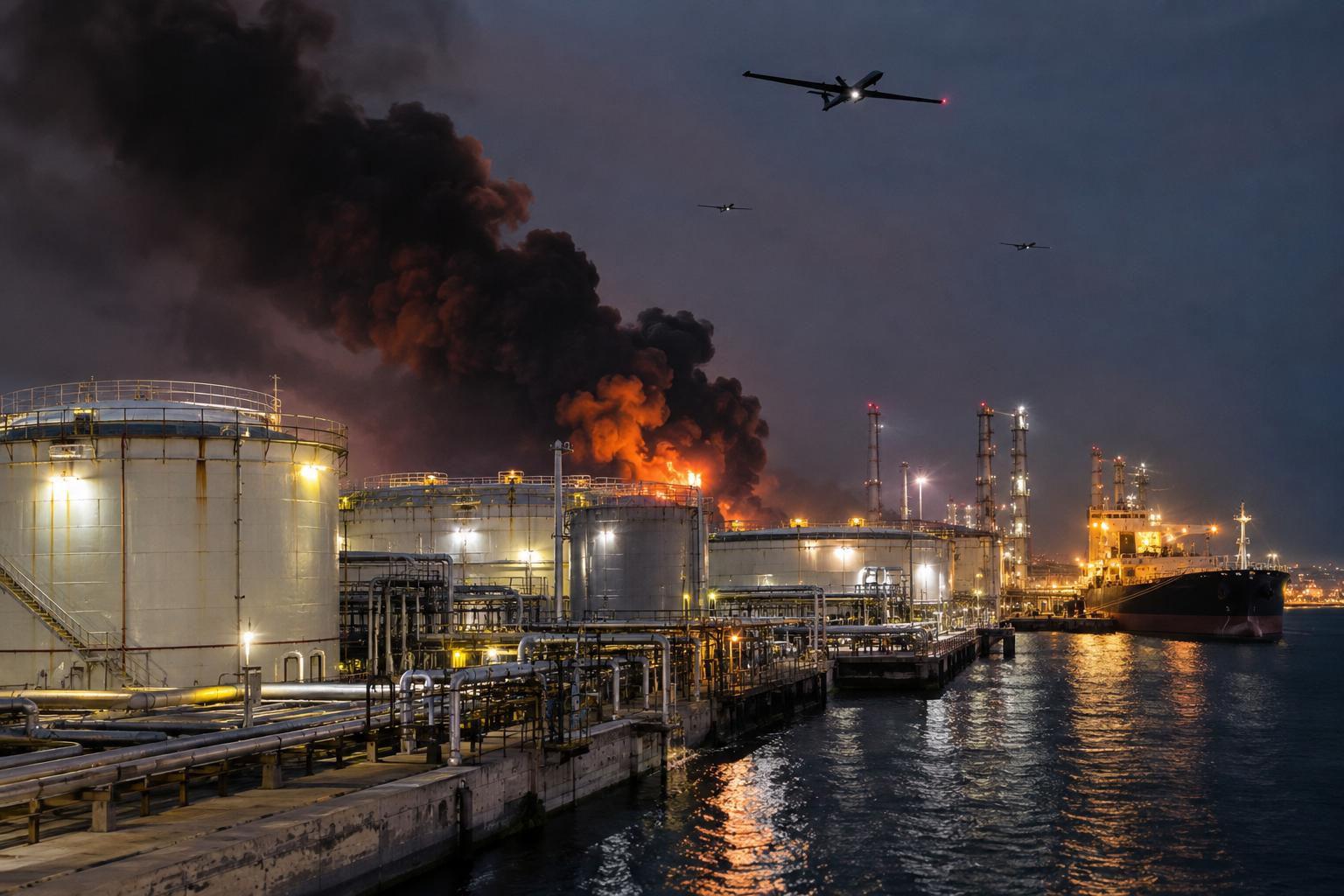
MOSCOW — Russia’s capital region faced an extraordinary reported wave of Ukrainian drone activity in August, with Moscow Mayor Sergei Sobyanin claiming that 8,670 unmanned aerial vehicles flew toward the region over a one-month period.
The announcement came as Ukraine continued expanding its long-range drone campaign against Russian energy infrastructure, including oil refineries and export facilities located hundreds of miles from the front lines. Together, the developments highlight how the war is increasingly reaching critical infrastructure deep inside Russian territory.
Moscow Reports Thousands of Incoming Drones
According to Sobyanin, 8,670 drones flew toward the Moscow region between 8:30 a.m. on August 1 and 8:30 a.m. on September 1, 2026.
The mayor said Russian air defense systems intercepted most of the aircraft before they reached the outskirts of the capital. He added that 795 drones were destroyed as they approached Moscow itself.
However, Sobyanin did not provide a detailed breakdown showing how many drones penetrated the region’s air defenses. He also did not disclose figures for casualties or damage caused by falling debris.
The figures were reported by The Moscow Times based on the mayor’s public statement. They should be treated as claims from Russian officials, rather than an independently verified count of drones launched by Ukraine or successful attacks on targets around the capital.
Ukraine Expands Its Long-Range Campaign
While Moscow reported a high volume of incoming drones, Ukrainian forces also continued striking energy and industrial facilities far from the front lines.
On August 13, the Associated Press reported that Ukrainian drones struck the Gazprom Neftekhim Salavat refinery in Russia’s Bashkortostan region, approximately 1,300 kilometers (800 miles) from Ukraine’s border. Ukraine’s General Staff said the attack caused a fire. The regional governor reported that two civilians were wounded and that a fire had broken out in an industrial area.
The attacks also affected Russia’s oil export infrastructure. In an August 28 report, Reuters cited traders and LSEG shipping data indicating that crude oil loadings from the Black Sea port of Novorossiysk were expected to fall below 350,000 barrels per day, compared with approximately 800,000 barrels per day in July. The disruption followed Ukrainian drone attacks affecting the Sheskharis oil terminal.
Reuters also documented attacks on several Russian refineries during August, including facilities in the Nizhny Novgorod and Rostov regions. Some reportedly suspended operations after being damaged.
What the Numbers Mean for the War
Ukraine’s long-range strikes are part of a broader effort to weaken infrastructure that generates revenue and supports Russia’s military operations. Oil production, refining and export facilities are particularly important because energy revenues remain a major source of income for the Russian economy.
At the same time, Russia’s reported interception figures do not establish the full effectiveness of its air defenses. Without independently verified data, it remains difficult to determine how many drones were launched, how many reached their intended destinations or how much damage resulted from the reported attacks.
One point is clear: the war is increasingly being fought beyond the immediate battlefield, with drone operations putting pressure on major cities, industrial facilities and energy-export routes.
This is a retrospective report on developments reported in August and September 2026, not a breaking event on November 18, 2026.



