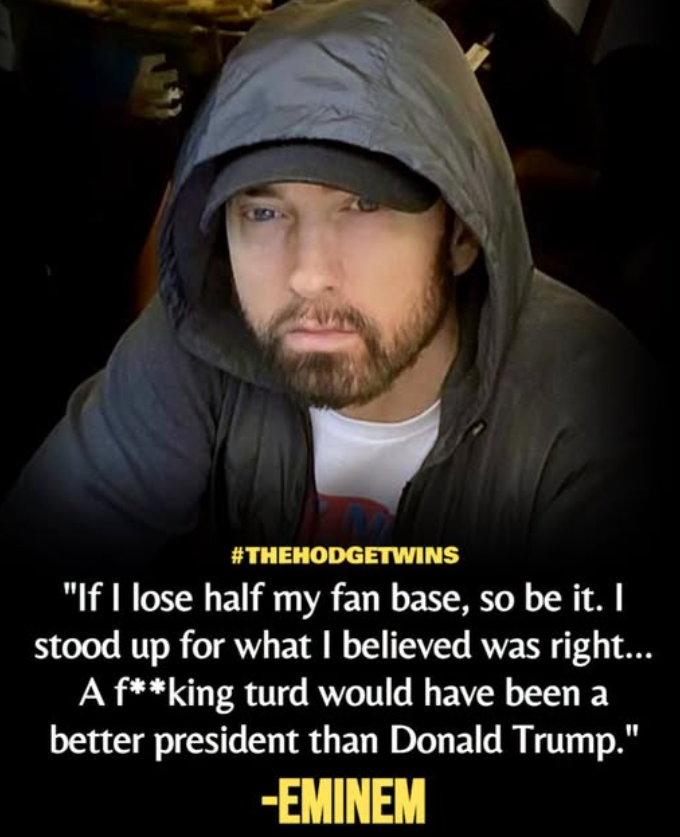
Subheadline: The rap superstar stood by his criticism of Donald Trump after his 2017 BET Hip Hop Awards freestyle divided fans. In a January 2018 interview with Billboard, Eminem said he was prepared to accept the consequences of speaking out, turning the controversy into a wider debate about politics, music and artistic freedom.
DETROIT, Michigan — October 27, 2026 — Rap superstar Eminem once made it clear that he was willing to risk losing a substantial portion of his audience rather than remain silent about his opposition to Donald Trump.
The Detroit-born rapper made the remarks in a January 25, 2018, Billboard interview, following the backlash to his political freestyle, “The Storm,” which was released during the 2017 BET Hip Hop Awards.
Asked whether he had considered holding back his criticism of Trump because some fans supported the president, Eminem said he was prepared to accept the consequences. He explained that he believed his decision reflected his personal convictions and that he was comfortable standing by his position, even if it cost him fans. (Billboard)
The comments captured a defining moment in the intersection of celebrity, music and American politics, as entertainers increasingly used their public platforms to address disagreements over presidential leadership and national policy.
The Freestyle That Started the Controversy
The dispute began on October 10, 2017, when Eminem released a roughly four-and-a-half-minute freestyle titled “The Storm” as part of the BET Hip Hop Awards’ cypher series.
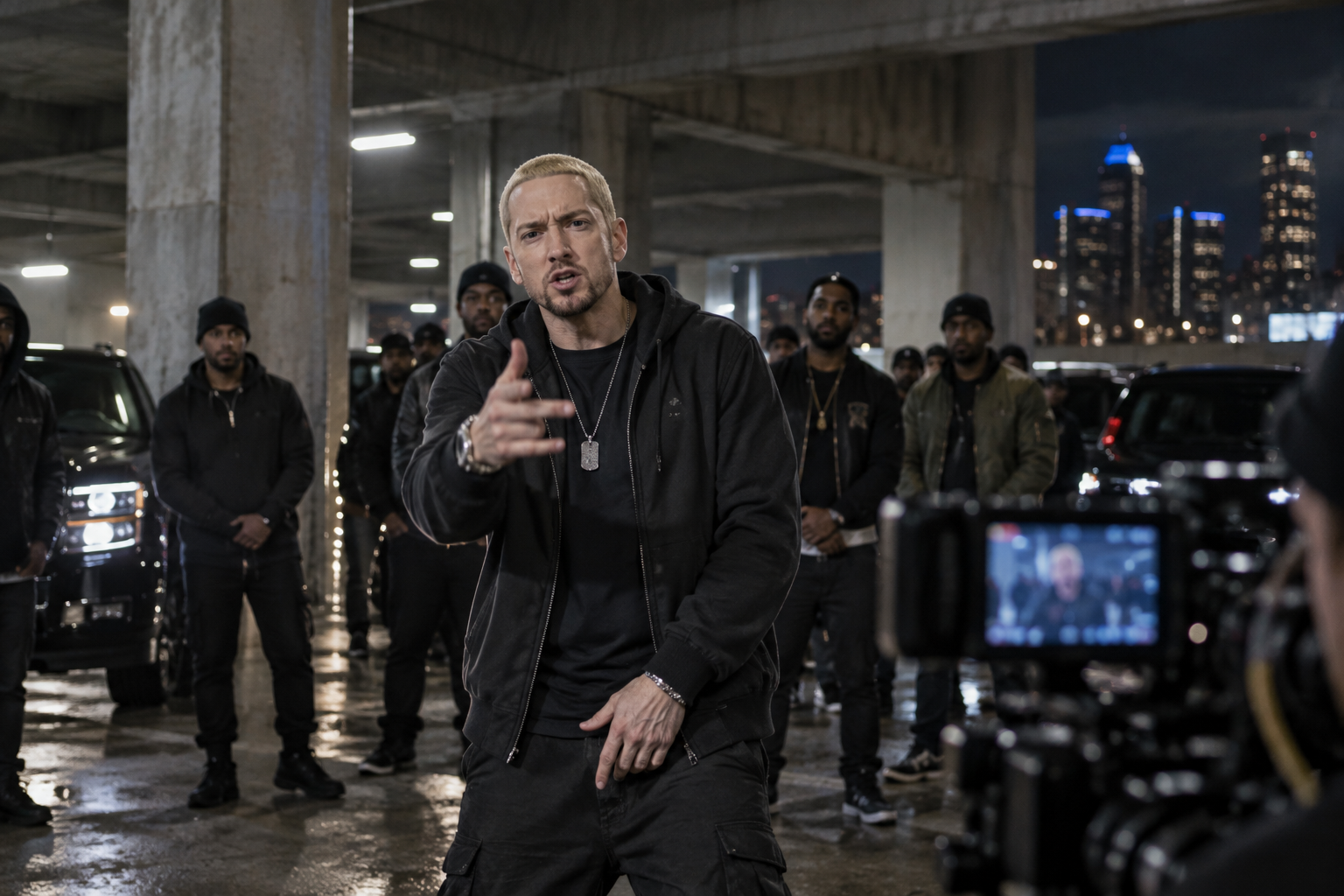
Rather than appearing as a conventional performance onstage, the video was filmed in a Detroit parking area and broadcast during the televised awards program. Eminem used the freestyle to criticize Trump’s political rhetoric, his response to protests by NFL players and what the rapper described as distractions from major national issues. (CBS News)
The performance also addressed Trump’s comments about military veterans, his public disputes with professional athletes and his handling of issues including hurricane recovery and gun violence.
One of the most controversial aspects was Eminem’s direct message to listeners who supported the president. He challenged those fans to decide where their political loyalties stood, making it clear that he would not soften his criticism simply to preserve his commercial audience.
The approach was unusual in an industry where artists often seek to maintain relationships with listeners across political and cultural divisions.
Eminem Refused to Back Away From His Position
By the time of the Billboard interview in January 2018, the controversy had become part of the wider conversation surrounding Eminem’s album “Revival,” released in December 2017.
During the interview, conducted alongside his longtime manager Paul Rosenberg, Eminem discussed his motivations and the response to “The Storm.” He acknowledged that some supporters of Trump had reacted negatively to the freestyle, but he did not express regret over making it.
His message was straightforward: he was willing to lose fans rather than compromise what he believed was right.
He also questioned why working-class Americans living paycheck to paycheck would expect a billionaire president to represent their economic interests. That argument connected his political criticism to concerns about economic inequality and the relationship between political leadership and ordinary workers. (Billboard)
Eminem’s comments reflected his personal political views, rather than an independently established assessment of how Trump’s policies affected every American. Nevertheless, they illustrated how the rapper wanted his audience to interpret the controversy: as a matter of conviction rather than a calculation about record sales or popularity.
A Divided Response From Fans and Fellow Artists
The freestyle attracted extensive attention across social media and entertainment news.
Some fans praised Eminem for using his platform to challenge the president, while others criticized him for bringing partisan politics into music. His decision to directly confront listeners who supported Trump intensified those disagreements.
Several prominent artists also reacted publicly. Colin Kaepernick, the former NFL quarterback whose protests during the national anthem had become a major political controversy, expressed appreciation for Eminem’s message.
Other musicians and commentators praised the performance’s willingness to challenge a sitting president, while some critics argued that the rapper’s political stance risked alienating part of his audience. (CBS News)
The mixed response demonstrated the potential cost of political expression in entertainment. A performer may gain attention and strengthen connections with some listeners while provoking opposition from others.
However, there is no verified evidence establishing that Eminem actually lost half of his fan base. The figure was a hypothetical consequence he discussed during the interview, not a measured outcome supported by audience or sales data.
The Role of Political Expression in Popular Music
Eminem’s decision fits into a long tradition of musicians using songs and performances to respond to political events.
Artists across hip-hop, rock, folk and other genres have addressed war, racism, economic inequality, civil rights and presidential leadership. Their work can influence public conversation, although the impact on listeners’ political beliefs varies and cannot be assumed from a single performance.
Hip-hop, in particular, has frequently served as a platform for social and political commentary. Eminem’s freestyle used that tradition to criticize a president while challenging the loyalty of fans who disagreed with him.
His approach also highlighted a continuing tension in popular entertainment: should an artist seek to appeal to as many people as possible, or openly express personal beliefs even when doing so creates controversy?
Eminem’s answer in 2018 was that he would not let the possibility of losing fans determine what he said.
What the Controversy Revealed
The episode demonstrated how quickly a musical performance can become part of a wider political debate.
“The Storm” was more than a celebrity’s criticism of a president. It became a discussion about the relationship between artistic independence, audience loyalty and the responsibilities that come with a large public platform.
For supporters, Eminem’s willingness to risk alienating listeners showed consistency with his stated beliefs. For critics, his ultimatum to fans illustrated how political divisions can extend into entertainment and personal identity.
Neither reaction establishes that one side represented all of Eminem’s listeners. His audience, like the broader American public, contains people with different political views and expectations of public figures.
The lasting significance of Eminem’s statement is not that he demonstrably lost half his audience, but that he publicly accepted the possibility of doing so.
His 2018 interview remains a clear example of an artist choosing to prioritize personal political convictions over the goal of avoiding controversy—and of the difficult choices performers face when their work enters the national political conversation.



