
Obama Takes Aim at Trump on the Campaign Trail
Former President Barack Obama sharply criticized President Donald Trump during Democratic campaign rallies on Saturday, October 24, 2026, accusing the administration of prioritizing personal interests over the needs of ordinary Americans.
Speaking in Cleveland, Ohio, and Detroit, Michigan, Obama urged voters to hold the administration accountable as candidates compete in high-stakes races that could determine control of Congress. His remarks focused on alleged corruption, rising living costs, the administration’s Iran policy and Trump’s highly visible White House renovation projects.
In Detroit, where Obama campaigned for Democratic Senate nominee Abdul El-Sayed, the former president delivered one of his strongest criticisms of Trump’s conduct in office.
“We have never seen a president excel in straight-up grifting, on your dime, like this,” Obama told the crowd, according to Reuters.
He also accused the administration of selling political favors and argued that Republicans had moved away from their traditional message of limited government.
These were Obama’s political accusations, not a judicial finding that Trump had committed corruption. The claims have become part of a broader debate over presidential ethics, private business interests and accountability in Washington.
White House Renovations Become a Political Flashpoint
Obama’s criticism was not limited to allegations of financial misconduct. He also mocked Trump’s White House renovation plans, including the proposed ballroom and other changes to the presidential residence.
At the Cleveland rally, Obama joked that the White House looked “like Saddam Hussein opened a Cheesecake Factory,” drawing attention to what he characterized as an excessive focus on decoration while Americans face economic pressures.
He argued that voters should be more concerned about the cost of living, government priorities and the consequences of presidential decisions than about the appearance of the White House.
The remarks also targeted Defense Secretary Pete Hegseth, whom Obama criticized over his emphasis on military personnel’s physical appearance and masculinity. The comments formed part of a wider argument that the administration was spending too much attention on symbolic displays and not enough on major national problems.
Corruption Allegations Meet Public Concerns About Business Interests
The confrontation comes amid public debate over Trump’s personal business interests and their possible influence on presidential decision-making.
A Reuters/Ipsos poll published August 19, 2026, surveyed 1,166 U.S. adults between August 14 and August 17. It found that 63% of respondents considered it inappropriate for Trump and his family to profit from cryptocurrency ventures in the way described in the survey, while 69% said they believed his private business interests influenced his presidential decisions. The poll’s margin of error was three percentage points for all respondents.
Those numbers reflect public opinion, not a legal determination that misconduct occurred. The White House previously rejected allegations of impropriety, saying Trump’s investments were managed by independent financial institutions and that there were no conflicts of interest. Trump has also said he has no day-to-day role in his family’s business since returning to office.
Obama’s remarks placed those concerns at the center of his campaign message, while Republicans and the administration have challenged Democratic criticism and defended their own records.
Trump Fires Back on Truth Social
Trump responded early Sunday, October 25, attacking Obama in a post on his Truth Social platform.
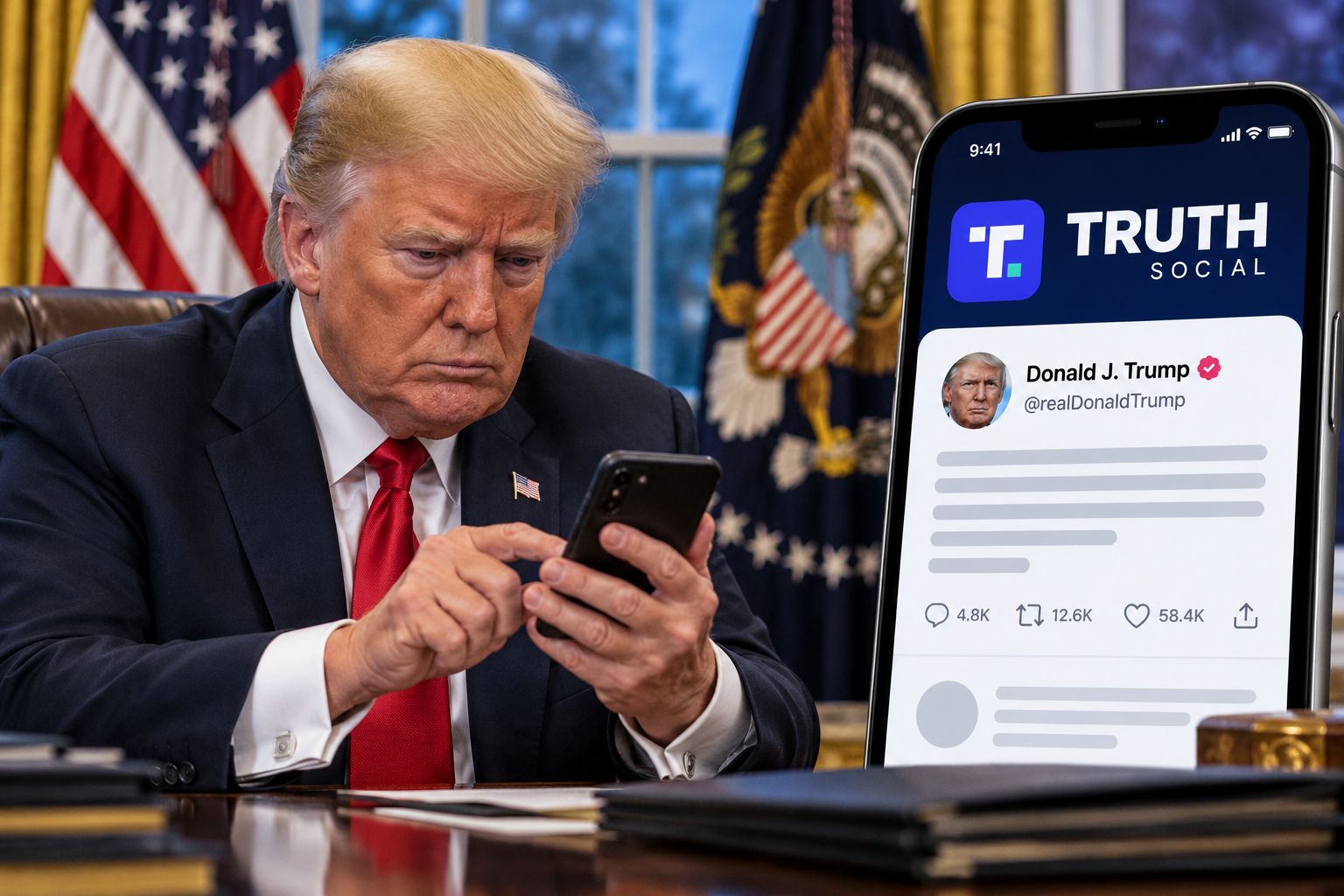
He called his predecessor a “grossly incompetent President” and criticized the 2015 nuclear agreement with Iran, arguing that Obama had given Tehran a path toward obtaining a nuclear weapon. The United States withdrew from that agreement during Trump’s first term.
Trump also targeted El-Sayed, using inflammatory language to describe the Michigan Senate candidate and urging voters to support Republican nominee Mike Rogers. The exchange widened the dispute beyond the two presidents and into a competitive Senate race.
Obama, meanwhile, argued that Trump’s approach to Iran had increased the risks facing the region and given Tehran greater leverage over shipping through the Strait of Hormuz, a critical route for global oil transportation. The disagreement illustrates how foreign policy and economic concerns are becoming intertwined in the campaign debate.
Midterm Elections Raise the Stakes
The exchanges come as campaigns intensify ahead of the November 3 midterm elections, when voters will decide races that determine control of Congress for the next two years.
Obama has been campaigning for Democrats including Sherrod Brown and gubernatorial candidate Amy Acton in Ohio, as well as El-Sayed in Michigan. His appearances are intended to energize Democratic supporters and connect local candidates to a broader argument about Trump’s leadership.
Trump’s response shows that the former and current presidents remain central figures in the national political debate, even as voters consider candidates and issues closer to home.
The central question now is whether arguments over corruption allegations, the economy, Iran and presidential conduct will shape voters’ decisions at the ballot box. The campaign rhetoric is growing sharper, but the allegations themselves must still be distinguished from verified findings.



