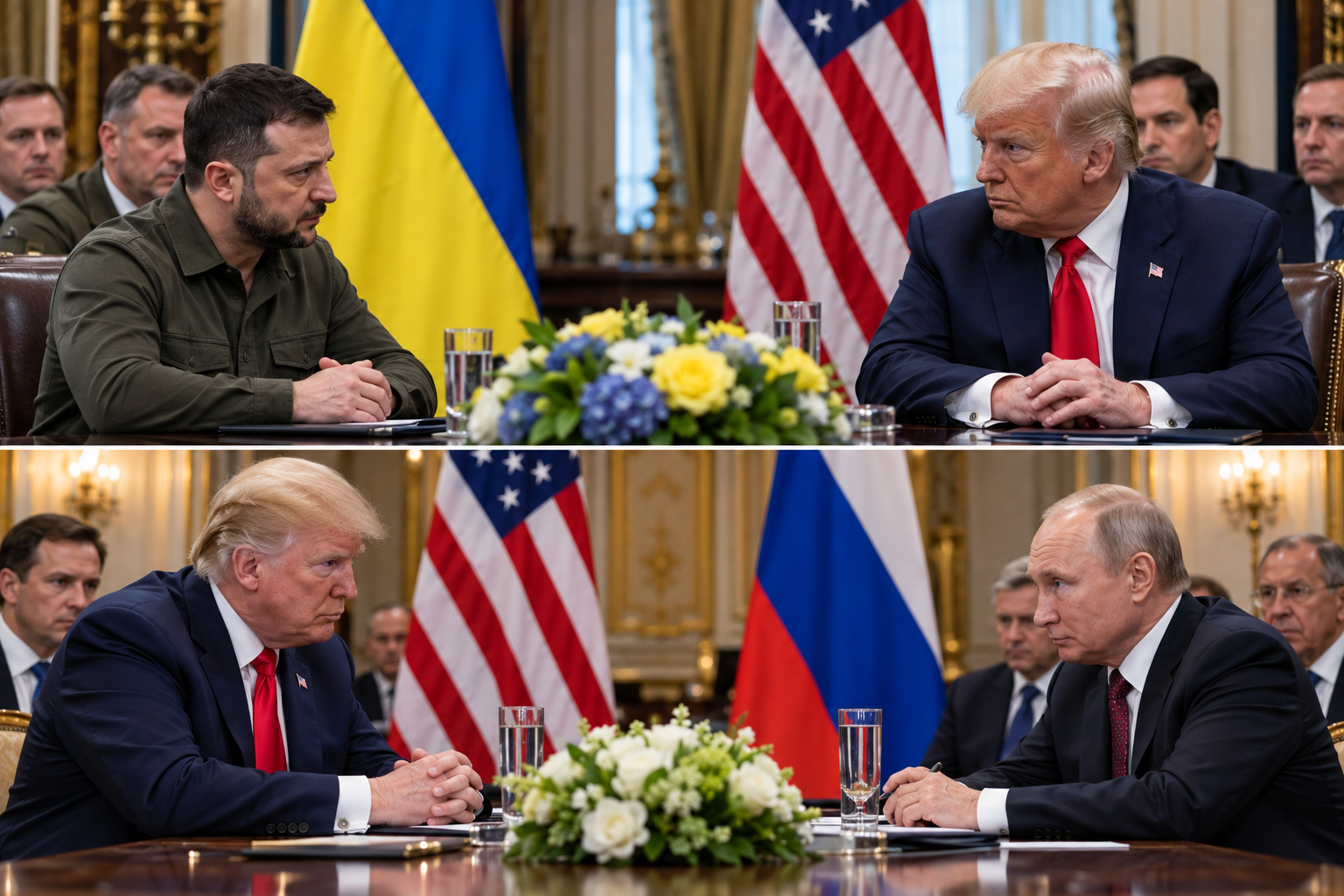
President Donald Trump’s approach to the Russia-Ukraine war is facing growing criticism after he publicly demanded concessions from Ukrainian President Volodymyr Zelenskyy, negotiated a Russian diesel supply arrangement with Vladimir Putin, and waived major Russia-related sanctions provisions approved by Congress.
The decisions have raised a politically charged question in Washington: Is Trump applying more pressure to the country defending itself than to the country that launched the invasion?
The answer is more complicated than a simple yes or no. But the October developments have given critics several concrete decisions to challenge.
1. Trump Turns Up the Pressure on Zelenskyy
The confrontation intensified on October 10, 2026, when Trump publicly suggested that Ukraine should replace Zelenskyy with a leader more willing to reach an agreement with Moscow.
Trump also demanded that Kyiv stop striking Russian oil refineries, arguing that the attacks were affecting international fuel supplies and American consumers.
The remarks followed Zelenskyy’s criticism of a new arrangement between Washington and Moscow involving Russian diesel exports. The Ukrainian president described the decision as unfair and warned that easing restrictions on Russian energy could benefit the Kremlin while the war continued.
On October 19, Trump again questioned whether Zelenskyy should remain the person negotiating for Ukraine, telling reporters that perhaps someone else should represent Kyiv.
The comments created fresh uncertainty about the relationship between the two governments. Reuters reported on Trump’s statements and the dispute.
2. The Diesel Deal With Putin Raises Questions
On October 9, Trump announced that Russia had agreed to supply more than 300,000 metric tons of diesel to American and international markets. He also described additional shipments planned for November and afterward.
The U.S. Treasury Department issued a temporary license allowing Russian diesel imports through April 7, 2027.
Trump presented the arrangement as an effort to increase fuel availability and reduce prices for American farmers, truckers, and businesses. However, the decision immediately generated criticism because Russian energy revenues help support Moscow’s economy during the war.
Zelenskyy argued that the arrangement effectively gave Putin an economic benefit while Russian attacks against Ukraine continued.
The central disagreement is whether the diesel arrangement creates useful diplomatic leverage—or provides Moscow with additional revenue without securing meaningful concessions. Reuters reported the details of the announcement and the Treasury license.
3. Trump Waives Sanctions Approved by Congress
Another major controversy followed on October 16.
In September, Trump had signed the Lindsey O. Graham Sanctioning Russia and Iran Act of 2026 into law. The legislation established additional sanctions, restrictions, and tariff provisions targeting Russia-related activity.
However, an executive order issued on October 16 waived major provisions of the new law before they were scheduled to take effect.
Trump’s administration said the decision was necessary to protect ongoing diplomatic efforts and avoid disrupting negotiations with Russia.
Importantly, the order did not erase every existing U.S. sanction against Russia. It waived specified provisions of the new legislation while preserving measures imposed under earlier executive orders.
Nevertheless, the timing triggered criticism from lawmakers who had supported the legislation specifically to increase economic pressure on Moscow. The White House published the October 16 executive order.
4. Washington Is Divided Over Trump’s Approach
The disagreement is no longer limited to Kyiv and the White House.
Reuters reported on October 22 that Trump’s Russia policy had generated bipartisan opposition in Congress. Some Republican lawmakers expressed concern about easing restrictions on Moscow while publicly criticizing Ukraine.
House Speaker Mike Johnson, despite being a close political ally of Trump, said lawmakers understood that Putin could not be trusted and needed to examine the consequences of putting the new sanctions on hold.
Democratic lawmakers also called for stronger support for Ukraine and questioned whether the administration’s decisions were weakening American leverage.
The debate now concerns not only the war itself but also Congress’s role in shaping U.S. foreign policy toward Russia.
5. Has Trump Really Never Pressured Putin?
The claim that Trump has never pressured Putin is not entirely accurate.
In July 2025, Trump threatened severe secondary tariffs against Russia and its trading partners if an agreement to end the war was not reached within 50 days. He has also publicly criticized Putin at different points during his presidency.
Furthermore, the Graham Act signed in September 2026 initially established additional economic penalties against Russia-related activity.
However, critics argue that threats and legislation matter less if they are repeatedly delayed, waived, or softened before producing meaningful pressure.
Trump and his administration offer a different explanation: they believe economic incentives and direct negotiations may encourage Moscow to reach an agreement. Secretary of State Marco Rubio said the administration wanted time to evaluate the potential economic effects of the sanctions and tariffs before deciding on further action.
6. The Question Facing American Leadership
The dispute reflects two competing approaches to ending the war.
Trump’s supporters argue that direct negotiation, economic flexibility, and pressure on both governments may create opportunities for a settlement.
Critics believe that pressuring Kyiv to accept concessions while easing restrictions on Moscow risks rewarding Russian aggression and leaving Ukraine in a weaker negotiating position.
The question is not simply whether Trump criticizes Zelenskyy or Putin more often. It is whether American policy applies meaningful pressure to both governments and produces conditions for a lasting peace.
As negotiations continue, that question will remain central to the debate over U.S. leadership, American credibility, and Washington’s responsibilities toward Ukraine.



