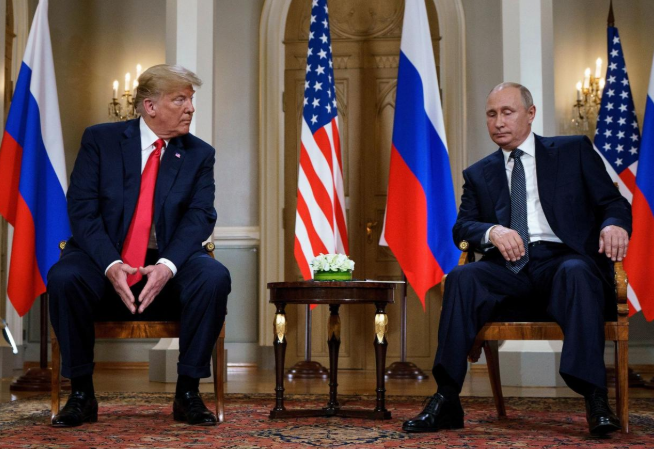
British billionaire and Virgin Group founder Sir Richard Branson has publicly criticized President Donald Trump’s approach to Russia, accusing the administration of accommodating Vladimir Putin while creating uncertainty for Ukraine and America’s European allies.
In an October 18 LinkedIn post, Branson questioned why Trump appeared so willing to accommodate the Russian president and urged European governments to take a larger role in supporting Ukraine. His criticism followed disputes over Russian diesel exports, satellite communications, and warnings of incoming Russian missile attacks.
1. Branson Questions Trump’s Relationship With Putin
Branson’s criticism was unusually direct. He described the Trump administration as an “enabler of autocrats and dictators” and questioned how America’s traditional allies could continue trusting Washington during a period of war and uncertainty.
“What is it about Putin that makes President Trump fawn over him?” Branson asked in his post.
His comments came after several earlier LinkedIn statements criticizing Trump’s demands that Ukraine stop attacking Russian refineries and questioning remarks that appeared, in Branson’s view, to shift responsibility for the war toward Ukrainian President Volodymyr Zelenskyy.
The entrepreneur’s intervention added a prominent business voice to an increasingly contentious debate over American policy toward Moscow. However, Branson’s statements represent his political assessment, not an official position of the British government or Virgin Group.
2. The Russian Diesel Arrangement Becomes a Flashpoint
One of Branson’s central objections concerned a fuel arrangement announced by Trump on October 9 following a discussion with Putin.
Trump said Russia would initially supply more than 300,000 metric tons of diesel to American and international markets, with additional shipments planned. His administration also temporarily eased certain restrictions to allow the fuel trade.
Trump presented the arrangement as a way to increase supplies and help ease fuel-price pressures. Critics, including Branson, argued that allowing Russian fuel exports could provide Moscow with additional revenue while its war against Ukraine continued.
The disagreement illustrates the competing priorities facing Washington: managing energy costs and pursuing negotiations while maintaining economic pressure on Russia.
3. Starlink and Starshield Raise Security Concerns
Branson also criticized reported restrictions affecting Starlink and Starshield, satellite communication technologies used in Ukraine.
The issue became especially controversial after Reuters reported on October 16, citing two U.S. officials and a Western official, that an order to limit military-grade Starshield services for Ukraine had originated inside the White House.
Ukrainian officials said restrictions affecting satellite connectivity interfered with military communications and some drone operations. However, the responsibility and technical circumstances were disputed.
SpaceX chief executive Elon Musk acknowledged that the company had throttled Starlink service, citing alleged violations of its terms of service, which Ukrainian officials denied. Musk said Starshield changes were controlled by the U.S. government. Trump denied ordering restrictions.
On October 28, the Associated Press reported that the Pentagon inspector general had declined a bipartisan Senate request to investigate the disruptions, referring the matter to the Air Force instead.
4. Did Ukraine Lose Early Warning of Russian Missile Attacks?
Another particularly serious allegation concerned American intelligence and missile-launch warnings.
Branson argued that restrictions on satellite communications and failures to provide advance warnings had contributed to Ukrainian civilian deaths.
A separate BBC report on October 19 quoted a Ukrainian presidential adviser who said people had died because Ukraine lacked reliable advance warnings of Russian missile attacks.
However, the White House said there had been no changes to intelligence-sharing with Ukraine. Public reporting has not established a definitive independent finding connecting a specific U.S. decision to particular civilian deaths.
The distinction matters because satellite connectivity and missile-warning intelligence are different capabilities. Both are important to Ukrainian defense, but restrictions affecting one do not automatically prove that the other was deliberately withheld.
5. Branson Calls on Europe to Do More
Branson’s message was also directed toward European leaders. He argued that Europe should become more capable of defending itself instead of depending entirely on Washington’s decisions.
He specifically called for European governments to consider transferring frozen Russian state assets to Ukraine and supplying advanced weapons, including Germany’s Taurus cruise missiles.
The frozen-assets proposal remains politically and legally complicated. European governments have immobilized approximately €210 billion in Russian central-bank assets, much of it held in Belgium. Questions remain over how the money could legally be used and which institutions should control it.
Branson’s proposal therefore reflects a broader debate among European governments, rather than an agreed policy or an imminent transfer.
6. What Branson’s Criticism Means for the West
The dispute highlights a difficult question for Washington and its European partners: can the United States negotiate with Moscow while maintaining the confidence of countries that depend on American security support?
Trump’s administration has defended its approach as an effort to find diplomatic and economic incentives that could move Russia toward negotiations. Critics argue that commercial concessions and uncertainty over military assistance could weaken Ukraine’s negotiating position.
Branson is not a government official, and his criticism does not determine U.S. policy. But his comments reflect concerns that extend beyond Ukraine’s leadership to the future of NATO cooperation and Europe’s security.
The central issue is whether diplomatic engagement with Putin can produce a lasting settlement without undermining Ukraine’s sovereignty or weakening confidence among America’s allies.



