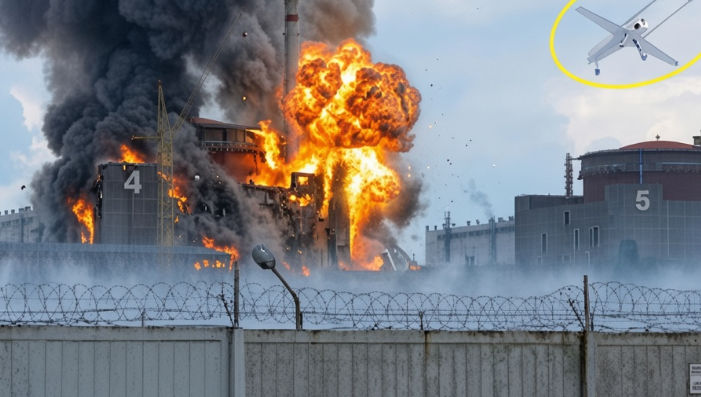
MOSCOW / KYIV — October 27, 2026 — Ukraine appears to have damaged a major Russian military facility near Moscow in a long-range drone operation that unfolded during a night of intense attacks between the two countries.
The reported strike targeted Russia’s 75th Arsenal in Serpukhov, approximately 60 miles south of Moscow. The attack came as Russian forces launched a major missile barrage against Kyiv, highlighting the growing reach of Ukraine’s long-range weapons and the continuing escalation of aerial warfare.
The incident occurred overnight on October 22, but new satellite-image analysis published October 27 has provided additional evidence of damage at the Russian facility.
Satellite Images Show Signs of Fire
According to The Insider, satellite images captured on October 26 showed burn marks and other signs of fire at several locations inside the 75th Arsenal.
Greenpeace analysts who examined the imagery identified apparent fire damage near a hangar and other sections of the installation. The facility has become a major Russian storage center for air-defense equipment, including systems used to protect military infrastructure.
Earlier reports by The Kyiv Independent, citing eyewitness accounts and independent Russian outlet Astra, said drones followed by missiles struck the site overnight on October 22.
The installation reportedly stores and supports equipment used by Russia’s armed forces. Damage to facilities maintaining air-defense systems could create logistical challenges, although the full operational impact has not been independently established.
Ukraine’s Attack Claims Remain Partly Unverified
Russia’s air-defense response was substantial. Moscow Mayor Sergei Sobyanin claimed that 630 Ukrainian drones headed toward the Moscow region, with most intercepted. Russia’s Defense Ministry later reported that more than 800 drones had been downed across the country.
However, those figures reflect Russian official claims and have not been independently verified in full.
The supplied account also describes a complicated sequence involving Liutyi drones, FP-5 Flamingo cruise missiles and multiple Russian air-defense systems. But the precise number of weapons launched, the interception sequence and claims that a particular drone reached an ammunition storage area have not been established by the independent reporting reviewed for this article.
Kyiv Faces Another Russian Missile Barrage
The fighting was not limited to Russian territory.
During the same overnight period, Russian forces attacked Kyiv with ballistic missiles and drones. Ukrainian President Volodymyr Zelenskyy said Russia launched at least 21 ballistic missiles in three waves, damaging apartment buildings, energy facilities, transportation infrastructure and businesses.
The Associated Press reported at least four people killed across Ukraine and dozens wounded in the broader attacks, including casualties in Kyiv and the Kharkiv region.
The simultaneous attacks demonstrated how both countries continue to use long-range weapons against targets far beyond the immediate front lines.
What the Serpukhov Strike Could Mean
The 75th Arsenal is significant because of its reported role in storing and supporting Russian air-defense equipment. Satellite evidence of fires suggests that the October 22 operation caused physical damage, but it does not establish how many systems or weapons were destroyed.
For Ukraine, striking military infrastructure deep inside Russia could place additional pressure on Moscow’s logistics and air-defense networks. For Russia, the attack raises questions about protecting important military storage facilities outside the immediate combat zone.
The confirmed picture remains incomplete: Ukraine’s reported strike near Serpukhov is supported by eyewitness reporting and satellite-image analysis, but many of the specific battlefield claims remain unverified.
As the war continues, the ability of both sides to strike deep behind enemy lines is becoming an increasingly important part of the conflict.



