By World News Desk | October 7, 2026 | Politics & World News
KYIV — Ukraine launched one of the largest drone attacks of the war against Russia this week, sending nearly 900 drones toward targets across Russian territory as Ukrainian officials warned that Moscow was preparing a major retaliatory aerial assault.
Russia said its air defenses intercepted the overwhelming majority of the Ukrainian drones, including hundreds headed toward the Moscow region. Russian officials reported deaths and damage, while Ukrainian President Volodymyr Zelenskyy warned Tuesday that updated intelligence showed Russia preparing a “massive attack” against Ukraine. AP News
By Wednesday, the retaliation had arrived. Russia launched a large combined barrage of drones and missiles against multiple parts of Ukraine, killing at least eight people, according to Ukrainian officials cited by Reuters and The Associated Press. Reuters
The rapid escalation highlights how the war is increasingly being fought through long-range strikes far beyond the battlefield.
Ukraine Sends Hundreds of Drones Toward Moscow
Russia’s Defense Ministry said nearly 900 Ukrainian drones were intercepted overnight across multiple regions, as well as over Russian-occupied Crimea and the Sea of Azov, according to AP.
Moscow Mayor Sergei Sobyanin said more than 650 drones were directed toward the capital region between Monday evening and Tuesday morning. He reported that 105 were brought down as they approached Moscow, followed by another 68 during daylight hours. AP News
The scale of the attack was striking.
Ukraine has increasingly used domestically produced long-range drones to strike Russian military, energy and logistics infrastructure. Kyiv has also stepped up attacks on oil refineries and fuel-storage facilities as it seeks to weaken one of the main economic foundations supporting Russia’s war effort.
Russian authorities reported two deaths in the Moscow region. Governor Andrei Vorobyov said seven people were injured and that dozens of homes and vehicles were damaged. Reuters
A major fuel storage facility in the Moscow area was also reportedly hit, although Russian authorities had not officially confirmed the damage and Reuters said it could not independently verify videos showing a large fire there. Reuters
Why Ukraine Is Targeting Russia’s Energy Infrastructure
Kyiv has increasingly focused its long-range campaign on Russian oil and fuel infrastructure.
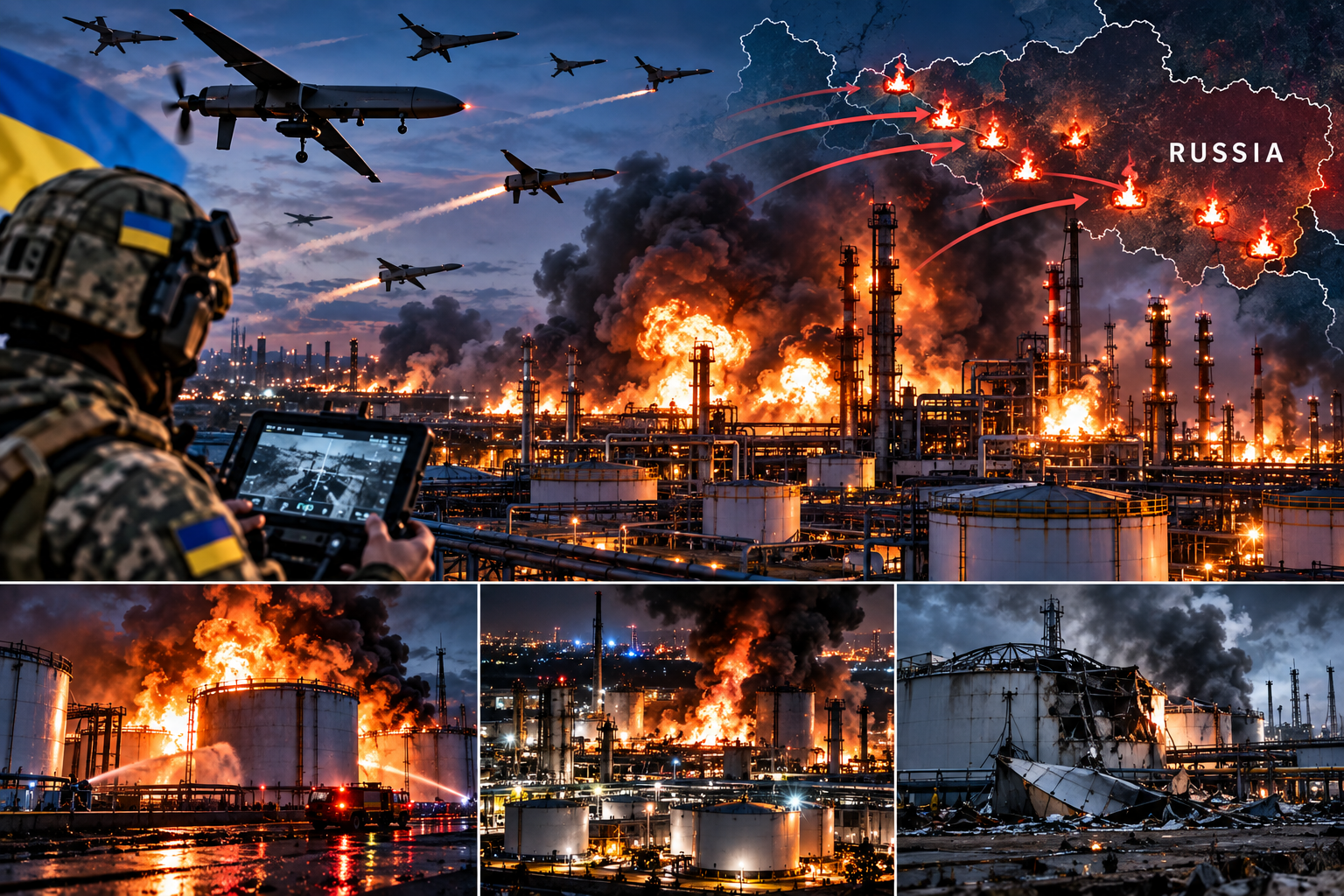
Ukrainian officials say their attacks have disabled a large share of Russia’s refining capacity. That claim has not been independently verified, but the strikes have clearly created pressure on Russian fuel supplies. Moscow has imposed restrictions on some fuel exports, while President Vladimir Putin has acknowledged an economic cost from Ukraine’s attacks. AP News
The strategy reflects a broader shift in the war.
With the front line largely stalled, both sides are trying to damage the infrastructure that keeps the other’s military operating. Ukraine hopes attacks on refineries and fuel depots will reduce Moscow’s ability to supply its forces, while Russia has increasingly targeted Ukrainian energy, transportation and industrial infrastructure. Reuters
Zelenskyy Warns Russia Is Preparing a Major Strike
As Ukrainian drones were hitting Russia, Zelenskyy warned that his government had received new intelligence indicating that Moscow was preparing a large-scale attack.
“We are preparing countermeasures,” Zelenskyy said Tuesday, emphasizing that Ukraine’s ability to respond depends heavily on the weapons and air-defense systems available to it.
He also appealed directly to the United States and European countries for additional defensive assistance. Reuters
Ukraine has faced persistent shortages of air-defense ammunition, particularly for its U.S.-made Patriot systems. Ukrainian officials have warned that Russian ballistic missiles remain particularly difficult to intercept and that Moscow has maintained a significant missile stockpile. AP News
Russia’s Retaliation Hits Kyiv and Other Cities
The feared attack came Wednesday.
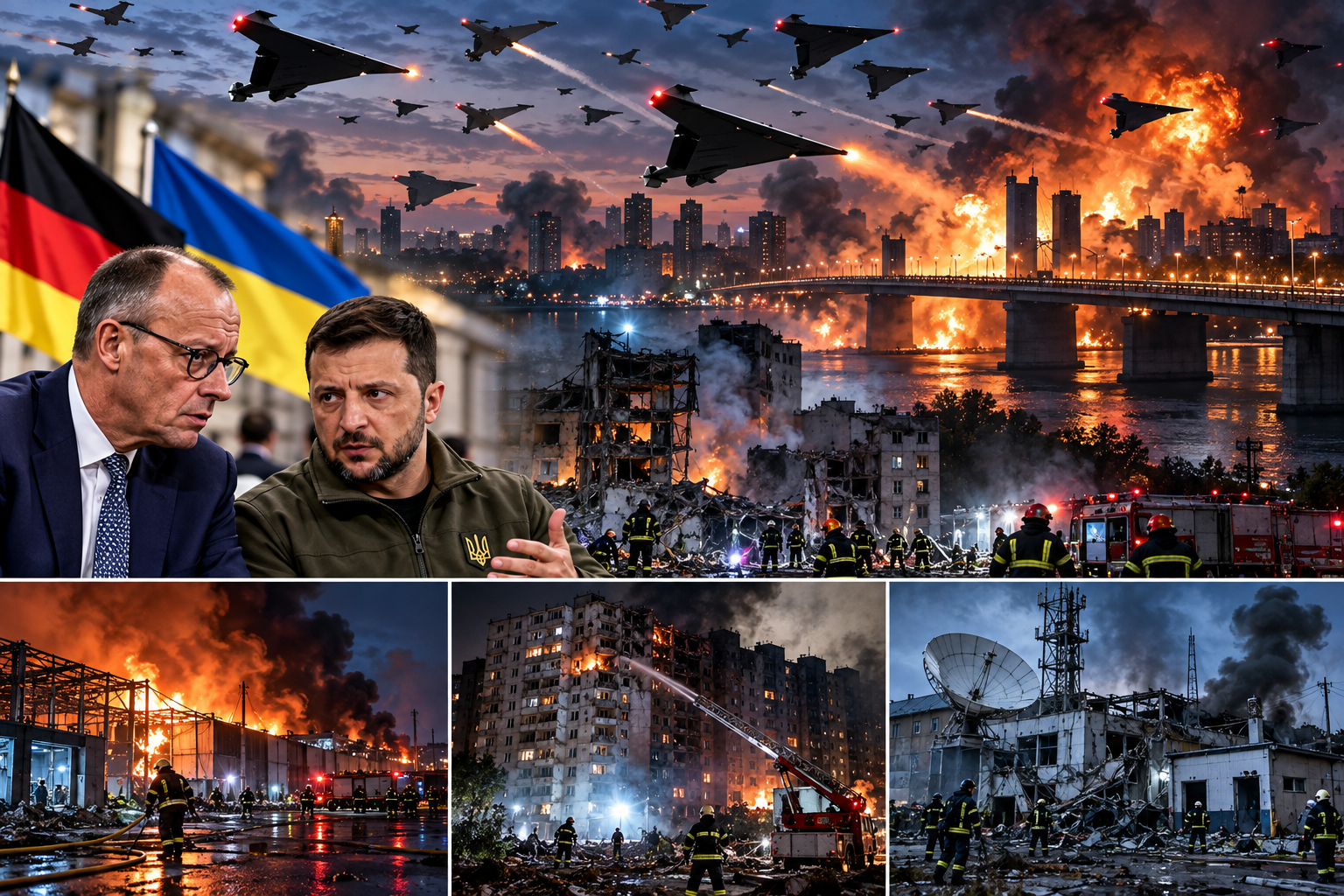
Ukraine’s air force said Russia launched 130 drones and 48 cruise missiles, along with ballistic missiles, against several regions. Ukrainian officials reported that 161 aerial targets were intercepted.
At least eight people were killed, including two in Kyiv, four in the northern city of Pryluky and two in the Poltava region. A missile struck a five-story apartment building in Pryluky, killing four people and injuring 20, according to local authorities. Reuters
Kyiv residents sheltered in underground Metro stations as explosions shook the capital overnight.
Russia said its forces were targeting military-industrial sites, including facilities linked to the Ukrainian defense company Fire Point, which produces missiles and long-range drones. Those Russian claims have not been independently verified. Reuters
A Dangerous Cycle Is Accelerating
The exchange illustrates a dangerous pattern: Ukraine expands its long-range strikes inside Russia, Moscow responds with larger attacks on Ukrainian cities and infrastructure, and both sides attempt to demonstrate that escalation will carry a price.
The growing reach of the attacks also increases the risk of wider economic disruption.
Oil facilities, ports, bridges, warehouses and transportation networks have all become important targets, meaning the consequences extend beyond military positions and increasingly affect civilian life and commercial activity. Reuters
For Ukraine, the immediate concern is whether it has enough air-defense ammunition to withstand repeated Russian barrages.
For Russia, the challenge is protecting a huge territory against increasingly sophisticated Ukrainian drones.
The Bottom Line
Ukraine’s huge drone assault on Russia was followed within days by the massive Russian aerial attack that Kyiv had warned was coming.
The latest escalation shows that neither side is limiting the war to the front line. Ukraine is reaching deeper into Russia with long-range drones, while Moscow continues to launch waves of missiles and drones against Ukrainian cities and strategic infrastructure.
For civilians on both sides, the message is increasingly clear: the war’s most dangerous attacks may be coming from hundreds of miles away.