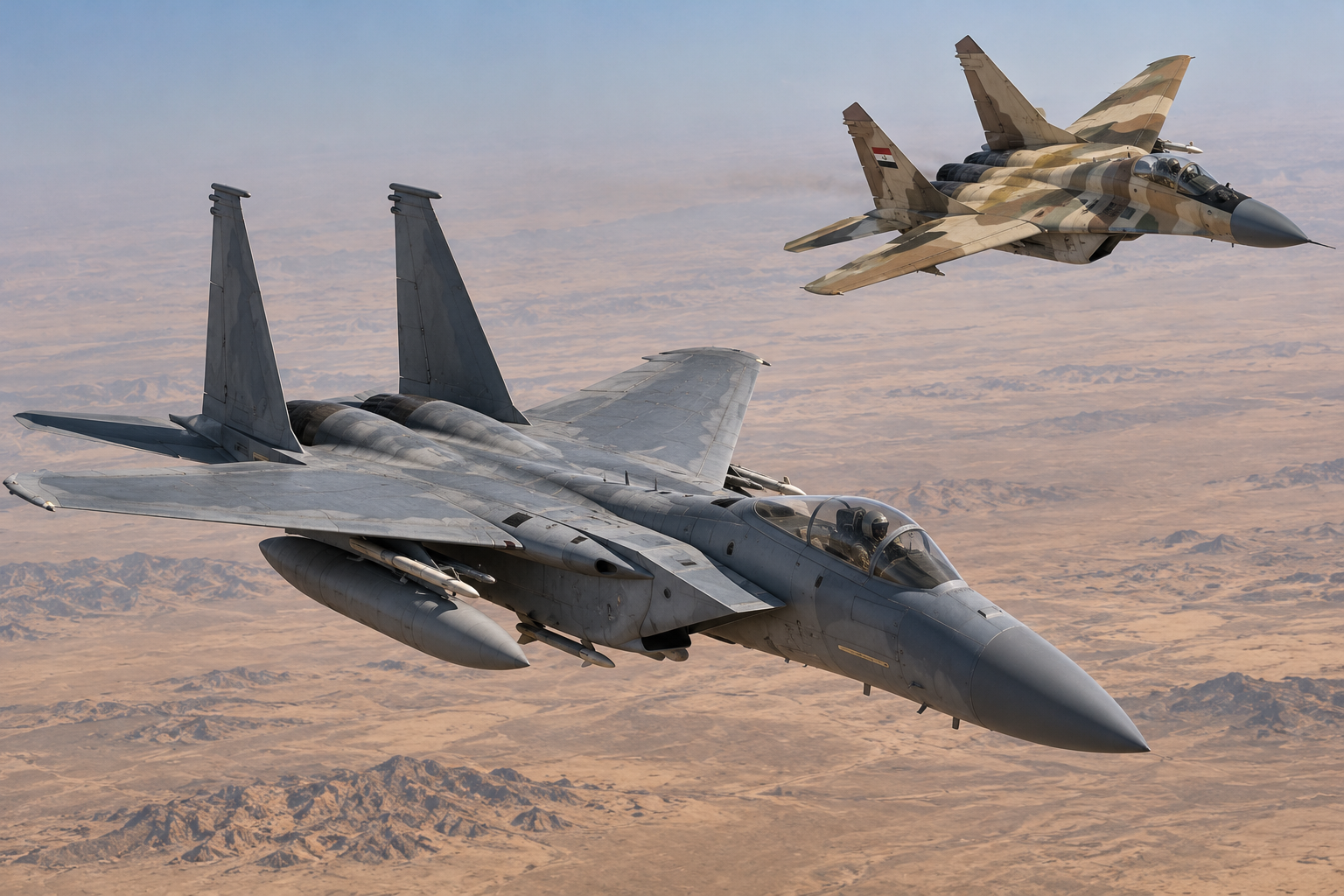
On January 19, 1991, during Operation Desert Storm, two American F-15C Eagle pilots confronted Iraqi MiG-29 Fulcrum fighters in one of the Gulf War’s most memorable aerial engagements. Captain Cesar “Rico” Rodriguez and Captain Craig “Mole” Underhill faced radar threats, surface-to-air missile danger, and a close-range turning fight that pushed the aircraft dangerously close to the desert floor.
The encounter is sometimes described as an ambush. Historical accounts indicate the Iraqi fighters may have been attempting to draw the Eagles toward an Iraqi missile-defense zone, although the pilots’ precise intentions cannot be established with certainty. What followed demonstrated how radar awareness, electronic countermeasures, wingman coordination, and aircraft maneuverability could determine the outcome of a modern air battle.
1. The Opposing Aircraft: F-15C Eagle vs. MiG-29 Fulcrum
The F-15C Eagle, built by McDonnell Douglas, was designed specifically for air superiority. Its combination of powerful engines, aerodynamic performance, radar, and air-to-air weapons was intended to help American pilots detect and defeat enemy aircraft before an engagement became a close-range fight.
The Soviet-designed MiG-29 Fulcrum was also a modern fighter, developed for frontline air combat. At the time, American assessments regarded the MiG-29 as broadly comparable to the F-15 in technological generation. However, aircraft performance on paper does not reveal every operational difference. Equipment configuration, missile availability, pilot training, tactical coordination, and situational awareness all influence combat effectiveness.
2. Radar, Warning Systems, and the Threat of an Ambush
The F-15C’s AN/APG-63 radar was central to its air-superiority mission. The radar could detect and track airborne targets, including aircraft flying at lower altitudes against background terrain. The Eagle’s cockpit displays and integrated weapons controls helped pilots maintain awareness while preparing to engage.
Electronic warfare equipment provided additional warning and countermeasure capabilities. During the January 19 encounter, Rodriguez and Underhill were tracking Iraqi fighters when warnings indicated that surface-to-air missile systems were beginning to track them. The situation suggested a dangerous possibility: the Iraqi aircraft could be trying to pull the American fighters toward an area defended by ground-based missiles.
An airborne warning and control system, or AWACS, then alerted the F-15 pilots to additional enemy aircraft approaching from another direction. This external surveillance and coordination helped the Eagles respond to the developing engagement rather than relying entirely on their own radar picture.
3. The AIM-7 Sparrow: The First MiG-29 Is Destroyed
The encounter became urgent when a MiG-29 established a radar lock on Rodriguez’s F-15C. Rodriguez maneuvered defensively and used electronic countermeasures while directing Underhill to engage the threat.
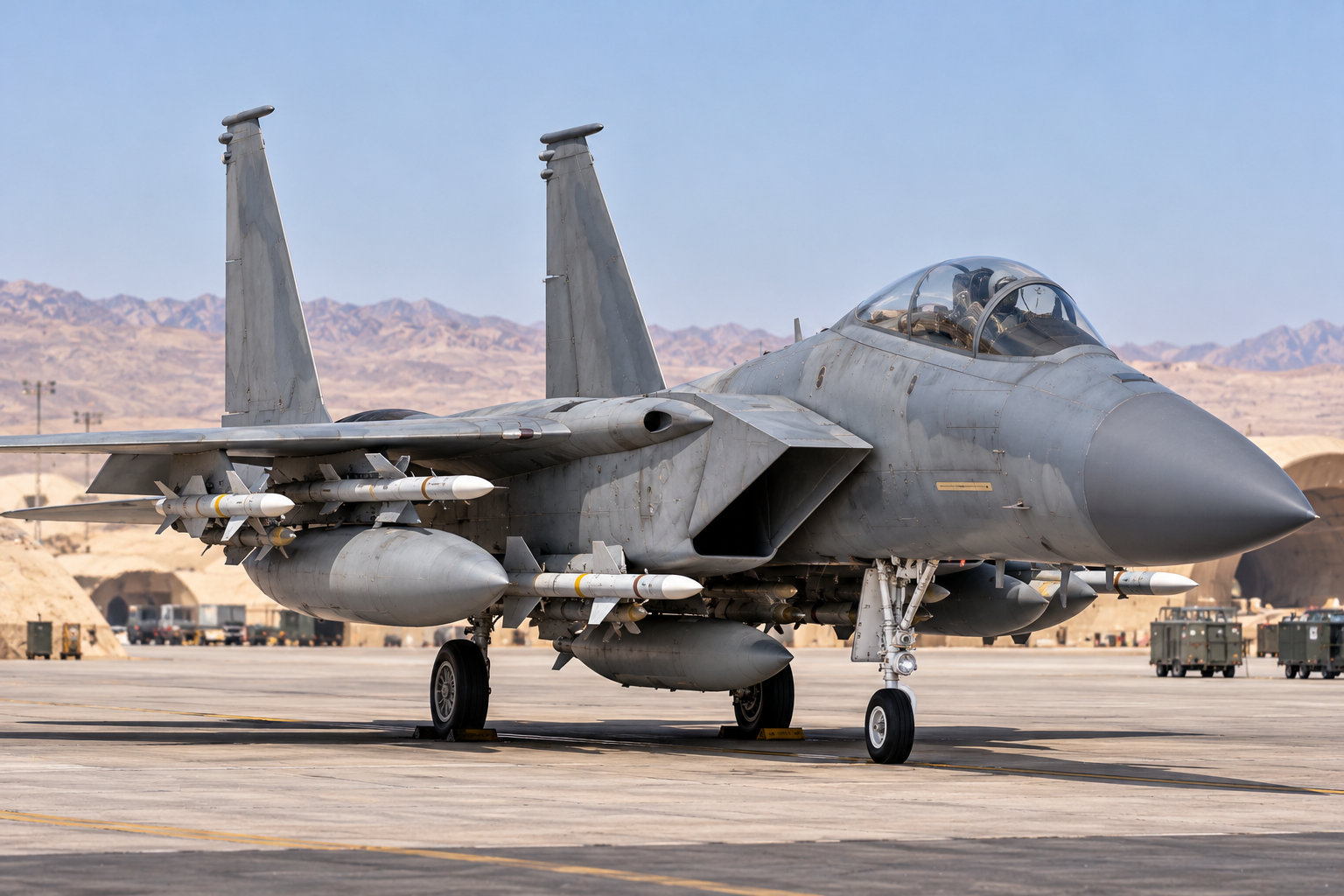
Underhill launched an AIM-7 Sparrow, a radar-guided air-to-air missile designed for medium-range engagements. Unlike a heat-seeking Sidewinder, the Sparrow used radar guidance to reach its target. Its successful use depended on the aircraft’s fire-control systems, the missile’s guidance process, and the geometry of the engagement.
The missile struck the Iraqi MiG-29, destroying it. The result illustrated an important principle of fighter tactics: a pilot under threat does not necessarily have to defeat the opposing aircraft alone. Defensive maneuvering by one aircraft can create an opportunity for its wingman to make the decisive attack.
4. A Second MiG-29: A Dangerous Low-Altitude Turning Fight
The encounter was not over. Additional contacts appeared, and Rodriguez needed to visually identify another aircraft before treating it as hostile. Once he confirmed the MiG-29, the two fighters entered a close turning engagement.
The fight began at approximately 8,000 feet. Rodriguez used the F-15C’s acceleration and turning performance to maintain the contest, while both pilots descended rapidly. According to Rodriguez’s later recollection, the aircraft were eventually below 300 feet above the ground.
The Iraqi pilot attempted a descending maneuver commonly called a Split-S, apparently seeking to escape the engagement. At such low altitude, however, there was insufficient height to recover safely. The MiG-29 struck the ground.
Rodriguez was credited with the victory despite not firing a missile at the second aircraft. The pilot’s handling of the F-15C, the geometry of the turning fight, and the opponent’s final maneuver all contributed to the result.
5. Why the Engagement Matters
The encounter demonstrated that air combat is not decided by aircraft specifications alone. The MiG-29 was a serious threat, and the F-15 pilots faced both airborne opponents and ground-based air defenses. Their response relied on coordination, threat awareness, and the ability to combine missile employment with close-range maneuvering.
The broader Gulf War air campaign also showed the importance of beyond-visual-range combat. The U.S. Air Force’s F-15C force used radar and radar-guided missiles to engage many Iraqi aircraft before a turning fight developed. Yet Rodriguez’s second encounter showed that close-range combat had not disappeared; it could still emerge when identification requirements and rapidly changing tactical circumstances brought opposing fighters together.
Conclusion
The January 19, 1991 engagement was not a successful ambush against the F-15s. It was a dangerous encounter in which Iraqi fighters and ground-based defenses threatened American aircraft, but the Eagles ultimately prevailed.
Underhill’s AIM-7 Sparrow destroyed one MiG-29, while Rodriguez’s maneuvering forced the second into a fatal low-altitude descent. The incident remains a compelling example of how sensors, electronic warfare, wingman teamwork, weapons integration, and pilot judgment combine to shape modern air combat.