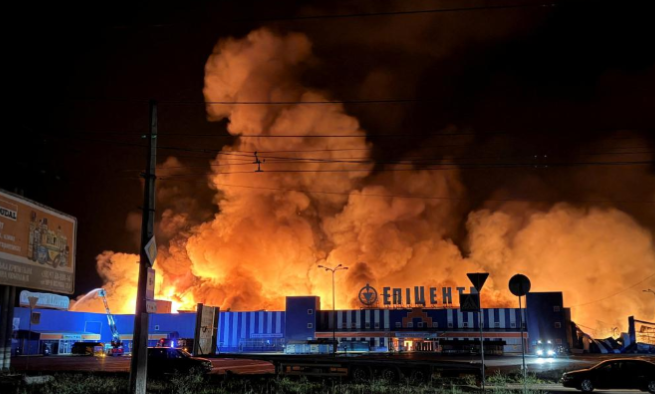
A Russian drone attack struck a major Epicentr home-improvement store in Uman, Cherkasy Oblast, triggering a massive overnight fire. Emergency crews eventually extinguished the blaze, while additional attacks damaged homes, a hotel, and university buildings across the city.
UMAN, UKRAINE
A massive fire destroyed large sections of an Epicentr hypermarket in the central Ukrainian city of Uman after Russian attack drones struck the commercial property overnight on October 20–21.
Dramatic photographs published by Ukrainian authorities showed towering flames and thick clouds of smoke rising above the shopping center as emergency crews worked to contain the blaze.
The attack was part of a broader wave of Russian strikes targeting civilian businesses, infrastructure, and residential areas across Ukraine.
According to Cherkasy Regional Military Administration head Ihor Taburets, Russian drones targeted several locations in Uman during the night.
Although Taburets initially did not identify the commercial property by name, photographs released by the regional administration and examined by Ukrainian news organizations identified it as an Epicentr home-improvement hypermarket.
Firefighters Face Dangerous Conditions
The fire spread through a substantial portion of the retail complex, creating difficult conditions for emergency responders.
According to Ukraine’s State Emergency Service, firefighting operations were complicated by the size of the blaze and the large quantity of combustible materials inside the building.
The danger was increased by the possibility of additional Russian attacks.
Emergency personnel were forced to withdraw temporarily to safer positions when further strikes threatened the area.
Firefighters eventually brought the blaze under control, and the State Emergency Service announced that the operation had been completed on October 21.
A specialist pyrotechnics team subsequently inspected the property for unexploded ammunition and other explosive hazards.
Authorities reported no casualties at the hypermarket itself.
Other Civilian Locations Were Also Damaged
The attack extended beyond the shopping center.
A private residence was destroyed, while a nearby hotel sustained damage from a blast wave.
During additional attacks on October 21, drones also damaged buildings at Uman National University, including student accommodation.
The human toll across the city increased as the attacks continued.
Ukraine’s State Emergency Service eventually reported five people injured in the wider series of strikes, with two requiring hospitalization.
The incidents demonstrated the danger facing residents even in locations outside the immediate front lines.
A Wider Campaign Against Ukrainian Businesses
The attack on the Uman Epicentr store came amid repeated Russian strikes against the company’s commercial and logistics infrastructure.
On October 20, another Epicentr store in Dubno, Rivne Oblast, was hit by drones.
The following days brought additional attacks against commercial facilities in other Ukrainian regions.
On October 14, a major Epicentr distribution center in Khmelnytskyi was destroyed after repeated drone strikes, according to the company’s public statements.
These attacks have raised concerns about the long-term damage to Ukraine’s civilian economy, supply chains, employment, and access to everyday household goods.
Investigation and Recovery Continue
The immediate firefighting operation in Uman has concluded, but the damage to the commercial complex represents another setback for Ukrainian businesses operating during the war.
The incident also highlights the risks faced by firefighters and emergency personnel who must sometimes suspend rescue and recovery operations because of continuing aerial threats.
For residents of Uman, the destruction of a major shopping destination is another reminder of how the war continues affecting everyday civilian life.
The fire was extinguished, but the damage remains. As Ukraine continues defending its cities against Russian attacks, the safety of civilians and the survival of essential commercial infrastructure remain major concerns.



