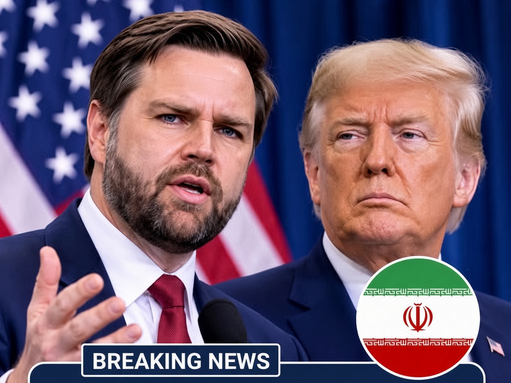
Vice President JD Vance has assured Americans that President Donald Trump will not allow the Iran conflict to become another prolonged military engagement. However, his latest remarks offer no specific withdrawal date or clear conditions for ending the fighting as American military forces continue expanding their presence in the Middle East.
WASHINGTON, D.C. — November 17, 2026
Vice President JD Vance is offering new assurances about the future of America’s military involvement in Iran, insisting that President Donald Trump will not allow the conflict to turn into another lengthy American war.
During a November 16 interview with Fox News host Laura Ingraham, Vance defended Trump’s handling of the conflict and rejected criticism that the United States could become trapped in another open-ended military commitment.
“We are not going to allow this to become a 10- or 15-year commitment, or frankly, even a two-year commitment,” Vance declared.
He also expressed confidence that Trump would eventually bring the conflict to an end with what he described as “great results” for the American people.
His comments immediately raised an important question: How does the administration intend to end the war, and when will American forces finally come home?
Vance Promises No ‘Forever War’
During the interview, Vance acknowledged that some political and foreign policy critics want the United States to maintain military pressure against Iran indefinitely.
He rejected that approach, arguing that the administration had promised Americans there would be no more prolonged overseas military commitments.
Vance also insisted that there was no disagreement between himself and Trump over the direction of the conflict.
He described the president as having several options, including ending military operations immediately or pursuing additional military and diplomatic pressure against Tehran.
However, he did not identify a specific date for withdrawing American forces or outline the conditions that would determine when the mission had been successfully completed.
The Iran Conflict Is Still Escalating
Despite the administration’s assurances, the military situation remains serious.
According to the Associated Press on November 17, the war has entered its ninth month, and a third American aircraft carrier, the USS Theodore Roosevelt, has arrived in the Middle East with thousands of additional troops.
The deployment gives Washington additional military options while the administration continues evaluating its strategy toward Iran.
The growing American military presence also highlights the difference between promising to avoid a prolonged war and actually establishing a timetable for ending one.
Rising Gas Prices Create Political Pressure
Vance also acknowledged that the Iran conflict has carried significant domestic political consequences.
During his interview, he admitted that higher gasoline and energy prices had created a political cost for the administration.
The disruption of commercial shipping through the Strait of Hormuz has contributed to concerns about global energy supplies, transportation costs, and economic uncertainty.
Vance has also previously blamed the Iran war for contributing to Republican losses in the November 3 midterm elections.
His latest comments appear aimed at reassuring Americans that the administration does not intend to maintain an indefinite military presence in the region.
What Happens Next?
The central question remains whether Washington can achieve its stated military and security objectives without extending the conflict.
Trump continues to hold authority over the administration’s military decisions, while Vance says he has confidence the president will eventually reach a resolution.
But the vice president has not specified what would constitute victory, when American troops would withdraw, or what Washington would do if negotiations fail.
For American families concerned about military casualties, energy prices, and another prolonged foreign conflict, those unanswered questions matter.
Vance has promised that Iran will not become another forever war. Now Americans are waiting to see whether the administration can turn that promise into a clear exit strategy.



