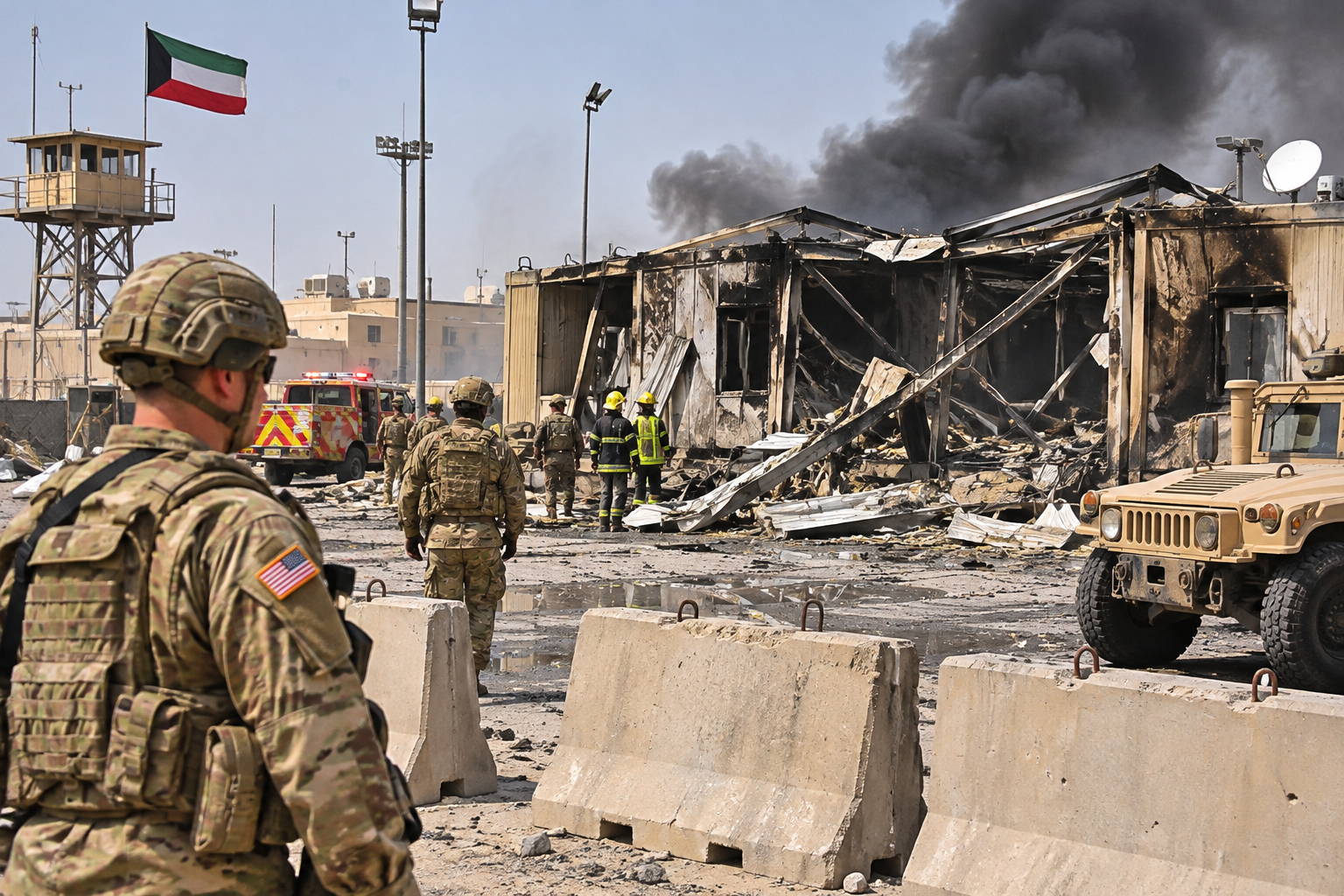
Army Major Stephen Ramsbottom, a survivor of the deadly March 1 drone attack in Kuwait, has filed whistleblower complaints alleging that military leaders ignored critical security warnings. His allegations are now raising serious questions about the Pentagon’s preparedness, troop protection, and accountability during the Iran war.
WASHINGTON, D.C. — November 17, 2026
An American soldier who survived one of the deadliest attacks on U.S. forces during the war with Iran is demanding answers from military leadership.
Army Maj. Stephen Ramsbottom has submitted a whistleblower complaint to congressional Armed Services Committee leaders, alleging that senior Army officials dismissed warnings about inadequate defenses at a military operations center in Kuwait before an Iranian drone attack killed six American soldiers.
The March 1 attack at Port Shuaiba also wounded dozens of service members, including Ramsbottom.
In an interview with CBS’s Norah O’Donnell for 60 Minutes, Ramsbottom described the incident as a failure involving the Army’s leadership and its preparation for modern drone warfare.
“We just did not plan this well, and this needs to be a lesson that we learn,” he said.
Warnings About Drone Attacks Were Allegedly Ignored
According to Ramsbottom’s complaint, the military installation lacked adequate protection against aerial attacks despite concerns raised before the war began.
He said he had warned senior officers, including Maj. Gen. John Hinson, that the facility did not appear sufficiently protected against Iranian drones.
Ramsbottom also said intelligence reports had identified Port Shuaiba as a potential Iranian target.
In the week before the attack, soldiers reportedly requested additional counter-drone equipment. Ramsbottom said the promised system never arrived.
The complaint also described serious shortcomings in emergency medical preparations.
According to the disclosure, the installation had no physician, no permanent medical aid station, and only one ambulance.
Some personnel reportedly described the operations center as a “trailer park.”
Six American Soldiers Lost Their Lives
The March 1 strike killed six Army Reserve soldiers assigned to the 103rd Sustainment Command.
The fallen service members were Capt. Cody Khork, Sgt. 1st Class Nicole Amor, Sgt. Declan Coady, Maj. Jeffrey O’Brien, Sgt. 1st Class Noah Tietjens, and Chief Warrant Officer 3 Robert Marzan.
The attack occurred during the opening days of the American military campaign against Iran.
Ramsbottom was inside the operations center when the drone struck. He suffered injuries but survived.
The tragedy became the deadliest single attack on American troops during the conflict and intensified questions about whether military personnel had been adequately protected.
Hegseth Previously Said the Facility Was Fortified
The new allegations directly challenge statements made by Defense Secretary Pete Hegseth one day after the attack.
At a March 2 Pentagon briefing, Hegseth acknowledged that a drone had penetrated American defenses and struck the operations center.
He described the installation as fortified, saying that powerful weapons could occasionally get through otherwise effective air defenses.
However, Ramsbottom’s account and other soldiers’ interviews suggest the facility may not have been adequately prepared for the specific threat posed by Iranian attack drones.
The Army has previously maintained that the location had layered defenses and sufficient bunker capacity. Its investigation was completed in June, but the full report has not been publicly released.
The Pentagon declined to comment on the specific allegations in Ramsbottom’s congressional complaint.
Congress and Pentagon Watchdogs Face New Questions
Ramsbottom’s attorneys submitted his complaint to the House and Senate Armed Services Committees on November 13.
His legal team also filed a separate complaint with the Pentagon inspector general on November 15, seeking an independent investigation.
Sen. Richard Blumenthal has requested a classified briefing from Hegseth and demanded access to all force-protection assessments concerning Port Shuaiba.
Democrats have indicated that investigations into the administration’s handling of the Iran war will become a major priority when they take control of both chambers of Congress in January 2027.
The questions now extend beyond one drone strike: Were intelligence warnings adequately considered? Why did requested defensive equipment reportedly fail to arrive? And could additional protection have saved American lives?
Six soldiers are gone. A wounded survivor is demanding answers. And the families of those who never came home are still waiting for a complete account of what happened.



