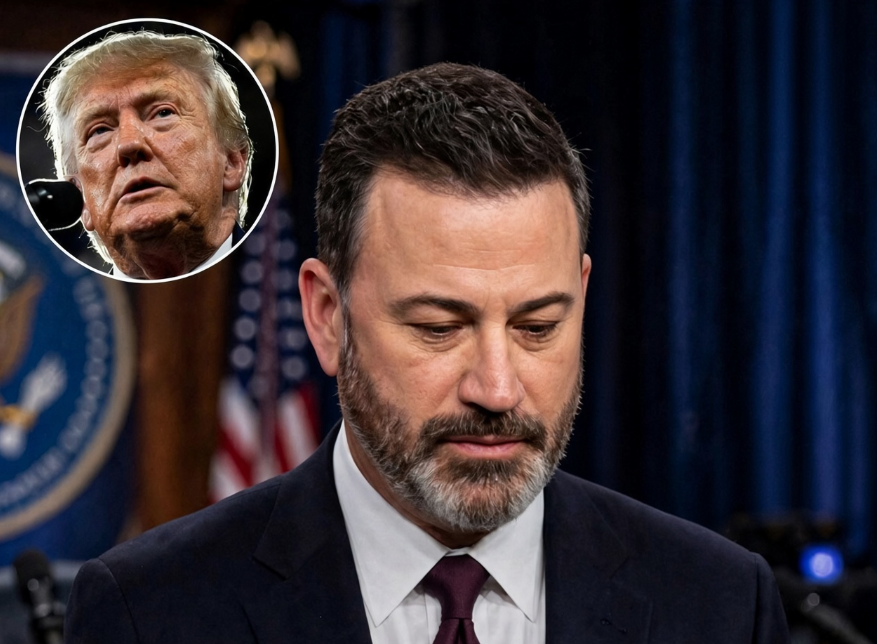
The late-night host used the fifth anniversary of the January 6 Capitol attack to criticize the Trump administration’s version of events, drawing attention to a controversial White House website and a commemorative plaque honoring the officers who defended Congress.
WASHINGTON, D.C. — November 17, 2026
Jimmy Kimmel used his nationally televised late-night show to deliver a pointed message about one of the most consequential days in modern American political history.
On January 6, 2026, marking five years since the attack on the U.S. Capitol, the comedian criticized what he described as an effort by President Donald Trump’s administration to rewrite the history of January 6, 2021.
Kimmel called the attack a “selfish, disgraceful, tyrannical and dangerous act” and warned Americans not to forget what happened.
“It’s very important that we do not forget that, that we don’t give in to this revisionist history,” he said during his monologue.
His remarks focused on two issues: the White House’s newly published account of January 6 and the continuing controversy surrounding a congressional plaque honoring the law enforcement officers who defended the Capitol.
Kimmel Targets the White House Website
Kimmel specifically criticized a new page published on the official White House website titled “January 6: A Date Which Will Live in Infamy.”
The administration’s version describes many individuals prosecuted over the Capitol attack as “patriotic citizens” who were merely trespassers or peaceful protesters.
It also argues that Democrats staged the real insurrection by certifying what the administration describes as a fraudulent election.
The website highlights Trump’s January 20, 2025, pardons and commutations for defendants charged in connection with January 6.
Kimmel challenged that description, arguing that it ignored the violence witnessed by millions of Americans during the attack.
His criticism reflected a broader national dispute over how the events of January 6 should be remembered and interpreted.
The Missing Capitol Police Plaque
Another major subject of Kimmel’s monologue was a commemorative plaque authorized by Congress in 2022 to honor the police officers who protected the Capitol during the attack.
The plaque was supposed to be installed at the western front of the Capitol in 2023, but it had still not been publicly displayed by the fifth anniversary.
Kimmel criticized House Speaker Mike Johnson for not overseeing its installation.
Johnson’s office argued that the plaque, as constructed, did not fully comply with the law because it listed responding law enforcement agencies rather than individually identifying the officers.
Two days after Kimmel’s comments, the Senate unanimously approved a resolution directing the Architect of the Capitol to display the plaque in a publicly accessible location in the Senate wing until a permanent location could be arranged.
The dispute demonstrated that the fight over January 6 involves not only competing political narratives but also questions about how the officers who defended the Capitol should be formally recognized.
Kimmel Later Criticizes Trump’s Military Ceremony Appearance
The January anniversary was not the only occasion when Kimmel criticized Trump during 2026.
On March 9, he separately addressed the president’s appearance at a dignified transfer ceremony at Dover Air Force Base for six American service members killed in the Iran war.
Trump wore a white, Trump-branded USA baseball cap during part of the ceremony. The hat was advertised for $55 on his merchandise website.
Kimmel questioned the appropriateness of wearing campaign-style merchandise during an event honoring fallen military personnel.
“Every situation is a merchandising opportunity,” he joked.
He also criticized Fox News after the network aired older footage showing Trump without a hat during its coverage of the ceremony.
Fox News subsequently acknowledged that the wrong video had been used, describing the incident as an accidental error during the video-selection process.
A Continuing Debate Over January 6
Kimmel’s comments reflect a wider disagreement about presidential responsibility, the January 6 attack, and how American political institutions should preserve the historical record.
Trump and his supporters have defended the pardons and challenged the prosecution of January 6 defendants, while critics argue that the administration’s presentation minimizes the violence and the experiences of injured officers.
Five years later, the arguments over the Capitol attack remain part of the national political conversation.
For Kimmel, the central message was that Americans should remember what happened rather than allow political arguments to erase the events of January 6 from the country’s history.



