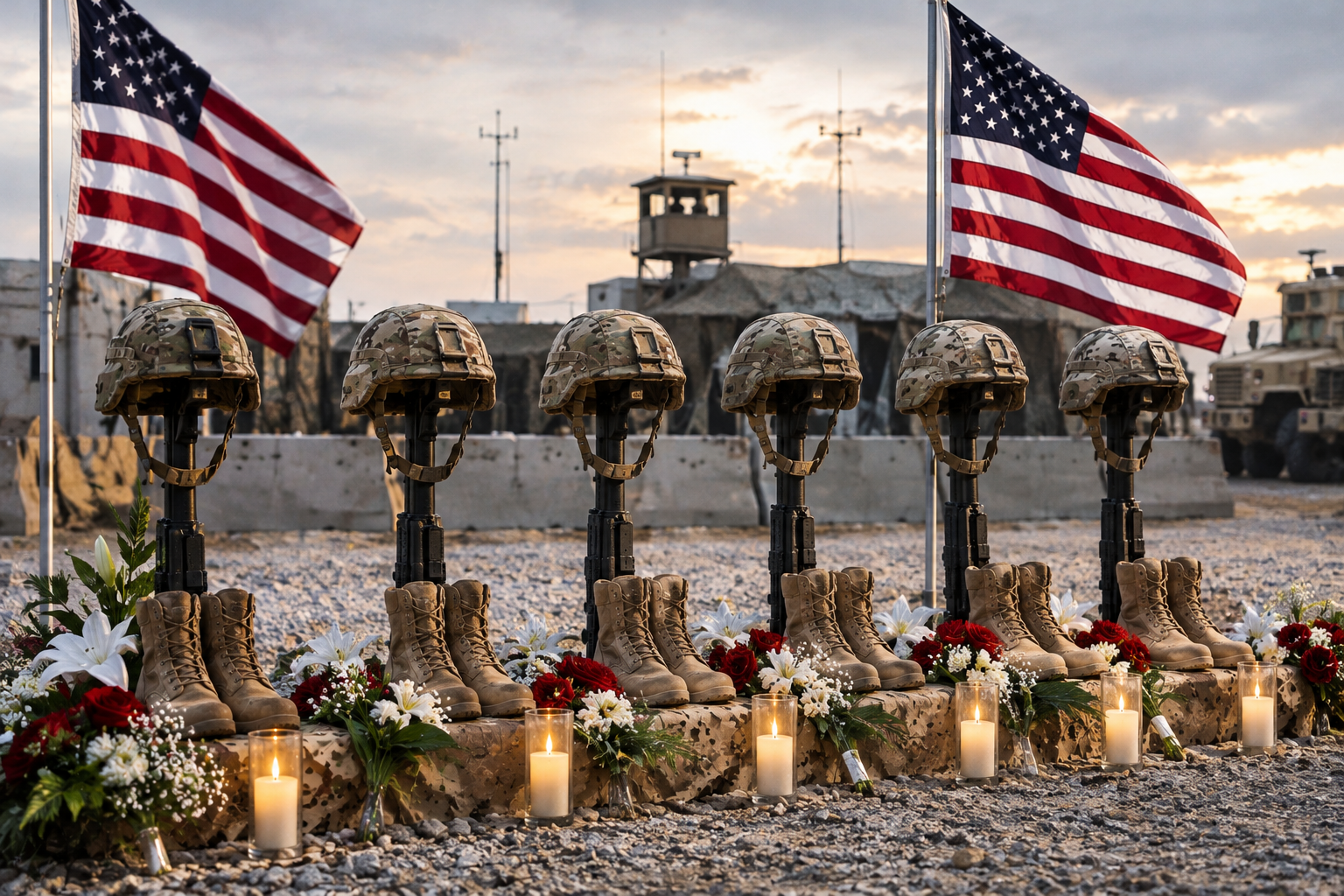
The families of American soldiers killed in a devastating Iranian drone strike in Kuwait say they still have not received the full truth about what happened. A wounded Army major’s whistleblower complaint and a new CBS investigation have intensified questions about whether military leaders ignored warnings before the deadly attack.
WASHINGTON, D.C. — November 17, 2026
Families of six American service members killed during the opening days of the Iran war are demanding answers after an explosive investigation by CBS’s 60 Minutes revealed allegations of inadequate military protection before the attack.
The tragedy occurred on March 1, 2026, when an Iranian drone struck an Army command post at Port Shuaiba in Kuwait, killing six members of the Army Reserve’s 103rd Sustainment Command and injuring dozens of others.
Among those killed was Master Sgt. Nicole Amor, whose husband, Joey Amor, says the military leadership responsible for protecting the unit must answer serious questions.
“She was proud. She was constant. She was unwavering. She was dedicated,” he told CBS correspondent Norah O’Donnell.
A Deadly Attack After an All-Clear Warning
According to the 60 Minutes investigation, soldiers at Port Shuaiba received an all-clear notification at approximately 9 a.m. after earlier Iranian attacks.
About 30 minutes later, an Iranian drone struck the makeshift operations center.
The attack destroyed much of the building and left soldiers struggling to locate and rescue their wounded colleagues.
Nicole Amor was reportedly still breathing when fellow soldiers placed her in an SUV and transported her to a local Kuwaiti hospital.
Her husband told CBS that survivors were forced to search online for hospitals capable of treating the injured.
He believes better preparation and emergency medical arrangements might have saved his wife’s life.
Whistleblower Alleges Military Warnings Were Ignored
Army Maj. Stephen Ramsbottom, who survived the attack, has filed whistleblower complaints asking Congress and the Pentagon inspector general to investigate military decisions before the strike.
Ramsbottom alleges that the command post lacked dedicated protection against one-way attack drones despite warnings that the location could be targeted.
He also claims the facility had no physician, no permanent medical aid station, and only one ambulance.
Several soldiers interviewed by CBS said they had seen intelligence identifying Port Shuaiba as a potential Iranian target before the war.
Ramsbottom said he raised concerns with senior officers and requested additional counter-drone protection, but the equipment never arrived.
“I feel this is a tactical failure by the Army, our leadership, and myself,” he told CBS.
Families Finally Receive Investigation Briefings
The Army completed its investigation into the March attack in June, but its findings have not been publicly released.
CBS reported on November 15 that Gold Star families were finally being briefed on the investigation’s results.
Michelle Tietjens, whose husband Master Sgt. Noah Tietjens was killed, told CBS that Army officials did not acknowledge mistakes during her briefing.
Other family members say they still want a complete explanation of the decisions that placed their loved ones at the vulnerable location.
The Pentagon declined to answer CBS’s specific questions about whether the unit had been denied adequate force protection.
Trump Defends the Military’s Defensive Record
On November 16, Trump criticized the CBS investigation, arguing that the report failed to provide sufficient context about the effectiveness of American air defenses.
He said Iran had launched thousands of one-way attack drones, but only two had penetrated defenses and caused American fatalities.
Defense Secretary Pete Hegseth previously described the Port Shuaiba facility as fortified during a March 2 Pentagon briefing.
Those statements now stand alongside Ramsbottom’s allegations that the installation lacked protection designed specifically for aerial drone attacks.
The Army’s investigation remains unpublished, and the whistleblower’s allegations have not been established as official findings.
For the families, however, the demand is clear: they want to know whether their loved ones could have been better protected.
Six American soldiers lost their lives. Now their families are demanding the truth, accountability, and assurances that the same failures will not happen to another military unit.



