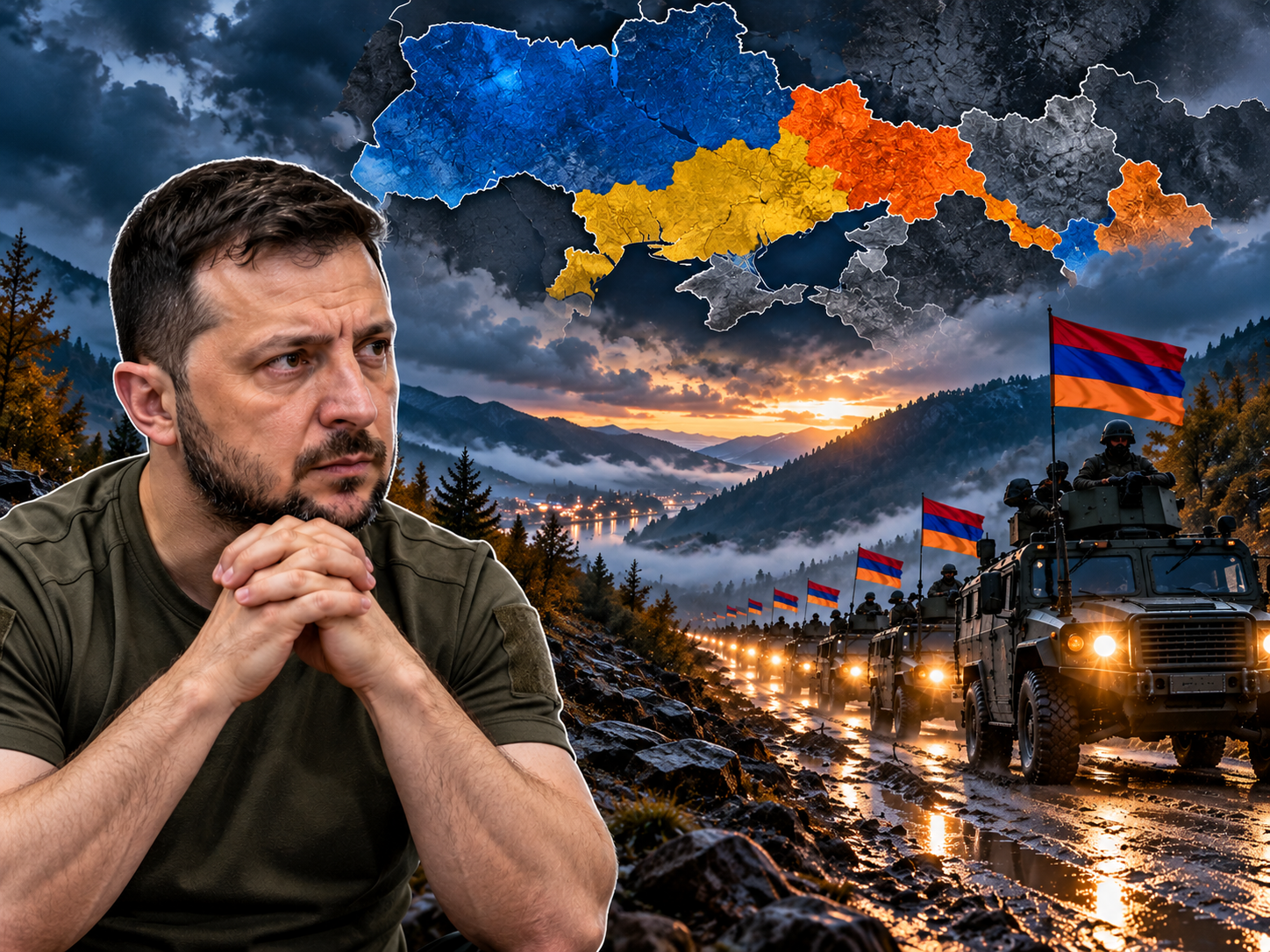
Armenia is taking steps to reduce its dependence on Russia, opening a new front in Moscow’s struggle to maintain influence over its former Soviet partners. From exploring alternative energy supplies to strengthening ties with the European Union, Prime Minister Nikol Pashinyan’s government is pursuing a strategy that could make Armenia less vulnerable to Russian economic pressure.
The shift does not mean Armenia is preparing to cut ties with Moscow or that it can end Russia’s war against Ukraine. Instead, the change is more practical—and potentially more consequential over time: Armenia wants more choices over where it gets its energy, where its businesses sell their products and which international partners shape its future. (Reuters)
Armenia’s Strategy Challenges Moscow’s Regional Influence
For decades, Armenia maintained close economic and security ties with Russia. But relations have deteriorated since Azerbaijan took control of Nagorno-Karabakh in September 2023, despite the presence of Russian peacekeepers.
Armenian officials have accused Moscow of failing to protect Armenian interests. Russia has rejected those criticisms, while continuing to maintain a military presence in Armenia.
The growing distance between the countries has coincided with Yerevan’s efforts to develop closer relations with Western governments and the EU.
In Armenia’s June 7, 2026, parliamentary election, Pashinyan’s Civil Contract party won approximately 49.8% of the vote, securing a parliamentary majority. The election was widely viewed as a test of the government’s efforts to advance peace with Azerbaijan and diversify Armenia’s international relationships. (Reuters)
The direction of travel is clear, even if the final destination is not. Armenia is seeking greater independence in its decision-making while maintaining important relationships with countries it cannot easily replace.
Energy Dependence Becomes a Major Pressure Point
One of the most sensitive areas is natural gas.
Armenia has relied heavily on Russian gas, and favorable prices have been an important part of its economic relationship with Moscow. That dependence also creates a potential vulnerability if political disagreements affect energy arrangements.
On September 11, Pashinyan said Armenia would continue diversifying its gas supplies, including pursuing opportunities to obtain gas from a second or third source. He emphasized that diversification should extend beyond energy to other sectors of the economy. (ARMENPRESS)
Then, on October 20, a report prepared by representatives of Russia, Belarus, Kazakhstan and Kyrgyzstan outlined potential economic consequences if the application of the Eurasian Economic Union’s treaty were suspended with respect to Armenia.
The report estimated that the price of imported gas could rise from $177.50 to $300 per 1,000 cubic meters, an increase of about 69%. It also projected substantial reductions in trade and economic activity.
Those figures describe a hypothetical scenario—not a price increase that has already happened or a confirmed decision to suspend Armenia’s participation in the bloc. (Public Radio of Armenia)
Still, the report illustrates why Armenia wants alternatives. A country that can negotiate with multiple suppliers has greater flexibility than one whose energy security depends overwhelmingly on a single source.
Yerevan Signals That the Relationship Must Change
Armenia’s government has also pushed back against the idea that its closer relationship with Europe necessarily requires an immediate break with Russia.
In an interview with Radio France Internationale published on October 12, Pashinyan said Armenia did not intend to sever or worsen its relations with Moscow. He said the country wanted to strengthen its independence by giving businesses more alternatives for imports and exports.
He also acknowledged that Armenia was not ready to join the European Union immediately, noting that substantial reforms remained necessary. (ARMENPRESS)
The distinction matters. Armenia is not announcing an imminent departure from every Russian-led institution. It is attempting to avoid replacing one dependency with another.
Foreign Minister Ararat Mirzoyan reinforced that message on October 21, questioning whether a unilateral increase in Russian gas prices would reflect the spirit of partnership between the two countries. He said there was a preliminary understanding that officials should review the broader relationship. (ARMENPRESS)
That dispute shows how energy pricing has become intertwined with Armenia’s wider strategic choices.
Europe Is Offering Armenia More Options
The European Union has also moved to strengthen its relationship with Yerevan.
During a visit to Armenia in July, European Commission President Ursula von der Leyen announced an additional €18 million in support, completing a previously pledged €52 million package. She also announced tariff-free access to the EU for nearly 80% of Armenian exports, aiming to help businesses reduce their reliance on the Russian market. (Associated Press)
That assistance does not instantly replace the scale of Armenia’s existing economic ties with Russia. Diversifying trade, building alternative supply routes and meeting European standards will take time.
But the offer gives Armenia additional opportunities to develop markets beyond its traditional economic sphere.
What Does This Mean for Putin and the Ukraine War?
Armenia’s growing independence could complicate Russia’s efforts to preserve influence across the South Caucasus. It also illustrates a broader consequence of Moscow’s international conflicts: neighboring countries may respond by seeking greater freedom from Russian economic and political pressure.
Armenia has taken another significant institutional step in this direction by joining the International Criminal Court on February 1, 2024. The court had issued an arrest warrant for Russian President Vladimir Putin in March 2023 over alleged war crimes involving the unlawful deportation of Ukrainian children—a claim Russia rejects. Armenia’s government said its decision to join the court was motivated by its own legal and security concerns, including the conflict with Azerbaijan. (International Criminal Court)
However, none of these developments establishes that Armenia can end the war in Ukraine or that its government has launched a direct campaign to defeat Russia.
The more defensible conclusion is that Armenia is seeking to reduce the leverage Moscow may gain from its economic and strategic importance.
The real challenge for Putin may be the gradual loss of influence that occurs when neighboring countries develop credible alternatives. Armenia remains economically connected to Russia, and any major shift carries risks. But its government is increasingly signaling that those connections should not prevent it from pursuing its own national interests.
Whether that strategy succeeds will depend on what Armenia can build—not simply what it rejects.



