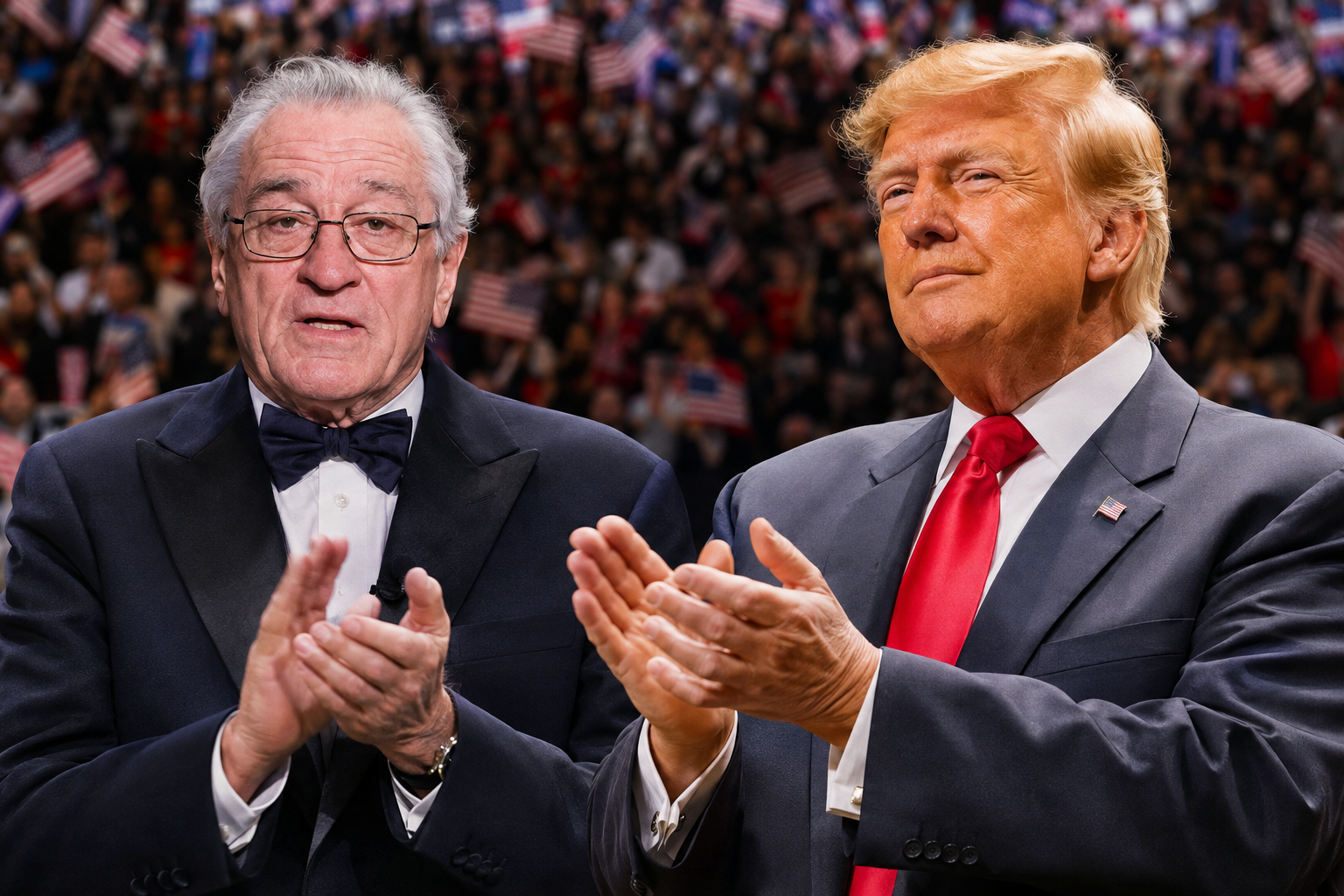
Hollywood legend Robert De Niro delivered a fiery political attack on President Donald Trump during a New York voting-rights rally, accusing the administration of threatening Americans’ voting power and urging citizens to stand up for their electoral rights. His profanity-filled speech sparked a new round of political controversy, drawing a sharp response from the White House.
The event, titled “Hands Off Our Vote!”, took place on October 4, 2026, at the Society for Ethical Culture in Manhattan, bringing together celebrities, voting-rights activists and political organizers ahead of the November 3 midterm elections. Actor Mark Ruffalo and comedian Mo Amer also participated.
De Niro Delivers a Blunt Message to Trump
Speaking before the audience, the 83-year-old Oscar-winning actor argued that powerful political figures were attempting to weaken the influence of ordinary voters.
De Niro accused congressional Republicans of failing to protect voting rights and directed some of his strongest language toward Trump.
“When the weak and spineless Republicans in the House and Senate won’t protect our rights, what are we saying to them?” he asked the audience before leading a chant demanding that politicians keep their hands off Americans’ votes.
He then directly attacked Trump, calling the president a “coward” and using additional profanity while warning against what he described as attempts to take away Americans’ political power.
His central message was straightforward: voters should participate, mobilize their communities and make their voices heard through elections.
“Vote Early” Becomes the Rally’s Central Message
Beyond criticizing the administration, De Niro encouraged Americans to participate in early voting and persuade their families, friends and neighbors to do the same.
He argued that defending voting rights required more than attending political demonstrations. It also required practical participation in the electoral process.
The rally was organized around that message. Indivisible’s event announcement described it as a nationwide voter-mobilization effort intended to provide volunteers and supporters with practical ways to protect elections.
Other participants included Mark Ruffalo, LaTosha Brown of Black Voters Matter and Ezra Levin, co-executive director of Indivisible.
Ruffalo also delivered a passionate speech, warning against potential restrictions on voting access and making a reference to his famous Marvel character, the Hulk.
“I’m gonna Hulk out. You won’t like me when I’m angry,” Ruffalo told the audience, drawing laughter and applause.
The White House Fires Back
De Niro’s comments quickly generated another confrontation between the actor and Trump’s administration.
White House spokesman Davis Ingle responded with a highly critical statement, dismissing De Niro as a washed-up entertainer and attacking his repeated criticism of the president.
The response demonstrated how the political disagreement had expanded beyond voting policies into a personal public dispute between the administration and one of Hollywood’s most outspoken Trump critics.
Why Voting Rights Became a Major Political Issue
The rally took place amid wider disagreements over federal involvement in election administration.
On March 31, 2026, Trump signed an executive order directing federal agencies to pursue citizenship verification measures and changes involving mail-in and absentee ballots. The White House described the initiative as an effort to strengthen election security and verify voter eligibility.
Critics raised concerns about federal authority, access to voting and the potential impact on state election administration.
The Justice Department’s efforts to obtain detailed voter-registration information also became contentious. In an October report, the Associated Press documented requests involving 29 states and Washington, D.C., with several state officials raising privacy and legal concerns.
Federal officials maintained that the information was needed to enforce election laws. Courts had repeatedly rejected some of the department’s efforts to obtain sensitive statewide voter information.
These disputes formed part of the political background to De Niro’s remarks, although his accusations at the rally should be understood as his political position rather than independent findings of misconduct.
A Celebrity Speech Becomes Part of a Larger Debate
The November 3 midterm elections have now taken place, but De Niro’s October appearance remains an example of how celebrities became involved in the election debate.
His speech highlighted disagreements over federal authority, voter registration, election security and citizens’ access to the ballot.
Whether audiences agreed with his language or rejected his political message, the rally demonstrated how strongly voting rights and election administration had become part of America’s political conversation.
The broader question remains how the country can maintain secure elections while protecting voter access, state authority and public confidence in the electoral process.



