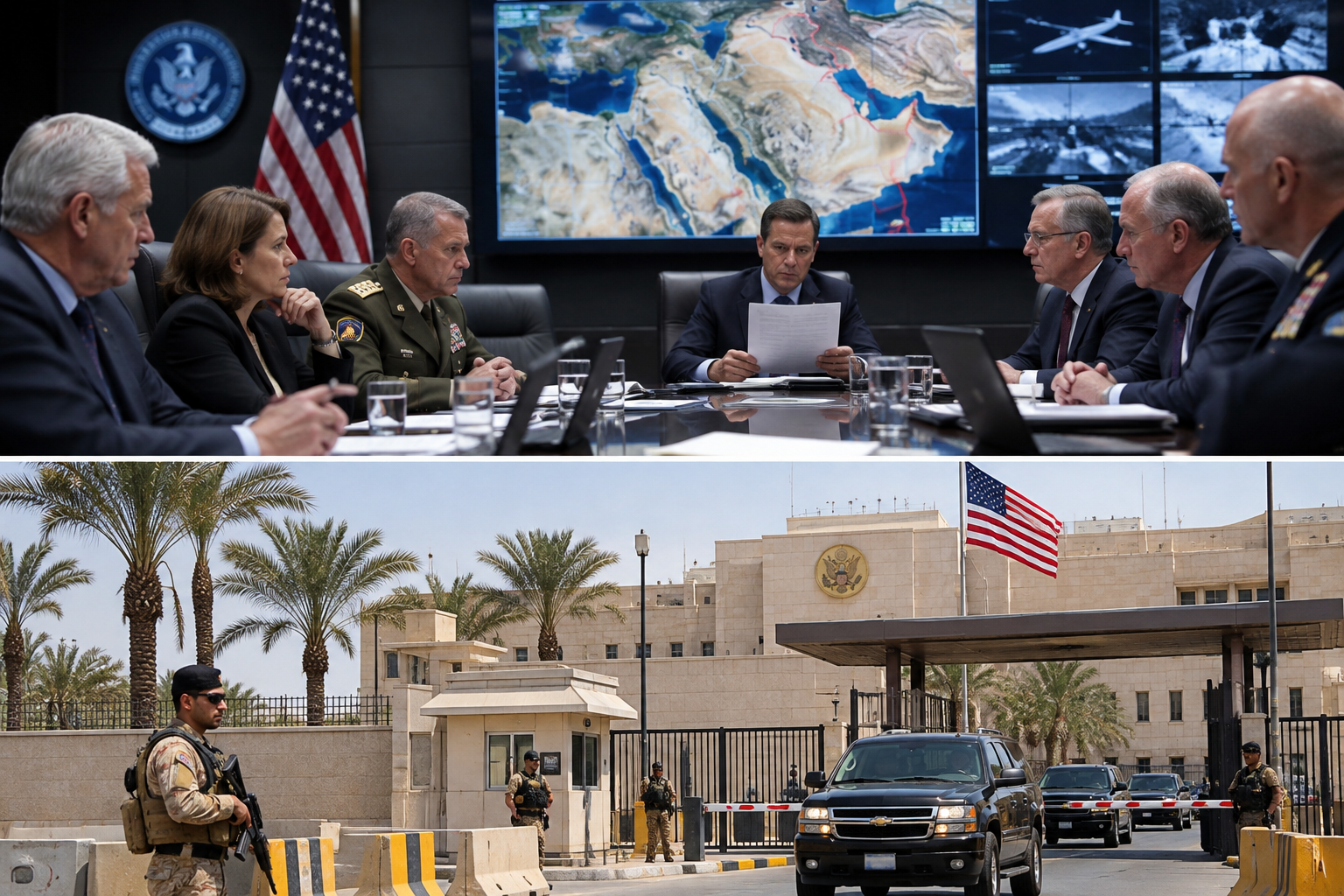
A serious new U.S. intelligence warning is raising concerns about the safety of American diplomats, government employees and other citizens overseas after officials reported that Iranian efforts to target Americans have intensified. The warning describes potentially lethal plots as having reached “advanced stages,” prompting renewed security measures at several U.S. diplomatic missions across the Middle East.
The alert was contained in an October 23, 2026, intelligence memorandum from Director of National Intelligence Jay Clayton to Secretary of State Marco Rubio. CIA Director John Ratcliffe was also copied on the document.
First reported by Axios and subsequently confirmed by CBS News, Reuters and other media organizations, the warning comes amid escalating tensions involving Iran, the United States and Iran-aligned armed groups operating throughout the region.
Intelligence Chief Warns of Advanced Iranian Plots
In the unclassified memorandum, Clayton wrote that American intelligence agencies had received information indicating that Iran had substantially increased its efforts to target U.S. personnel.
“The lethal plotting efforts by the Iranians against U.S. citizens have reached advanced stages in both the Middle East and certain other countries,” Clayton warned.
The intelligence chief emphasized that information gathered through multiple channels needed to reach more American officials than were currently authorized to receive it.
He offered to work with the State Department to downgrade sensitive intelligence wherever possible, allowing Rubio to share additional details with diplomats and other government personnel who could face potential threats.
However, the memorandum does not identify specific targets, locations outside the Middle East or the exact nature of the alleged plots.
It also does not establish that an attack is imminent. That distinction is important because an advanced-stage intelligence assessment does not necessarily mean authorities have identified a specific operation scheduled to take place.
U.S. Embassies Begin Reducing Their Presence
The intelligence warning coincided with significant changes to American diplomatic staffing.
On October 23, the State Department ordered non-emergency U.S. government employees and their family members to leave Saudi Arabia because of security concerns.
The order applied to the U.S. Embassy in Riyadh and the consulates in Jeddah and Dhahran. The department also restricted government employees’ use of Saudi airports, requiring special authorization.
Additional staffing reductions were ordered at American diplomatic missions in the United Arab Emirates, Lebanon, Qatar and Jordan, according to U.S. officials cited by Axios and CBS News.
A U.S. official explained that the decisions reflected concerns about possible Houthi attacks and Iranian plots targeting American personnel.
These adjustments allow diplomatic missions to continue essential operations while reducing the number of personnel exposed to potential threats. They do not necessarily mean that the embassies have closed or that every American employee has been evacuated.
Iran-Backed Houthis Add Another Security Concern
American officials are also concerned about the expanding threat from Yemen’s Iran-aligned Houthi movement.
The group has intensified missile and drone attacks against Saudi Arabia, reportedly targeting civilian airports and important infrastructure.
On October 30, Reuters reported that the U.S. Embassy in Riyadh had confirmed the departure order for non-emergency personnel, citing risks associated with Houthi attacks on civilian airports and other critical facilities.
The embassy warned American citizens about the possibility of additional attacks, airspace closures, flight cancellations and other travel disruptions.
The overlapping threats create a complicated security environment. American officials must consider both potential Iranian-directed operations and attacks conducted by regional armed groups.
Washington Faces Difficult Decisions
The intelligence disclosure also comes as President Donald Trump weighs the possibility of renewed military operations against Iran.
Axios reported that Trump suggested at an October 23 rally in Florida that the United States could launch another military operation if negotiations failed.
That possibility has increased concerns about potential retaliation against American diplomatic facilities, military personnel and other interests throughout the Middle East.
The State Department’s October 23 travel advisory for Saudi Arabia was raised to Level 3: Reconsider Travel, citing the danger of missile and drone attacks involving Iran and the Iranian-supported Houthis.
Are Americans Facing an Imminent Attack?
The intelligence warning is serious, but the publicly available memorandum leaves important questions unanswered.
Officials have not disclosed the identities of potential targets, the countries involved beyond the broad geographic description, or the specific operational details.
There is no public confirmation that a particular attack against Americans is imminent. Nevertheless, the intelligence assessment and subsequent diplomatic staffing changes demonstrate that Washington considers the threat significant enough to take additional precautions.
As tensions continue, American officials face the challenge of protecting personnel abroad while avoiding further escalation with Tehran.
The coming weeks will test whether diplomatic negotiations can reduce the danger—or whether the deteriorating security environment creates another major confrontation.



