Subheadline: The Democratic National Committee is asking a federal judge to halt a government-funded advertising campaign that has already cost more than $12 million, while Trump says his political committee will pay for future ads but has not committed to reimbursing taxpayers.
WASHINGTON — October 8, 2026 — The Democratic National Committee filed a federal lawsuit Wednesday seeking to stop the Trump administration from using taxpayer money for television advertisements that prominently feature President Donald Trump and promote his administration’s agenda.
The legal challenge comes less than a month before the November 3 midterm elections, putting new attention on the boundary between government communications and political messaging. The DNC argues that the advertisements violate federal restrictions on the use of appropriated funds for “publicity or propaganda” purposes. Reuters
The advertising campaign began airing in September and has already cost taxpayers more than $12 million, according to the media-tracking firm AdImpact. The Department of Homeland Security had tapped $20 million for the contract used to finance the campaign. AP News
DNC Challenges Government-Funded Trump Ads
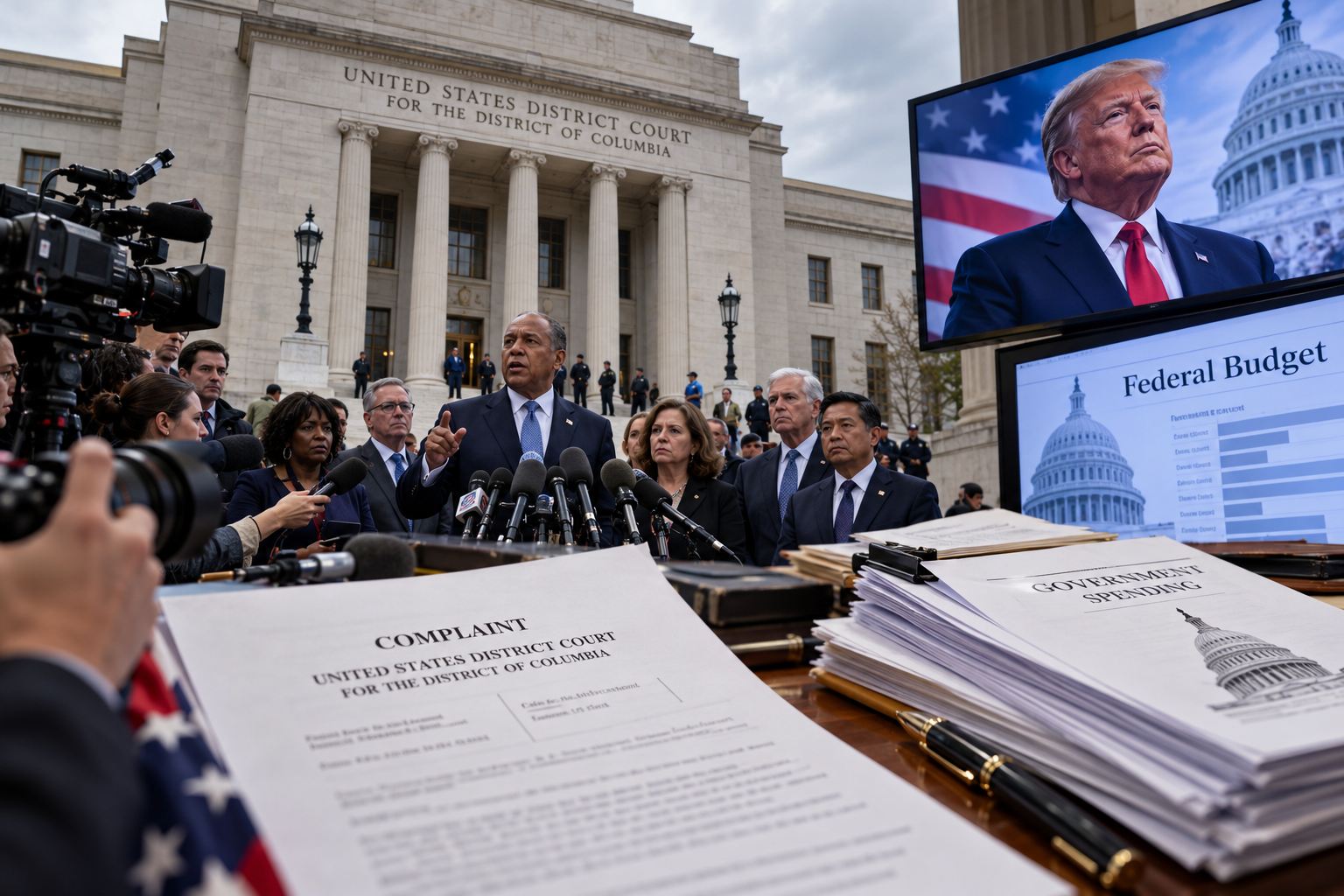
The DNC lawsuit was filed in the U.S. District Court for the District of Columbia. It asks the court to declare the use of the funds unlawful and block additional spending on the advertisements. Democrats argue that the spots cross the line from legitimate government communication into political promotion.
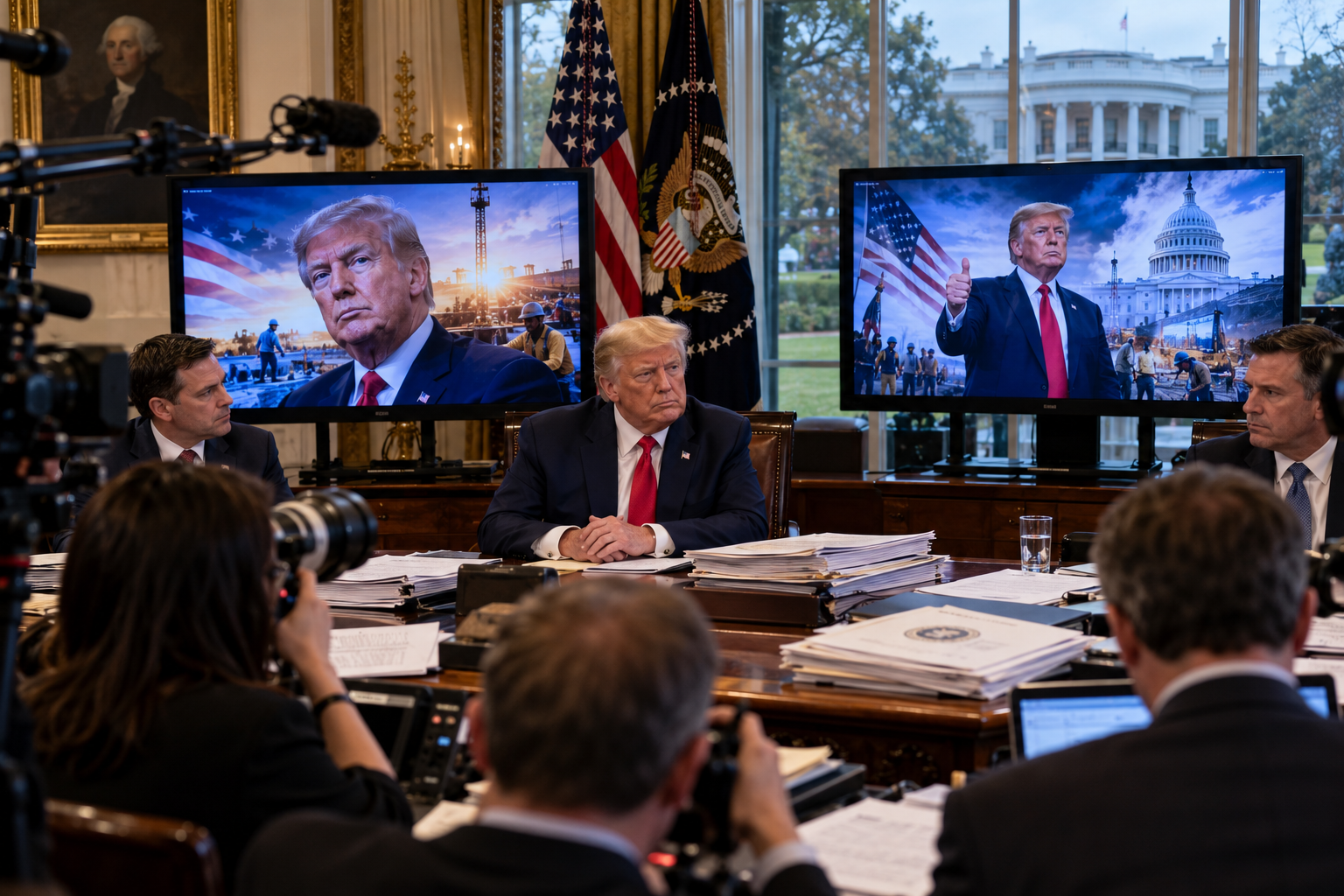
The complaint points to a series of advertisements that feature Trump’s image, political messaging and themes closely associated with his public campaign. One advertisement includes Trump declaring that “America will never be a communist country,” while other material highlights actions and achievements attributed to his administration. Reuters
The DNC also argues that the timing matters. With the midterm elections less than a month away, Democrats contend that the advertising could give Republicans political advantages while using public money rather than campaign funds.
A second lawsuit has also been filed by a coalition led by Common Cause, adding another legal challenge over the same spending. AP reported that both cases allege that the ads may violate federal restrictions on government-funded political propaganda. AP News
Trump Says Future Ads Will Use MAGA Inc. Funds
The controversy intensified after Trump said Monday that his MAGA Inc. super PAC would pay for future advertisements, rather than relying on taxpayer money.
Trump has defended the ads, describing them as promotion for the country and arguing that administrations have used public service announcements to communicate policy messages before. The White House has similarly rejected accusations that the advertisements are campaign material, saying they are intended to promote national priorities rather than persuade voters. The White House
But that decision does not resolve the dispute over advertisements that have already aired.
According to AP and The Washington Post, Trump has not committed to reimbursing the federal government for the nearly $12 million already spent. When asked about repayment, Trump indicated that the matter would be decided later. The Washington Post
That distinction is central to the legal and political controversy: shifting future costs to a political organization would not automatically return the public money already spent.
Where Did the Money Come From?
The funding has drawn additional scrutiny because the $20 million was connected to the Department of Homeland Security.
The Washington Post reported that money was redirected within DHS for the advertising campaign, including funds originally associated with activities such as border-security operations and memorials for officers killed in the line of duty. Critics have questioned whether those appropriations can legally be used for advertisements that feature the president and emphasize his political message. The Washington Post
The White House disputes the characterization of the spots as political advertising. Its September defense argued that presidential public-service announcements are not unusual and pointed to previous administrations that used taxpayer-funded advertising to explain government policy. The White House
Public Opposition Adds Pressure
The controversy has also produced a striking public reaction.
A Reuters/Ipsos poll released October 6 found that 86% of Americans considered it inappropriate to use taxpayer funds for television advertisements featuring Trump around an election, including 80% of Republicans surveyed. The poll involved 4,506 adults and had a margin of error of about two percentage points. Reuters
The numbers suggest that concerns over government-funded political messaging extend beyond one party, although polling opinions do not determine whether the spending is legally permissible.
What Happens Next?
The lawsuits now put the issue before the courts as the midterm campaign enters its final weeks.
The Trump administration maintains that the advertisements are legitimate government communications, while the DNC and Common Cause argue that taxpayer money is being used for political propaganda. The courts will ultimately have to determine whether the government’s spending and the content of the advertisements comply with federal law. AP News
For taxpayers, one immediate question remains unresolved: who will ultimately pay for the millions of dollars already spent?
Trump has shifted future advertising costs toward MAGA Inc., but there is currently no commitment to reimburse the public for the spending that has already taken place. Meanwhile, the legal battle could determine whether the government can continue financing similar advertisements at all.
With Election Day approaching, the dispute has become both a legal test of federal spending rules and a political fight over the use of taxpayer money in an election year.