Subheadline: The Trump administration objected to a #Disinfo2026 panel examining whether the United States itself could be a foreign information-manipulation threat to Europe, triggering diplomatic pressure and a dispute over the boundaries of free debate among allies.
VILNIUS, Lithuania — October 8, 2026 — A European conference focused on fighting disinformation has become the center of a diplomatic dispute after the Trump administration urged allied governments to distance themselves from the event over a panel examining the United States as a potential information threat to Europe.
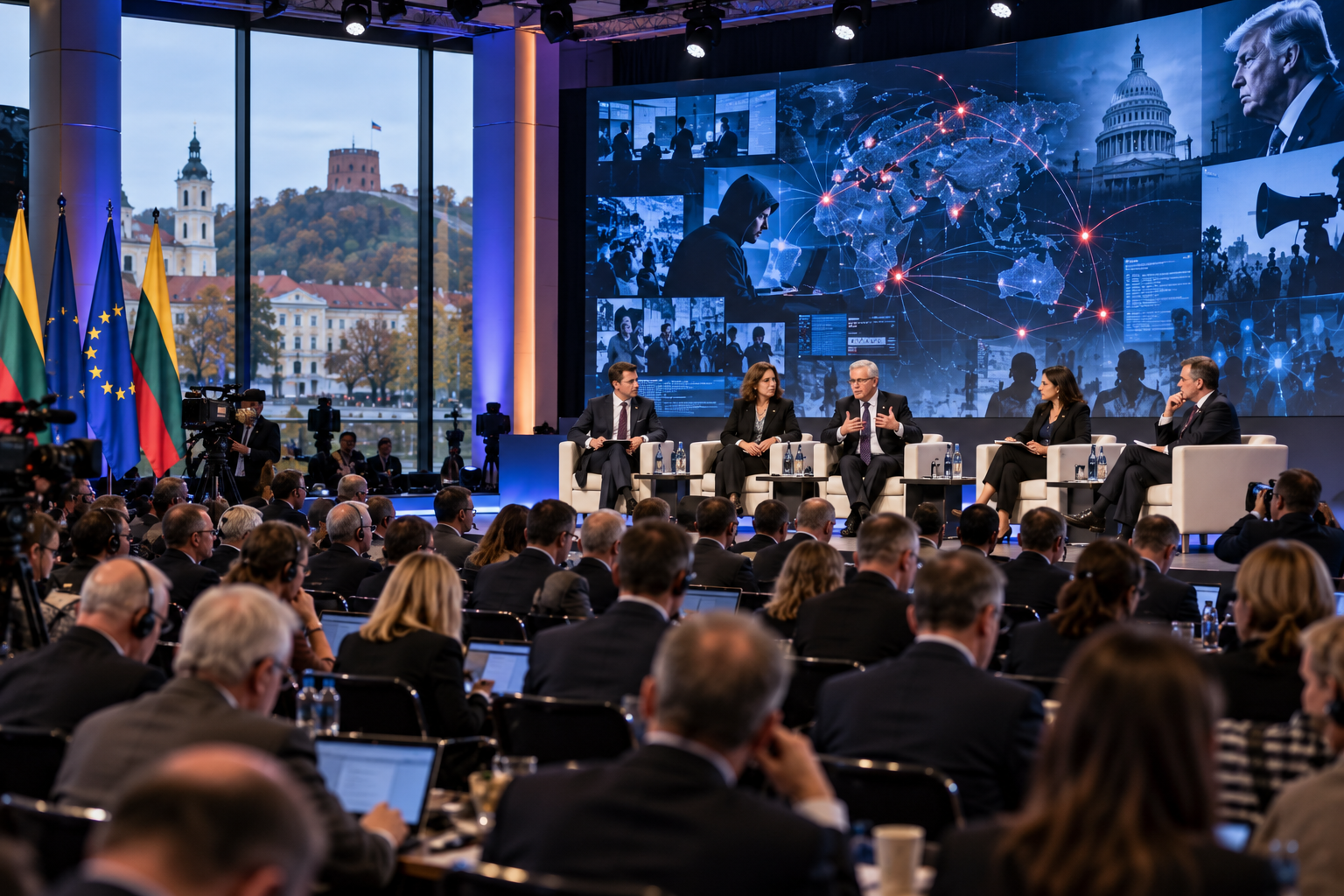
The controversy surrounds #Disinfo2026, the annual conference organized by Brussels-based nonprofit EU DisinfoLab and held in Vilnius on October 7–8. The gathering brings together researchers, journalists, policymakers, academics and technology specialists focused on foreign information manipulation and interference. Reuters
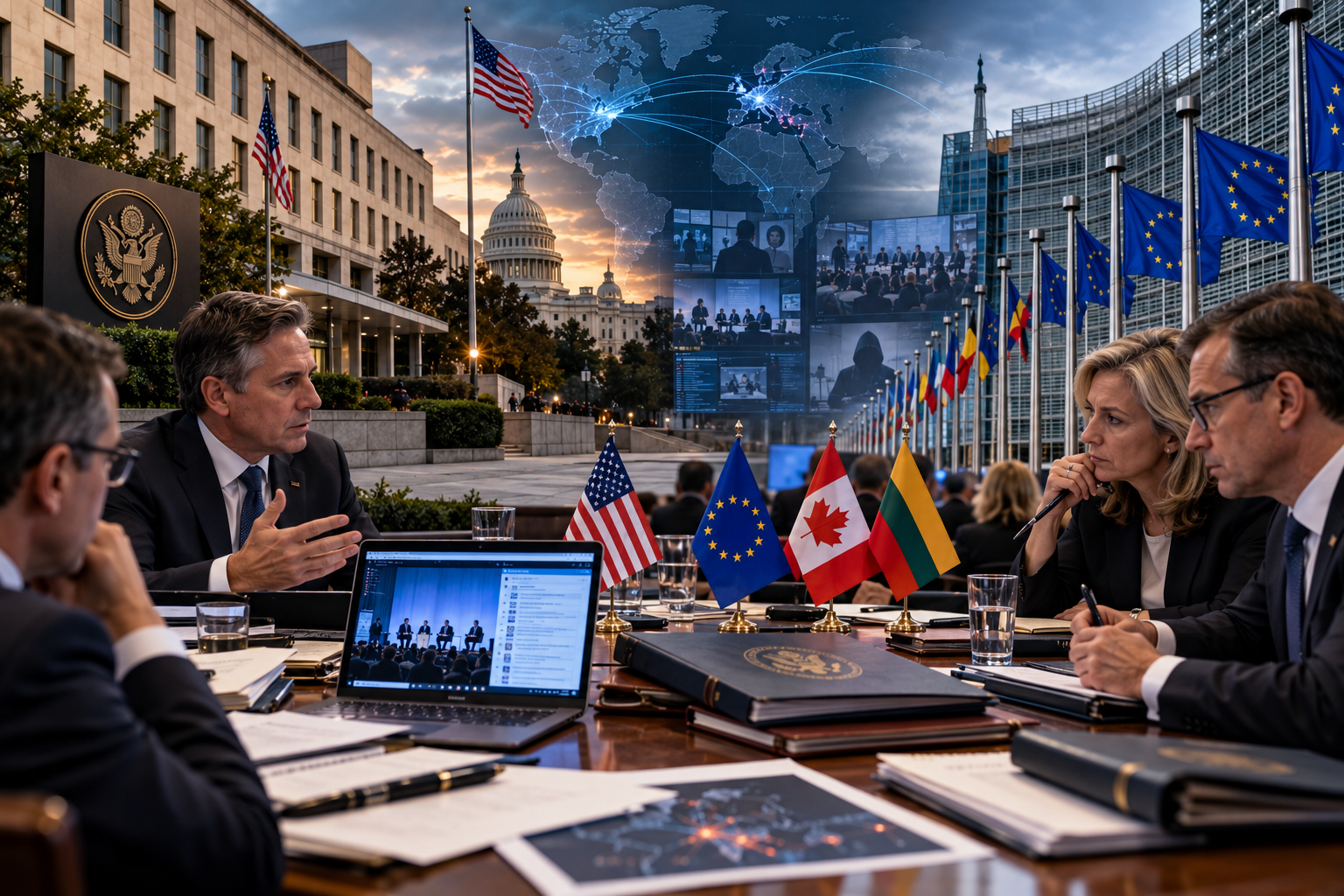
According to Reuters, U.S. State Department officials spent several days lobbying counterparts in Lithuania, Canada and France about the conference. American diplomats succeeded in persuading the Canadian and Lithuanian governments to reduce or end their official involvement, while the European External Action Service, the EU’s diplomatic arm, also disappeared from the conference’s list of supporters. Reuters
The dispute has raised fresh questions about U.S. influence over European institutions and the limits of disagreement within close diplomatic alliances.
The Panel That Triggered Washington’s Objections
At the heart of the dispute was a panel titled “USA as a FIMI threat: acknowledge, adapt, push back.”
FIMI stands for foreign information manipulation and interference, a term commonly used by European governments and international organizations when discussing coordinated attempts by outside actors to influence information environments.
The conference program said the panel would examine what it described as an uncomfortable question for the counter-disinformation community: how the United States became a potential FIMI threat to Europe. The session also explored how European actors might strengthen their resilience and operate independently of Washington. Reuters
The panel was especially sensitive because it followed an opening address by International Criminal Court Judge Kimberly Prost, who was placed on a U.S. sanctions list after ICC judges authorized an investigation involving alleged war crimes by U.S. forces in Afghanistan, according to EU DisinfoLab’s published conference program. EU DisinfoLab
Washington Pushes Back
The U.S. State Department strongly objected to the characterization of America as a FIMI threat.
In a statement quoted by Reuters, the department said labeling the United States a FIMI threat—language it said is normally used for adversarial influence operations—could undermine shared goals among countries working together against disinformation. Reuters
Reuters reported that U.S. officials contacted allied governments directly. The Guardian separately reported that internal State Department documents showed American officials thanking Lithuania for taking U.S. concerns seriously and welcoming the country’s decision to limit its involvement. The Guardian
The diplomatic pressure did not produce identical responses from every government.
Lithuania canceled its participation, saying portions of the program differed from the official position of its government. Canada revised its participation in several panels, citing changes to the framing of discussions, although Canadian officials were still taking part in the conference. The EU External Action Service withdrew its support, saying organizers had framed some discussions in ways that did not align with official EU positions. Reuters
EU Funding Continues
One important distinction is that the EU has not completely cut ties with the conference.
The European External Action Service removed its branding as an official supporter, but the Guardian reported that EU funding for the conference continues. France also remained listed as the conference’s only remaining main government supporter and defended its decision to continue backing civil-society efforts against disinformation. The Guardian
That means the dispute is not simply a case of governments abandoning the event. Instead, governments have drawn different lines between financial support, official sponsorship and participation in individual discussions.
A Bigger Fight Over Information Power
The dispute arrives at a time when governments on both sides of the Atlantic are placing greater emphasis on information security.
The European Union regularly describes Russia and China as major foreign information-manipulation threats, while Lithuania has also made countering hostile information operations a national-security priority. Canada likewise says combating foreign disinformation is important for protecting democratic institutions and public debate. EEAS
But the disagreement over #Disinfo2026 highlights a difficult question: Can governments effectively cooperate against disinformation while also allowing uncomfortable criticism of their own institutions?
The Trump administration argues that calling the United States a FIMI threat misrepresents an ally and damages cooperation. Conference organizers, meanwhile, included the controversial discussion as part of a broader effort to examine changing information threats.
For Europe, the episode underscores its complicated relationship with Washington. European governments remain heavily dependent on U.S. cooperation in security and defense, yet they are also developing greater independence in areas ranging from technology to foreign policy.
For Washington, the incident demonstrates that the battle over disinformation is no longer limited to Russia, China or other traditional adversaries. It increasingly involves disagreements among democratic allies over who defines an information threat, what evidence should be considered, and where legitimate criticism ends.
As #Disinfo2026 concludes in Vilnius, the conference may ultimately be remembered not only for its discussions about disinformation—but for the international dispute over who gets to decide what counts as a threat in the first place.