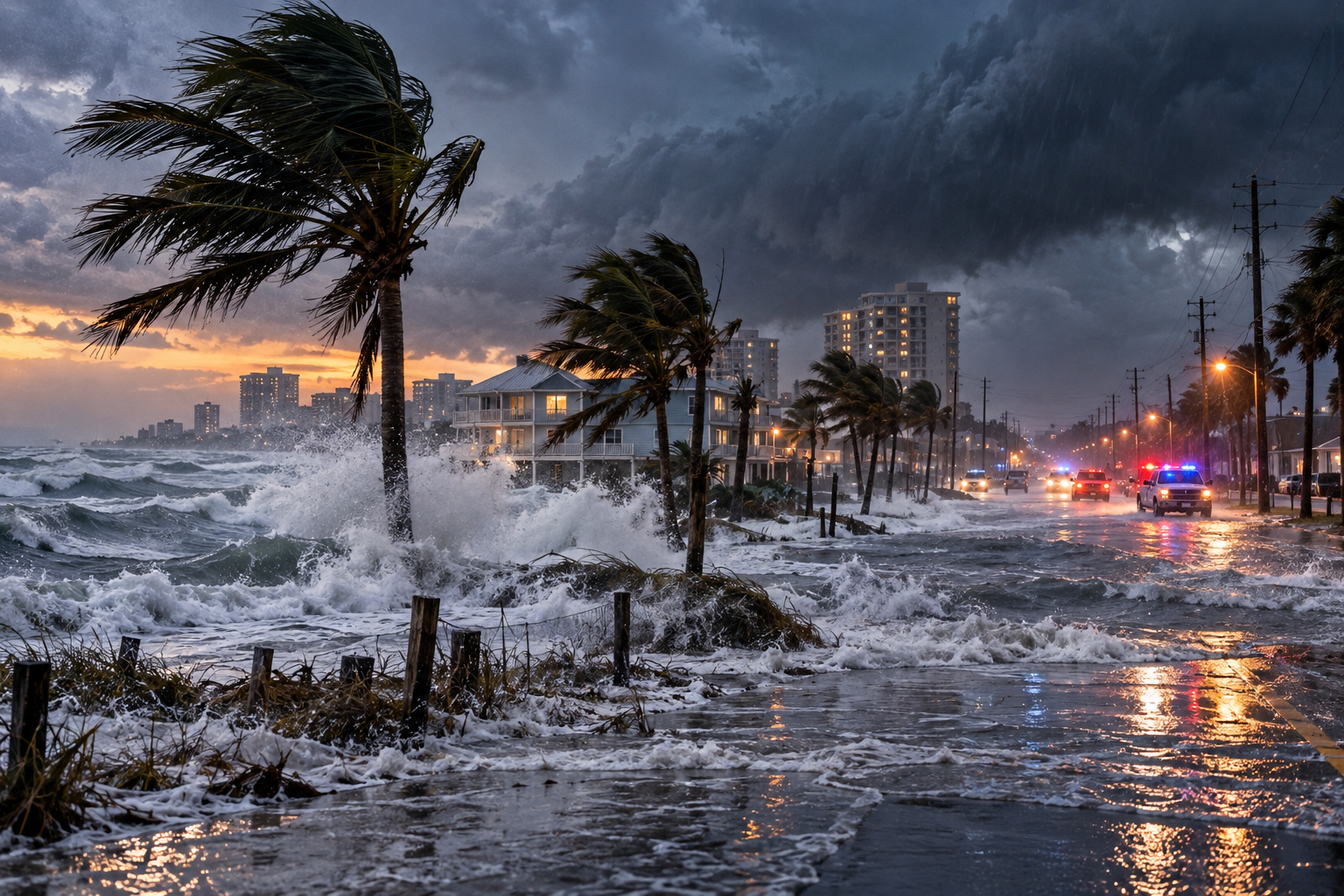
Subheadline: The storm struck near Destin, Florida, as a Category 2 hurricane with winds of 105 mph before weakening into a post-tropical cyclone early Saturday. Flooded roads, downed power lines and widespread outages have disrupted communities across Florida, Alabama and Georgia.
DESTIN, Florida — October 10, 2026 — Hurricane Isaias slammed into the U.S. Gulf Coast Friday night, battering Florida’s Panhandle and parts of Alabama with powerful winds, heavy rainfall and coastal flooding before weakening early Saturday morning.
The storm made landfall near Destin, Florida, at approximately 8 p.m. Eastern time on October 9, as a Category 2 hurricane with maximum sustained winds of 105 mph, according to the National Hurricane Center. Isaias had briefly strengthened into a Category 3 hurricane earlier Friday before weakening as it approached the coast.
Although the storm lost hurricane status by early Saturday, officials warned that dangerous flooding, damaging winds and hazardous road conditions could continue across the southeastern United States.
The storm has already disrupted electricity supplies, damaged buildings and trees, and forced evacuations in vulnerable coastal communities. Emergency crews are now working to assess damage and restore essential services as Isaias moves inland.
Powerful Winds and Flooding Batter Florida’s Panhandle
Coastal communities around Destin, Pensacola and Panama City Beach faced some of the storm’s strongest impacts as Isaias approached and crossed the shoreline.
In Destin, floodwaters covered portions of local roads, while police in nearby Pensacola urged residents to stay off streets blocked by debris. Images and videos shared by residents showed fallen trees, damaged power lines and water accumulating around homes and businesses. One video from Pensacola appeared to show strong winds tearing roofing material from an inn.
The immediate scale of the destruction remained uncertain early Saturday, as dangerous conditions temporarily limited emergency operations in some areas.
Authorities urged residents not to drive through flooded streets or approach downed electrical lines. Even after the strongest winds subside, floodwater can conceal damaged pavement, electrical hazards and debris that create additional risks for motorists and pedestrians.
The storm’s weakening does not mean the danger has ended, particularly for communities dealing with standing water and damaged infrastructure.
Nearly 700,000 Customers Without Power
One of the most immediate consequences of Isaias has been widespread electricity disruption.
By early Saturday, nearly 700,000 customers across Florida, Alabama and Georgia were reported without power, according to the outage tracker PowerOutage.us cited by CBS News.
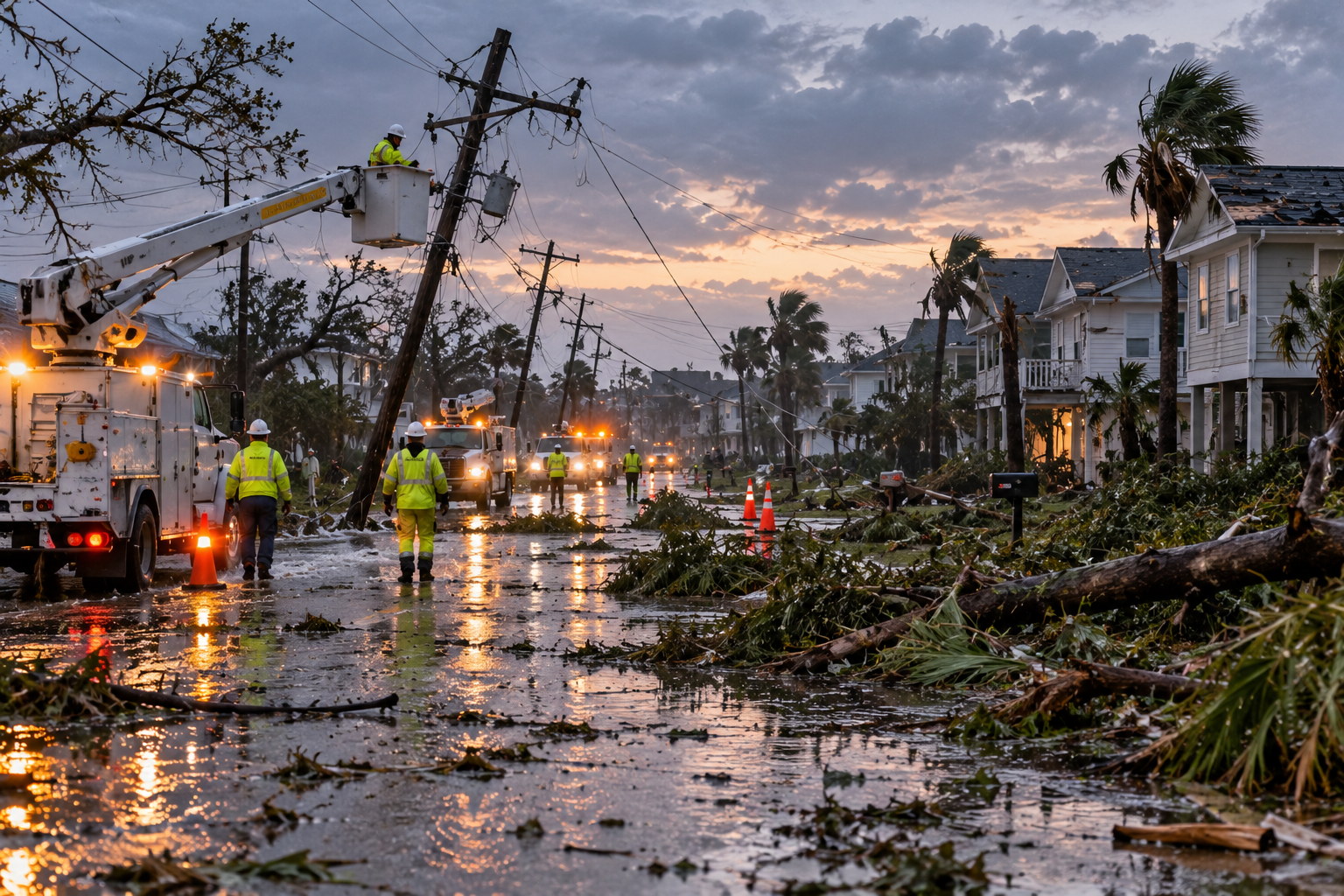
The outages followed strong winds that brought down trees and power lines across parts of the region. In southern Alabama’s Houston County, authorities reported that all roads were temporarily closed early Saturday because of fallen trees and electrical lines. Emergency services and road crews were working to assess the damage and clear routes for safe travel.
For residents, extended outages could affect air conditioning, refrigeration, communications and access to essential medical equipment.
Utility crews face additional challenges because they must inspect damaged infrastructure before restoring service safely. Flooded roads and unsafe working conditions can slow repairs, especially in coastal communities where trees, debris and standing water obstruct access.
Authorities have urged residents to follow local emergency instructions and avoid approaching damaged power lines.
Storm Surge and Heavy Rain Remain Major Concerns
Although Isaias weakened after landfall, forecasters warned that its circulation could continue producing substantial rainfall and dangerous coastal conditions.
Before landfall, the National Hurricane Center warned of potentially life-threatening storm surge, with water levels forecast to rise several feet above normal tides in vulnerable coastal areas. Heavy rain was also expected across southern Alabama, southwestern Georgia and Florida’s Panhandle, increasing the risk of flash flooding.
Forecasts issued before the storm arrived called for widespread rainfall totals of 4 to 8 inches, with isolated locations potentially receiving as much as 15 inches. Those totals represented forecasts, not confirmed measurements across the affected region.
The threat extends beyond the immediate coastline. As Isaias moves inland, heavy rain can overwhelm drainage systems, flood low-lying neighborhoods and cause rivers and smaller waterways to rise.
The National Hurricane Center reported early Saturday that Isaias had weakened into a post-tropical cyclone, with sustained winds of 65 mph around 2 a.m. Eastern time. At that time, the system was approximately 55 miles southwest of Montgomery, Alabama, moving north at 20 mph.
That transition marked an important change in the storm’s classification, but it did not eliminate the potential for dangerous weather.
Emergency Declarations and Evacuations
Florida and Alabama officials moved to prepare communities ahead of the hurricane’s arrival.
Florida Gov. Ron DeSantis declared a state of emergency covering 27 counties, enabling state agencies to coordinate resources and prepare for potential damage. The state’s National Guard also mobilized approximately 5,000 soldiers and airmen to support response efforts and assist local authorities.
Evacuation orders were issued in vulnerable coastal areas, while some local governments introduced temporary restrictions to keep residents away from dangerous roads. Officials also warned of possible fuel shortages and highway closures as the storm disrupted transportation.
The Federal Emergency Management Agency approved an emergency declaration for Alabama on Friday, opening access to federal assistance for emergency protective measures.
Officials emphasized that people should not return to evacuated areas until authorities determine that conditions are safe.
Flights and Gulf Energy Operations Disrupted
Isaias also affected transportation and energy operations.
Several airports in Florida’s Panhandle experienced widespread flight disruptions Friday, including cancellations at Destin-Fort Walton Beach Airport. Airlines and passengers may continue to face delays as airports inspect facilities and transportation links recover.
The storm also forced oil and gas producers in the Gulf of Mexico to reduce operations before landfall. Reuters reported that producers had shut in approximately 1.5 million barrels of oil production per day and 1.3 billion cubic feet of natural gas production per day ahead of the storm. Those reductions represented about 72% of the region’s oil output and 59% of its natural gas production, according to federal figures cited by Reuters.
Although Isaias was expected to miss the Gulf Coast’s largest refining hubs, power outages could still affect fuel availability if refineries experience operational disruptions.
What Happens Next?
As daylight reveals the extent of the damage, local authorities and utility companies face the task of restoring power, reopening roads and helping residents whose homes or businesses have been affected.
Isaias is no longer classified as a hurricane, but its impacts are continuing across the Southeast. Flooding, damaged electrical infrastructure and heavy rainfall remain concerns as the storm moves inland.
For residents in affected communities, the priority is staying clear of flooded roads, following emergency instructions and waiting for officials to confirm that damaged areas are safe.
The coming hours should provide a clearer picture of the storm’s overall impact. Until then, emergency crews remain focused on protecting residents and restoring essential services after a dangerous night along the Gulf Coast.