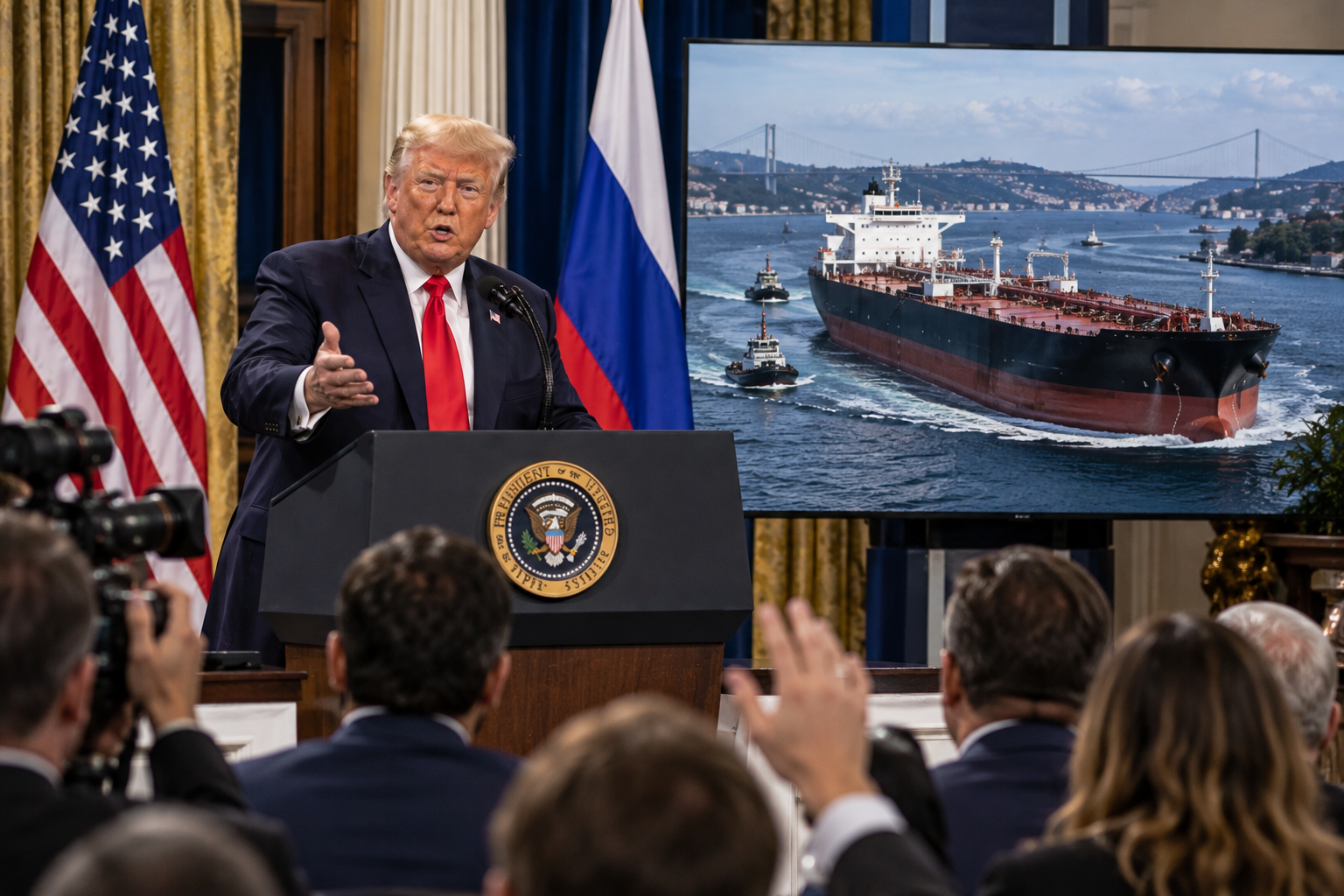
Subheadline: President Donald Trump says Russia will deliver millions of metric tons of diesel after talks with Vladimir Putin. The agreement comes as U.S. fuel prices surge, Washington eases certain Russian fuel sanctions, and Ukraine warns the move could help finance Moscow’s war.
WASHINGTON — October 10, 2026 — President Donald Trump announced that Russian President Vladimir Putin has agreed to supply diesel fuel to the United States and global markets, marking a significant shift in U.S. energy policy as consumers and businesses struggle with rising fuel costs.
Trump announced the agreement on Friday, October 9, following what he described as a “highly successful discussion” with Putin. Under the arrangement outlined by Trump, Russia would immediately supply more than 300,000 metric tons of diesel, followed by additional shipments in November and subsequent months.
The announcement comes as diesel prices remain near record levels and the Trump administration faces mounting pressure to reduce energy costs ahead of the November 3 midterm elections. It also introduces a major foreign-policy complication: the United States is easing certain restrictions on Russian fuel even as Moscow continues its war against Ukraine. (Reuters)
Russia Promises Millions of Tons of Diesel
In his announcement, Trump outlined a series of proposed deliveries that could total approximately 4.8 million metric tons of diesel if all the stated shipments are completed.
The schedule includes:
- More than 300,000 metric tons immediately
- 500,000 metric tons in November
- Another 1 million metric tons afterward
- An additional 3 million metric tons within a short period, subject to the condition of Russia’s diesel refineries
These quantities reflect Trump’s public announcement; the complete commercial terms, shipment schedule and payment arrangements have not been publicly detailed. (Associated Press)
The agreement is intended to increase available diesel supplies at a time when international energy markets are under pressure from the ongoing U.S.-Iran conflict and disruptions to important shipping routes.
Diesel is essential to trucking, agriculture, construction, freight transportation and heating. When its price rises, businesses often face higher operating expenses, which can eventually feed into the prices consumers pay for food, merchandise and other everyday necessities.
Washington Eases Sanctions on Russian Fuel
The announcement was followed by an important policy change from the U.S. Treasury Department.
The Treasury issued a temporary license allowing certain Russian diesel shipments to enter the market despite existing sanctions. Under the license reported by the Associated Press, sanctions will not apply until April 2027 to qualifying deliveries of Russian diesel that had been loaded onto tankers by October 9. (Associated Press)
The decision represents a significant departure from the restrictions Washington imposed after Russia launched its full-scale invasion of Ukraine in February 2022. Those measures were designed partly to limit Moscow’s energy revenues and reduce the financial resources available to support its military campaign.
The United States had not imported Russian oil or petroleum products under its post-invasion import ban, according to the U.S. Energy Information Administration, as reported by the Associated Press.
The temporary license raises questions about how the administration intends to balance its immediate energy priorities with its longer-term policy toward Russia.
Will the Deal Lower Diesel Prices?
The central economic question is whether additional Russian diesel will significantly reduce costs for American drivers, truckers and businesses.

According to the American Automobile Association, the national average price of diesel reached a record $6.53 per gallon on September 22 and remained around $6.28 per gallon on October 9. Prices have risen sharply as international fuel supplies have tightened. (Associated Press)
Diesel futures fell following Trump’s announcement, suggesting that traders anticipated additional supply. However, energy analysts cautioned that the agreement may provide only limited relief.
Some of the announced shipments could redirect fuel that Russia would otherwise sell to existing customers rather than substantially increase total global supply. Analysts also point to disrupted refining capacity in the Middle East and continuing shipping risks as factors likely to keep prices elevated.
The deal could therefore affect particular markets without producing a substantial or lasting reduction in diesel prices nationwide.
For American farmers, trucking companies and other diesel-dependent businesses, even modest price changes can matter. But the agreement’s ultimate impact will depend on whether the shipments arrive on schedule, how they are distributed and what happens to global energy supplies in the coming months.
Ukraine Warns the Deal Could Benefit Putin
Ukraine reacted critically to the announcement, which came while Ukrainian officials were in the United States for discussions about ending the war with Russia.
President Volodymyr Zelenskyy described the decision as “a weak decision” by otherwise strong partners, warning that additional Russian energy revenue would not bring peace. He argued that Russia could use the money generated by fuel exports to continue financing its war effort. (Reuters)
Some U.S. lawmakers also criticized the move. Republican Representative Don Bacon argued that Washington should enforce the sanctions Congress had recently approved rather than ease restrictions in a way that could benefit Moscow.
The controversy highlights the tension between reducing domestic energy costs and maintaining economic pressure on Russia over its invasion of Ukraine.
The Trump administration has emphasized the need to make fuel more affordable, while critics argue that allowing Russian diesel sales could weaken sanctions policy and provide Moscow with additional revenue.
A Deal With Economic and Geopolitical Consequences
The diesel agreement could provide Russia with an important export opportunity while offering the United States another source of fuel during a period of market uncertainty.
However, the scale of its impact remains uncertain. Trump has announced the proposed deliveries, but the agreement’s full terms and the final volume of fuel that will reach U.S. buyers have not been independently established in public.
The policy shift also carries diplomatic implications. European allies and Ukraine have sought to limit Russian energy revenues since the invasion, making Washington’s decision a potential source of further disagreement among partners.
For American consumers, the most immediate concern remains the cost of energy. Diesel prices influence transportation expenses, agricultural production and the movement of goods across the country. If the shipments materialize, some buyers could benefit, although analysts do not expect the agreement alone to resolve the broader supply problem.
For now, Trump’s deal with Putin represents an attempt to address high fuel prices—but it also opens a new debate over whether short-term energy relief is worth relaxing economic pressure on Russia. The outcome will depend on deliveries, market conditions and the administration’s ability to reconcile its energy goals with its policy toward the war in Ukraine.