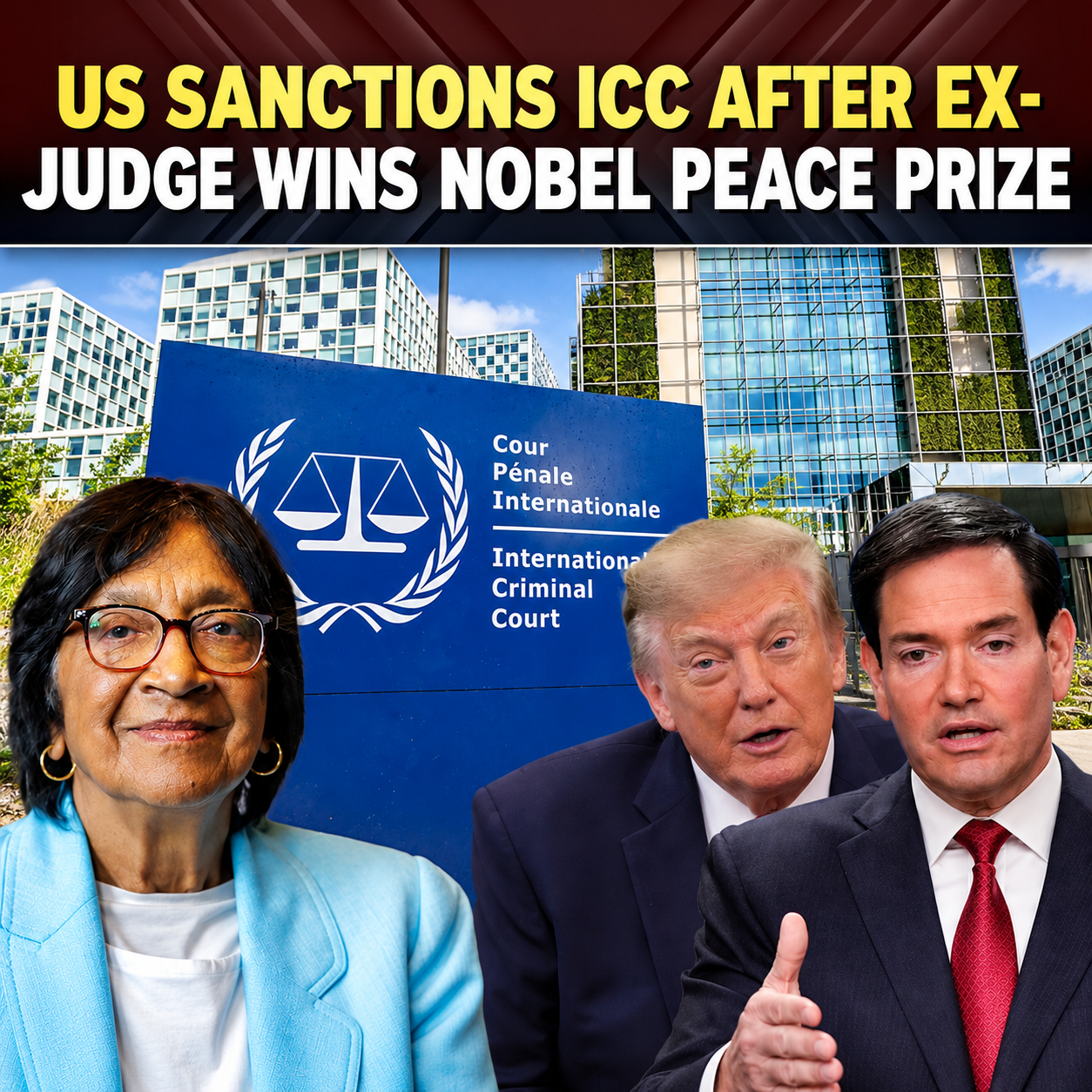
Subheadline: The Trump administration has targeted the International Criminal Court as an institution, restricting its access to U.S. financial services, technology companies and dollar transactions. The move has drawn sharp criticism from international allies and raised new questions about the future of global war-crimes prosecutions.
WASHINGTON — October 10, 2026 — Secretary of State Marco Rubio announced sweeping U.S. financial sanctions against the International Criminal Court (ICC) on Friday, October 9, escalating the Trump administration’s campaign against the international tribunal over investigations involving American personnel and Israeli leaders.
The measures mark a significant expansion of Washington’s efforts to restrict the court’s activities. Previous U.S. sanctions had targeted individual ICC judges and prosecutors, but the latest action targets the institution itself, potentially affecting its financial transactions, technology access and relationships with companies operating under U.S. jurisdiction. (Associated Press)
Rubio announced the decision in a video message, arguing that the court has exceeded its authority and threatened American sovereignty by pursuing investigations that the United States considers illegitimate.
The sanctions introduce a six-month wind-down period for U.S. companies and individuals that conduct business with the court, while restrictions on transactions and access to certain American services could create immediate operational challenges. (Reuters)
The announcement has triggered an international dispute over national sovereignty, accountability for alleged war crimes and the independence of judicial institutions.
Rubio Delivers a Forceful Warning to the ICC
In his announcement, Rubio accused the court of acting beyond its legitimate authority and attempting to exercise jurisdiction over American citizens and political leaders.
“Either the ICC will end its threats, or we will end the ICC,” Rubio declared, warning that Washington would continue its campaign against the institution unless its concerns were addressed. (Associated Press)
The administration argues that the United States never joined the ICC and should not be subject to its jurisdiction over American personnel or officials. Washington has also criticized the court’s investigations involving Israeli leaders, describing them as politically motivated and legally unjustified.
The ICC, headquartered in The Hague, Netherlands, is an international tribunal established under the Rome Statute. Its mandate includes prosecuting individuals accused of genocide, war crimes, crimes against humanity and the crime of aggression under the conditions defined by its founding treaty.
The United States is not a party to the Rome Statute, the treaty that established the court. However, the ICC maintains that it can exercise jurisdiction in certain circumstances involving alleged crimes committed on the territory of a member state, even when the accused person’s country is not a member.
That disagreement over jurisdiction lies at the heart of the confrontation.
What the Financial Sanctions Mean
The new restrictions could create substantial obstacles for the court’s everyday operations.
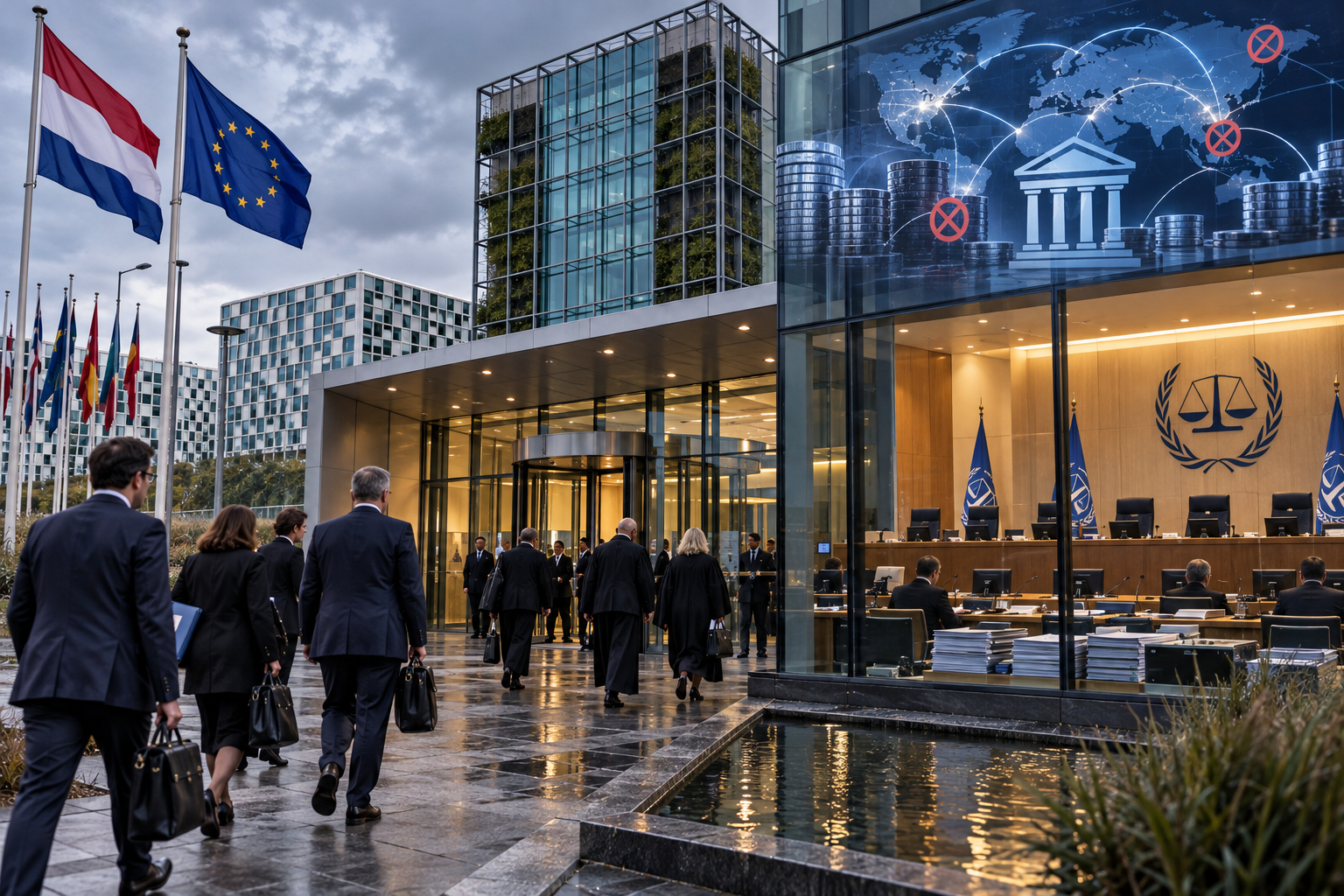
Under the measures announced by Washington, transactions with the ICC are restricted, and its access to U.S.-based financial services, technology providers and dollar-based transactions is curtailed. American companies and individuals that have existing business relationships with the tribunal have been given a six-month period to wind down those activities, subject to the applicable rules and exemptions. (The Washington Post)
The implications extend beyond the courtroom. International institutions often rely on cross-border banking, digital services, insurance and other commercial systems to pay employees, manage records and coordinate work across multiple countries.
Restrictions involving American financial and technology providers could therefore complicate the ICC’s administrative operations and discourage some organizations from cooperating with it.
The administration’s action also increases uncertainty for businesses and institutions that work with the court. Some may need to review contracts and transactions to determine whether they are permitted under the new rules.
The full impact will depend on the scope of the restrictions, applicable exemptions and the ability of the court and its international partners to arrange alternative services.
Investigations Into Afghanistan and Israeli Leaders
The dispute reflects longstanding tensions between Washington and the ICC.
The court previously authorized an investigation into alleged crimes committed in Afghanistan, including allegations involving U.S. personnel. American officials have consistently opposed the possibility of American citizens being prosecuted by a court that the United States has not joined.
Another major point of contention involves the arrest warrants issued in November 2024 for Israeli Prime Minister Benjamin Netanyahu and former Defense Minister Yoav Gallant over alleged war crimes and crimes against humanity connected to the war in Gaza.
Those warrants intensified opposition to the ICC from the Trump administration and Israeli officials.
The warrants are judicial measures alleging individual criminal responsibility; they are not convictions. The Israeli government has rejected the accusations, while the ICC maintains that its actions fall within its legal mandate.
For the Trump administration, the investigations demonstrate what it describes as an unacceptable extension of the court’s authority. For supporters of international criminal accountability, the cases illustrate why an independent tribunal is needed to investigate alleged serious crimes when national proceedings are insufficient.
ICC Rejects Sanctions and Appeals for International Support
The ICC strongly condemned Washington’s decision, describing the sanctions as an attack on the rule of law and an attempt to obstruct international justice.
ICC President Tomoko Akane said the court would continue carrying out its mandate independently and impartially, while urging member states to provide the resources necessary to sustain its work. (Reuters)
The response has also drawn support from several U.S. allies.
Canada, Denmark, Germany, France, Italy, Japan, the Netherlands and the United Kingdom expressed strong disagreement with the sanctions and pledged to continue supporting the court’s work, according to the Associated Press.
The Netherlands, which hosts the tribunal, has also been preparing possible measures to protect the ICC and European organizations that work with it. One option under consideration is an EU blocking statute designed to shield European businesses from having to comply with certain foreign sanctions. (Associated Press)
These disagreements could complicate diplomatic relations between Washington and governments that regard the ICC as an important part of the international legal system.
A Wider Battle Over International Justice
The sanctions place renewed pressure on a fundamental question: how should international courts investigate alleged crimes when powerful countries reject their authority?
The Trump administration maintains that it is protecting American sovereignty and preventing what it considers politically motivated prosecutions. The ICC and its supporters argue that restricting the court threatens its independence and makes it more difficult to hold individuals accountable for the most serious international crimes.
The confrontation could affect not only the tribunal’s finances but also broader cooperation among governments, investigators and organizations involved in international justice.
For now, the sanctions have created a new and potentially consequential dispute between the United States and its international partners. The coming months will show whether diplomatic negotiations can produce an accommodation or whether the financial restrictions deepen the divide over the future of international criminal accountability.



