Subheadline: President Donald Trump criticized the Nobel Committee after South African jurist Navi Pillay received the 2026 Peace Prize, using a Syracuse campaign rally to defend his record on global conflicts and promise further victories in Iran and Ukraine.
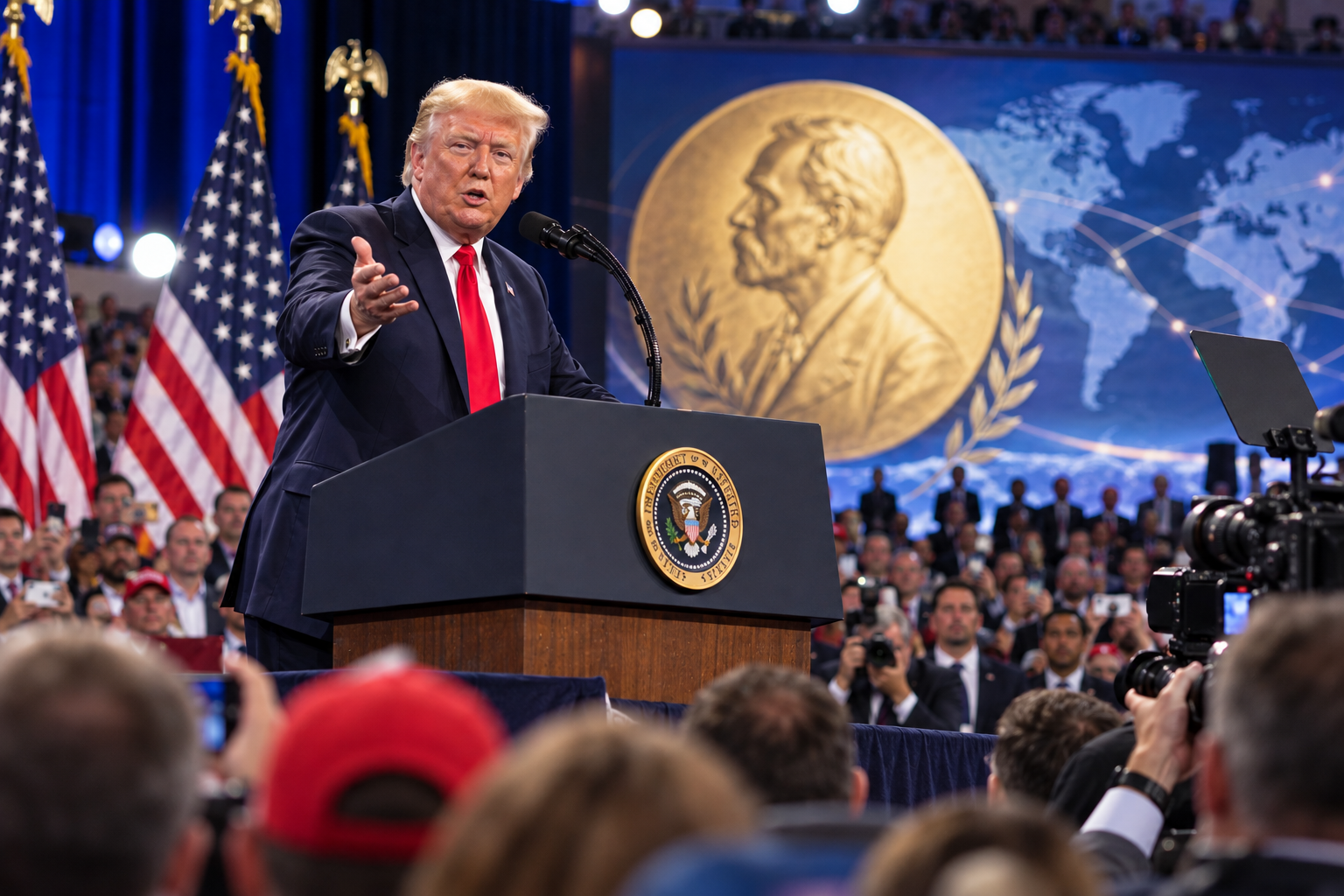
SYRACUSE, New York — October 10, 2026 — President Donald Trump used a campaign rally in Syracuse on Friday, October 9, to criticize the Norwegian Nobel Committee for not awarding him the 2026 Nobel Peace Prize, renewing his claim that he has ended eight wars and declaring that he intends to settle or win the ongoing conflicts involving Iran and Russia’s war against Ukraine.
The remarks came during an event intended to support Republican gubernatorial candidate Bruce Blakeman, but Trump’s extended criticism of the Nobel Committee became one of the rally’s central themes. The president argued that his diplomatic efforts deserved international recognition and accused the committee of making a decision that would damage the prize’s reputation.
The 2026 Nobel Peace Prize went to Navi Pillay, an 85-year-old South African jurist and former United Nations high commissioner for human rights. The Norwegian Nobel Committee recognized her efforts to promote peace, international law and accountability for serious international crimes. (Reuters)
Trump Calls Nobel Decision an Insult to the United States
Trump did not hide his frustration over the decision.
Speaking to supporters at the Oncenter convention complex, he argued that the United States, represented by him as president, should have received the award. He described the committee’s decision as “an indelible stain on the country of Norway” and said the Nobel Peace Prize had been discredited by what he characterized as politically motivated decision-makers. (Associated Press)
Trump also criticized Pillay, saying that the prize had gone to a person working at the United Nations whom few people knew. His comments followed years of public statements in which he argued that his role in international negotiations and ceasefire efforts merited a Nobel Peace Prize.
The committee, however, cited Pillay’s work on international justice and the rule of law. Its announcement did not mention Trump.
The award is selected by the independent Norwegian Nobel Committee, and the prize does not depend on a public vote or a candidate’s own assessment of their achievements.
Trump Repeats His Claim of Ending Eight Wars
The president used the dispute to revisit one of his most frequently repeated foreign-policy claims: that he has ended eight wars or major international conflicts.
The White House has listed conflicts involving Cambodia and Thailand, Kosovo and Serbia, the Democratic Republic of the Congo and Rwanda, Pakistan and India, Egypt and Ethiopia, Armenia and Azerbaijan, Israel and Iran, and the war in Gaza among the disputes Trump says he helped resolve. (White House)
However, that claim requires important context. Some of the situations involved ceasefires, diplomatic agreements or periods of reduced tensions rather than comprehensive peace settlements. Trump’s precise role in several cases has also been disputed, and some conflicts have remained unresolved.
The distinction matters because a temporary ceasefire does not necessarily mean a conflict has permanently ended. Determining whether a war has concluded often depends on the durability of an agreement, whether fighting resumes and whether the underlying dispute has been addressed.
Trump nevertheless presented the number as evidence of achievements he believes should have earned him the international honor.
President Says Iran and Ukraine Are Next
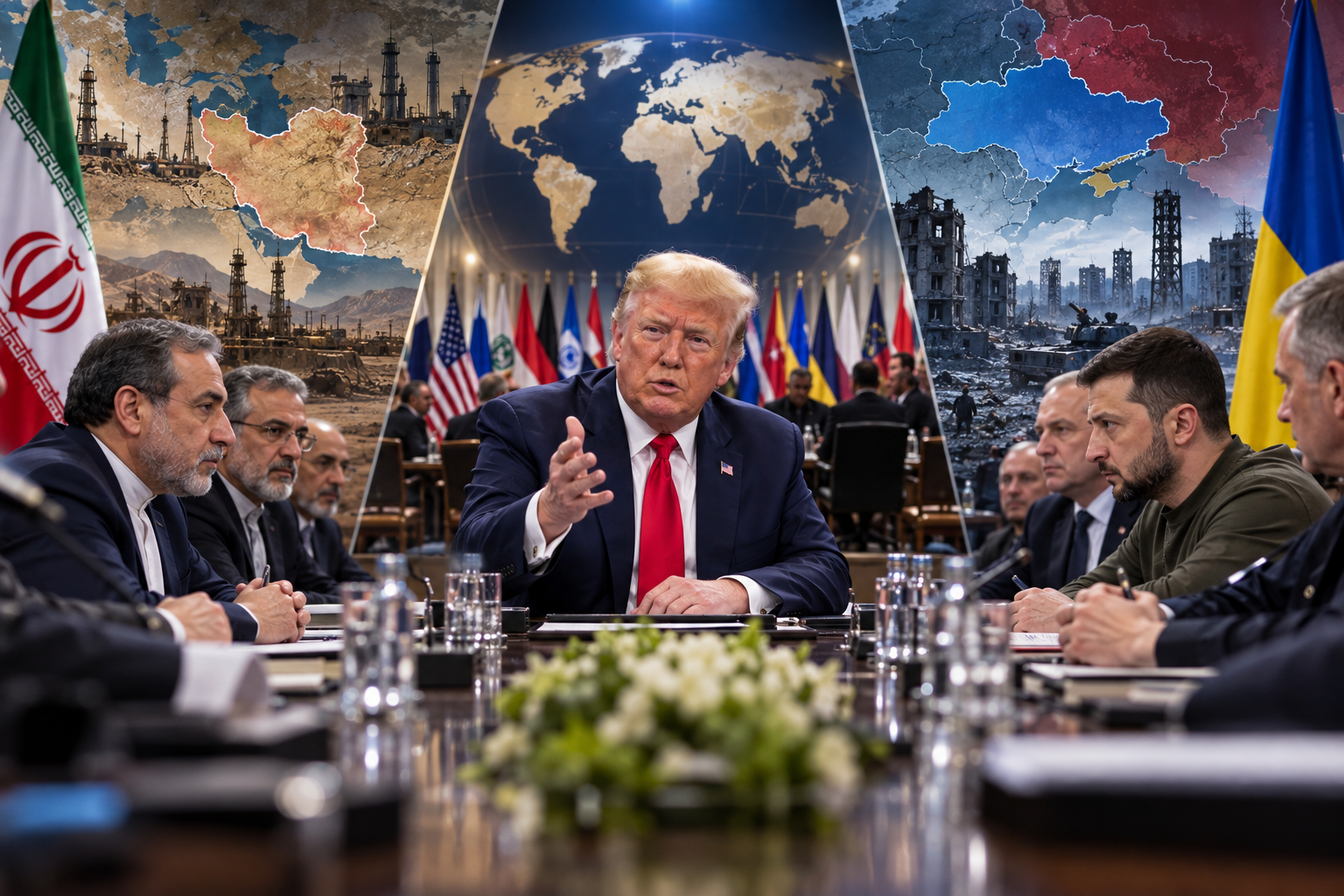
Trump’s remarks became particularly consequential when he turned to the two major conflicts he said he hoped to resolve next.
“I’m about to settle or win two more: Iran and Russia-Ukraine,” Trump said, according to The Guardian. He added that he expected the conflicts to end quickly. (The Guardian)
His comments come as the war involving Iran remains unresolved and diplomatic efforts face significant obstacles. The United States and Israel have carried out military operations against Iran, while Tehran has threatened retaliation against further attacks.
The conflict has also created concerns about regional stability, commercial shipping and international energy supplies.
Trump’s comments about Ukraine were similarly ambitious. Russia’s war against Ukraine remains a major international security challenge, with any lasting settlement requiring decisions by the countries involved and agreement on difficult questions concerning territory, security guarantees and the future relationship between Moscow and Kyiv.
Trump’s statements expressed his intention to secure further victories, not confirmation that either conflict has been resolved. No completed agreement ending both wars was announced during the Syracuse rally.
Iran Nuclear Claims Add to the Controversy
Trump also defended his approach to Iran’s nuclear program, claiming that his actions had prevented Tehran from obtaining a nuclear weapon and potentially causing destruction across the Middle East and beyond.
Those assertions need to be distinguished from publicly available intelligence assessments. A 2025 U.S. intelligence assessment reported that Iran had suspended its nuclear weapons program in 2003, although concerns about its uranium enrichment activities and the possibility of future weapons development have remained central to international diplomacy.
The status of Iran’s nuclear material, damaged facilities and future enrichment capabilities continues to be a critical issue in negotiations.
Trump’s latest comments therefore combine a claim about preventing a future threat with a broader argument that his administration’s actions have made a decisive contribution to international security.
Nobel Controversy Overshadows the Campaign Rally
The Nobel dispute also diverted attention from the political purpose of Trump’s visit to New York.
The rally was organized to promote Bruce Blakeman’s Republican campaign for governor against Democratic incumbent Kathy Hochul. Trump also criticized New York Attorney General Letitia James and spoke about the economy as Republicans prepare for the November 3, 2026, midterm elections. (Associated Press)
The timing is politically significant because the Iran conflict, energy costs and economic concerns are weighing on the national debate ahead of the election.
For Trump, the Nobel controversy provided another opportunity to defend his foreign-policy record. For the committee, the award recognized Pillay’s work in international justice rather than Trump’s stated ambitions.
What Happens Next?
Trump’s latest remarks leave two separate questions in focus: whether his administration can secure lasting settlements in Iran and Ukraine, and whether his diplomatic record will be viewed differently by the international community over time.
The Nobel Peace Prize has been awarded to Navi Pillay, while the conflicts Trump says he intends to resolve remain unsettled.
For now, Trump’s promise to end the Iran and Russia-Ukraine wars remains a political declaration rather than an accomplished outcome. Whether negotiations can produce durable peace agreements will depend on the actions of the governments involved, the terms they are prepared to accept and whether any agreements hold.
As the November elections approach, Trump’s foreign-policy claims are likely to remain a prominent part of the national debate—particularly as voters weigh the costs, consequences and prospects of the continuing conflicts.



