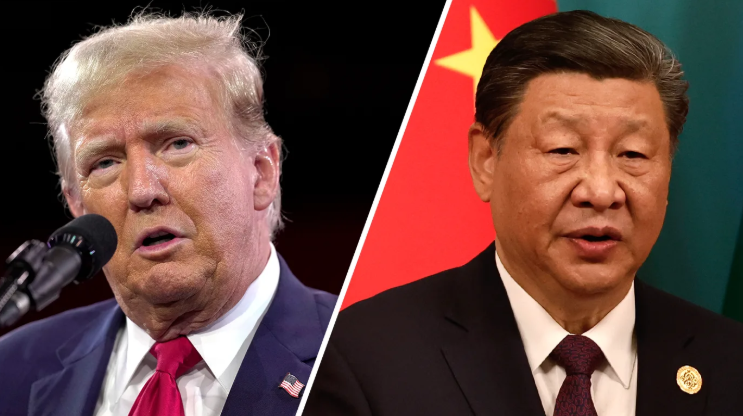
China, U.S. Release $60 Billion Tariff Lists After Trump-Xi Summit
WASHINGTON/BEIJING — The United States and China have released reciprocal lists of non-sensitive goods worth roughly $30 billion in each direction that could receive more favorable tariff treatment, giving concrete form to a trade mechanism created by President Donald Trump and Chinese President Xi Jinping earlier this year.
The announcement is significant because it identifies the products covered by the new U.S.-China “30-for-30” framework after months of negotiations. Together, the two lists represent about $60 billion in annual two-way trade, based on 2024 trade values.
But the development is more limited than some viral descriptions suggest. It is not a wholesale cancellation of Trump-era tariffs, it does not settle the largest strategic disputes between Washington and Beijing, and it does not by itself demonstrate that the global balance of power has suddenly shifted.
The White House published the product lists on September 27 through the newly established U.S.-China Board of Trade. The official terms say the two governments will consider the listed goods for reduced tariff treatment in a reciprocal manner and that future tariff reductions will be determined and implemented through each country’s domestic legal processes.
That wording matters. The framework creates an approved pathway for lower duties, but the official U.S. documents do not describe every tariff reduction as automatically taking effect the moment the lists were published.
U.S. Trade Representative Jamieson Greer said the framework covers $30 billion of non-sensitive trade on each side and could improve market access for about 30 percent of U.S. exports to China. He said the American side is seeking better treatment for products ranging from agricultural goods to medical devices while allowing lower-cost imports of selected Chinese consumer products.
The White House says the U.S. products identified for possible preferential treatment include agricultural goods, fish and seafood, logs and wood products, cosmetics and medical devices. Chinese goods identified for potential relief include toys, small household appliances, holiday decorations and children’s car seats.
The emphasis on “non-sensitive” goods is central to the deal. Washington and Beijing are separating ordinary commercial trade from sectors they regard as strategically important, allowing limited tariff relief without removing the broader web of restrictions surrounding national security, technology and critical supply chains.
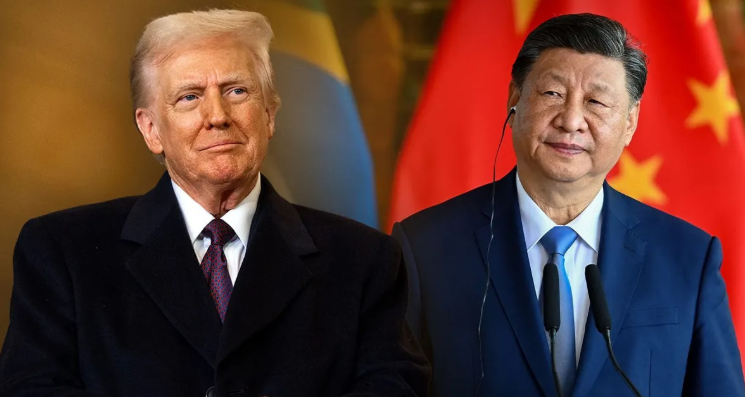
That means advanced semiconductors, electric vehicles and other strategic products remain outside the core of this arrangement. The framework therefore represents selective de-escalation rather than a broad reset of U.S.-China economic relations.
The two governments first agreed to create the U.S.-China Board of Trade during Trump’s May 2026 visit to Beijing. Under the board’s terms of reference, officials from both countries were tasked with developing comparably valued lists of products totaling about $30 billion on each side. The principals have now approved those lists, and officials may review the arrangement and consider future expansion.
The release comes after Xi’s state visit to Washington, where the two leaders also extended a temporary trade truce and created additional channels for cooperation. The broader diplomatic effort is aimed at preventing another immediate spiral of tariffs and countermeasures while negotiators continue to work on harder disputes.
Those unresolved issues remain substantial. Rare earth minerals and critical materials are still a major source of tension. China retains a dominant role in the processing of many rare earths used in electronics, automobiles, advanced manufacturing and military systems, giving Beijing leverage in an area Washington increasingly treats as a national-security concern.
Technology controls are another major dividing line. U.S. restrictions on advanced chips and other sensitive technologies remain separate from the new tariff framework. Taiwan and wider security disputes in the Indo-Pacific also remain unresolved and were not settled by the publication of the tariff lists.
The product lists nevertheless matter for businesses because they convert a political understanding into something more specific. Importers and exporters can now see which categories are being targeted for preferential treatment, and the framework creates a process for monitoring trade in those products and considering adjustments over time.
For American exporters, the most important question is whether the lower duties translate into measurable sales. Agriculture is particularly important because U.S. farmers have repeatedly been caught in the middle of tariff disputes with China. Medical-device makers, seafood exporters and producers of wood products could also benefit if the new treatment is fully implemented.
For U.S. consumers and importers, the potential benefit is more straightforward: selected Chinese household and consumer goods could face lower tariff costs. But because the framework is targeted rather than comprehensive, it will not eliminate the broader cost effects of the U.S.-China tariff structure.
China’s Ministry of Commerce had acknowledged before the summit that the two sides were consulting on reciprocal tariff reductions covering about $30 billion in goods from each country. At a September 17 press conference, the ministry said the economic and trade teams were maintaining close communication and that progress would be announced in due course.
The latest release is therefore the next step in a process that was already underway rather than a surprise policy reversal announced without warning. The dramatic element is the scale of the product lists and the fact that both governments have now formally approved them, not an overnight transformation of the world economic order.
Reporting from the Associated Press and PBS on September 28 and 29 described the move as a meaningful but limited easing of trade tensions after the Trump-Xi meetings. The coverage also emphasized that strategic products remain outside the arrangement and that major disputes between the two countries continue.
The distinction is especially important when assessing claims circulating online that “China just flipped the global balance of power.” Trade policy can alter commercial incentives and strategic leverage, but a $60 billion framework for selected goods is small relative to the full scale of U.S.-China trade and does not by itself establish a sudden geopolitical realignment.
What the announcement does show is that Trump and Xi have chosen, at least for now, to build a controlled channel for economic cooperation rather than allow every area of the relationship to be governed by confrontation. That is a notable shift in tone from periods when tariff escalation dominated the bilateral relationship.
The next test will be implementation. The official terms specify that tariff changes must proceed through domestic legal processes, and the board can monitor trade in the covered products and recommend future adjustments. The two sides may also discuss expanding the framework to additional goods.
So the immediate story is not that China has overturned the global order. It is that Washington and Beijing have moved from broad political promises to a defined $60 billion trade framework covering non-sensitive goods — a concrete step toward selective tariff relief while their larger strategic rivalry remains firmly in place.
ALTERNATIVE HEADLINES
NUMBER-DRIVEN: Trump-Xi Framework Targets $60 Billion In U.S.-China Trade For Tariff Relief
CONFLICT-DRIVEN: U.S. And China Ease Pressure On $60 Billion In Trade — While Tech And Rare-Earth Fights Remain
YOUTUBE-DRIVEN BUT FACTUAL: China And U.S. Just Revealed The $60 Billion Trump-Xi Trade List — Here’s What It Actually Changes



