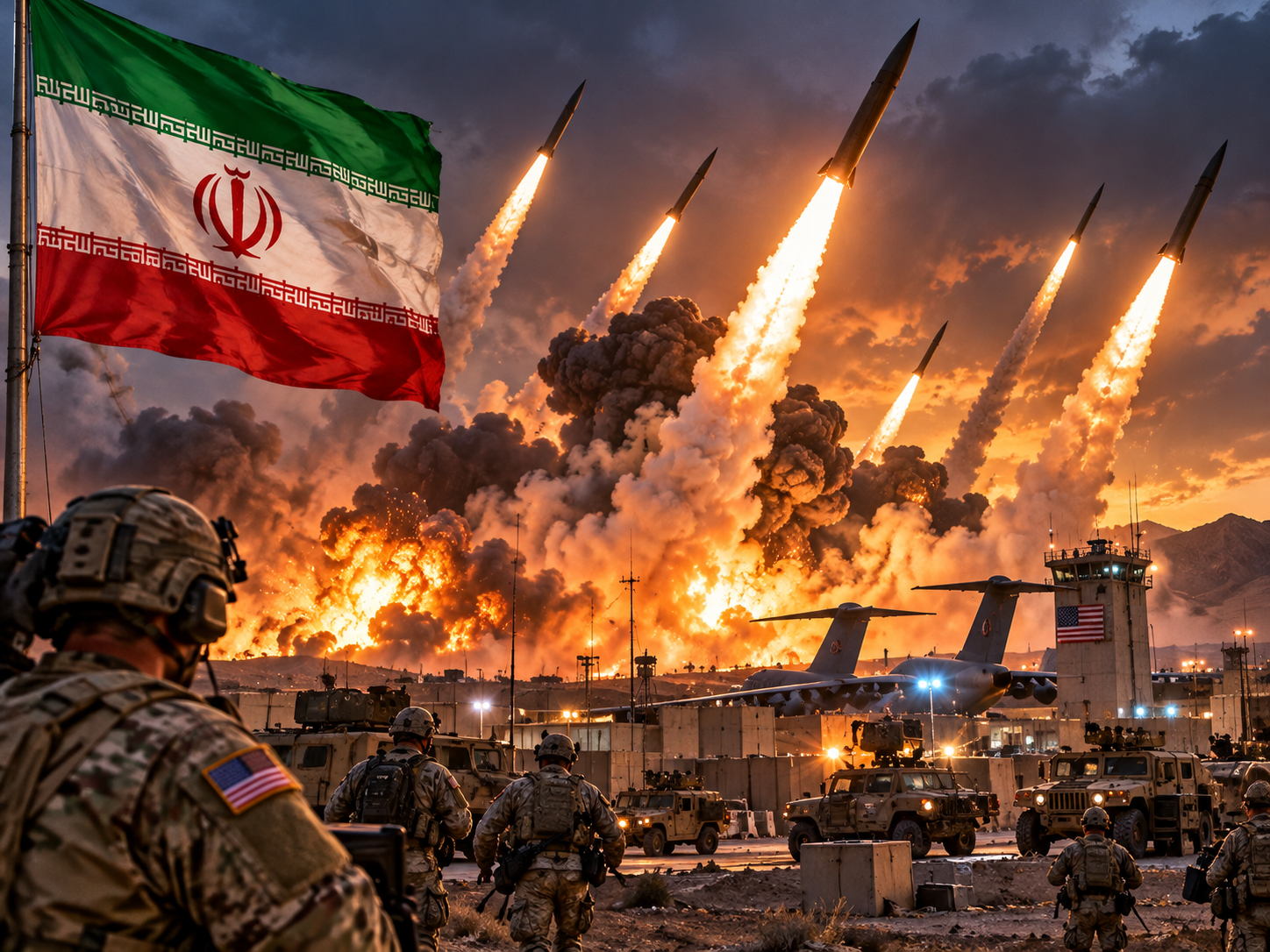
A new military escalation unfolded in the Middle East on July 28, when Iran launched multiple ballistic missiles toward U.S. forces and American and Saudi aircraft subsequently struck Iran-aligned militia sites in Iraq. The developments threatened to undermine a fragile pause in hostilities and raised fresh questions about whether diplomacy could prevent another round of regional fighting.
The U.S. military said its forces intercepted every Iranian missile launched in the attack. Hours later, U.S. Central Command (CENTCOM) announced that American and Saudi fighter aircraft had conducted precision strikes against logistics and weapons sites in eastern Iraq.
The two operations highlighted the growing connection between direct confrontation with Iran and attacks carried out by armed groups that Washington says receive direction from Tehran.
Iranian Ballistic Missiles Intercepted
According to CENTCOM, Iran’s Islamic Revolutionary Guard Corps (IRGC) launched multiple ballistic missiles at 5:45 p.m. Eastern Time on July 28 in what the U.S. military described as an attempted surprise attack on American forces in the Middle East.
“All Iranian missiles were successfully intercepted,” CENTCOM said in its public statement. The command added that U.S. forces remained vigilant and at a high state of readiness.
Axios, citing a U.S. official, reported that the missiles were directed toward an American military base in Jordan. CENTCOM’s public statement did not identify the exact location of the forces targeted in the attack.
The incident came after President Donald Trump had paused U.S. strikes against Iran to give negotiations another opportunity. The renewed missile attack therefore raised immediate concerns about whether the fragile diplomatic opening could survive further military exchanges.
U.S. and Saudi Forces Strike Targets in Iraq
Later that evening, CENTCOM announced a joint operation involving American and Saudi fighter aircraft against multiple logistics and weapons facilities in eastern Iraq.
U.S. officials said the strikes targeted Iran-aligned armed groups accused of conducting more than 30 drone attacks during the preceding 72 hours against American forces and Saudi energy infrastructure.
According to CENTCOM, the Islamic Revolutionary Guard Corps had directed the attacks. The military described the operation as a response intended to disrupt the groups’ ability to continue launching attacks.
Saudi Arabia subsequently confirmed its participation. Its Foreign Ministry said the joint strikes followed drone attacks against Saudi interests launched from inside Iraq. Riyadh also said it did not seek further escalation but reserved the right to protect its territory, citizens and national assets.
The participation of Saudi aircraft was a significant aspect of the response. Rather than limiting its involvement to diplomatic statements, Riyadh joined Washington in conducting military action against groups it regarded as threats to its security.
CENTCOM Cites Hundreds of Earlier Attacks
The Pentagon also pointed to a longer pattern of attacks involving Iran-aligned militias.
According to figures cited by CENTCOM and reported by Axios, those groups attempted more than 600 attacks against U.S. citizens and facilities in Iraq between February and April 2026.
That figure covers the specified three-month period. It should not be interpreted as a verified total for the entire year, and the publicly reported figures do not establish that every attempted attack had the same target, impact or level of involvement by Iranian officials.
The repeated attacks have complicated the security environment for American personnel across the region. Washington has accused Tehran of using partner militias to exert pressure while maintaining some distance from individual operations.
Iran’s broader regional relationships remain a source of tension, although assessing responsibility for specific attacks requires evidence about the planning, command structure and actions involved.
A Military Response With Diplomatic Consequences
The July 28 confrontation came during a period of uncertainty over negotiations between Washington and Tehran. Trump had publicly indicated that discussions were underway while warning that military action could resume if diplomacy failed.
The missile attack and subsequent airstrikes raised the risk that a limited exchange could develop into a broader confrontation. Further attacks against American personnel, Saudi infrastructure or other regional targets could put additional pressure on the diplomatic process.
At the same time, military officials’ announcements do not independently establish the full damage inflicted on the targeted sites or the longer-term effectiveness of the strikes. Those questions require additional evidence beyond initial battlefield statements.
The confirmed sequence is clear: Iran launched ballistic missiles, CENTCOM said all were intercepted, and U.S. and Saudi aircraft struck Iran-aligned militia sites in Iraq. What remains uncertain is whether the military response will deter further attacks or contribute to another cycle of retaliation.
The episode illustrates the challenge facing Washington and its regional partners: protecting military personnel and critical infrastructure while avoiding an escalation that could make a diplomatic settlement more difficult to achieve.



