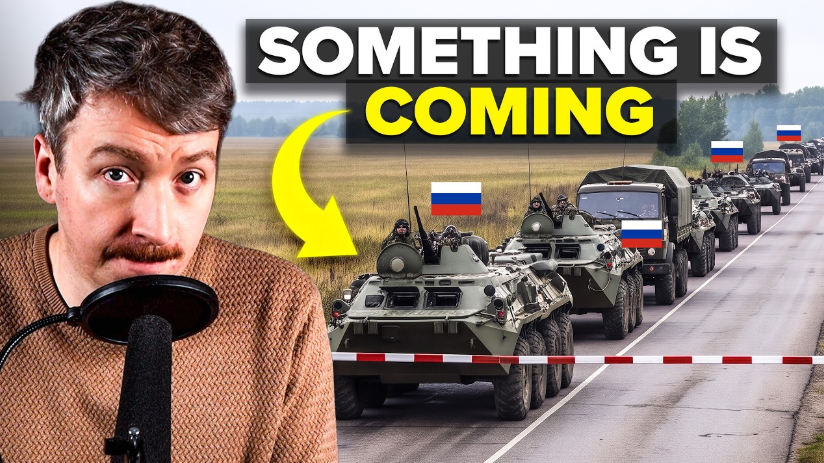
New satellite imagery is raising concerns about Russia’s long-term military ambitions as tanks, armored vehicles and artillery systems reappear at storage facilities near NATO’s northeastern borders. While Moscow continues its war in Ukraine, analysts say the rebuilding of military reserves and expansion of infrastructure could give Russia greater capacity to threaten Europe in the years ahead.
The developments do not prove that Russia is preparing an immediate invasion of a NATO country. But they suggest that the Kremlin is thinking beyond the current battlefield—and that European governments have a growing reason to strengthen their defenses.
New T-90M Tanks Appear at Russian Storage Bases
A report published by UNITED24 Media on October 19, based on satellite imagery and open-source intelligence research, documented renewed activity at several Russian military storage facilities.
One of the most notable locations is the 22nd Central Tank Reserve Base near Buy, in Russia’s Kostroma region. Satellite comparisons from October 2025 and October 2026 show the arrival of newly manufactured T-90M main battle tanks, alongside BTR-82A armored personnel carriers and other vehicles. The facility is approximately 500 kilometers from Estonia and Latvia.
Farther north, a military storage facility in Karelia, approximately 185 kilometers from Finland, has reportedly received additional 2S43 Malva wheeled artillery systems and 2S44 Giatsint-K self-propelled guns.
Other facilities are also being replenished. The 6018th storage base has reportedly received BMP-3 infantry fighting vehicles and BMD-4 airborne combat vehicles, while the 349th Central Tank Storage Base at Topchikha has accumulated refurbished T-72B3 tanks and BMP-2 vehicles.
These developments are significant, but the distinction is important: the vehicles identified in the imagery are being stored, not confirmed as newly deployed combat formations positioned for an immediate attack.
Why Is Russia Rebuilding Its Armor Reserves?
Russia relied heavily on older Soviet-era equipment during the first years of its invasion of Ukraine. Many storage facilities were stripped to replace battlefield losses.
However, the military environment has changed. Drone warfare, precision strikes and increasingly dangerous frontline conditions have made large concentrations of armored vehicles more vulnerable.
According to the Institute for the Study of War’s October 16 assessment, Russia appears to be replenishing its armored reserves while simultaneously conducting major operations in Ukraine. Analysts suggest that lower battlefield use of heavy armor, combined with continued production, repairs and refurbishment, has allowed equipment to accumulate at storage bases.
The assessment describes this as partial and relatively modest reconstitution, rather than evidence that Russia has already rebuilt its prewar armored strength.
Belarus and Kaliningrad Add to NATO’s Concerns
Russia is also strengthening military infrastructure in Belarus, its close military partner.
In December 2025, Russia announced that an Oreshnik intermediate-range ballistic missile unit had been placed on combat duty in Belarus. Satellite imagery analyzed by defense intelligence company Janes identified a possible launch facility under construction at the former Krichev-6 airbase, including a rail spur leading toward a secure structure believed potentially to support delivery and storage.
This is evidence of missile-related infrastructure development, but it does not establish the separate claim that Belarusian railways have been broadly reinforced for Iskander missile launchers.
In Kaliningrad, satellite imagery has revealed construction of a large over-the-horizon radar facility near Gvardeysk, approximately 37 kilometers from the Polish border. The installation features three antenna structures, each more than 500 meters long.
Analysts estimate that a system of this type could potentially detect aerial threats at distances approaching 3,000 kilometers. However, its operational status and actual performance have not been independently established. On October 26, the British government confirmed that the construction was being monitored in coordination with NATO allies.
Strategic Infrastructure Raises Additional Questions
Military concerns extend beyond tanks and missiles.
An October analysis by the Atlantic Council highlighted reports of Russian-linked purchases of property near sensitive infrastructure in Northern Europe, including ports, military facilities and energy installations.
Such properties could potentially create intelligence or security vulnerabilities. However, ownership alone does not prove espionage or sabotage activity. Finland and other European countries have responded by strengthening restrictions on certain foreign property purchases.
Can NATO Match Russia’s Military Expansion?
NATO’s challenge is not simply buying more tanks. It must develop a combination of armored forces, air defenses, drones, electronic warfare and ammunition production.
On October 30, NATO’s Supreme Allied Commander Transformation, Admiral Pierre Vandier, warned that forces unprotected against drone attacks and swarms face significant risks. He emphasized integrating drones into traditional military capabilities rather than replacing conventional equipment entirely.
Europe is investing more heavily in defense. The European Defence Agency reported that EU military spending reached €418 billion in 2025, equivalent to 2.2% of EU economic output, and could rise to €547 billion by 2029. However, the agency acknowledged that major capability and industrial-production gaps remain.
The biggest concern is the period after the war in Ukraine. Russia’s ability to rebuild forces may increase as troops and military resources become available for other missions.
Nevertheless, Estonia’s Foreign Intelligence Service assessed in February 2026 that Russia had no intention of militarily attacking a NATO member during the following year. The rebuilding of reserves is a reason for long-term preparation—not proof that an attack is imminent.
For NATO, the objective is to make sure Russia never sees an opportunity to test the alliance’s unity. The military buildup deserves attention, but the most important question is whether Europe can turn its growing defense spending into the equipment, readiness and industrial capacity needed to deter future aggression.



