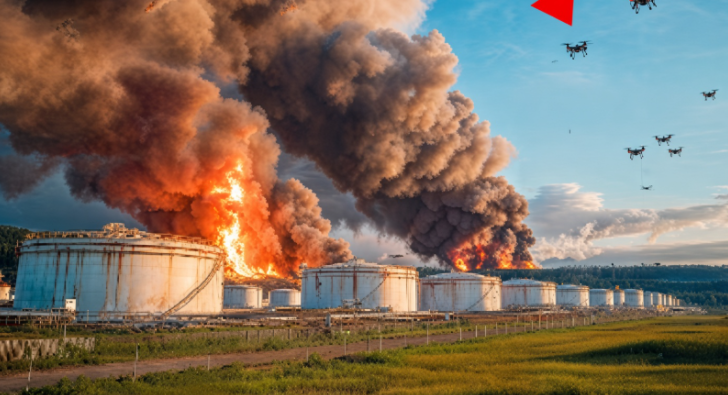
A Ukrainian long-range drone attack struck one of Russia’s major oil-refining complexes nearly 1,300 kilometers from Ukraine, triggering a fire and renewing concerns about the vulnerability of Moscow’s energy infrastructure. The October 8 operation targeted the Gazprom Neftekhim Salavat complex in Russia’s Bashkortostan region, demonstrating how Ukrainian unmanned aircraft can threaten strategically important industrial facilities far from the front lines.
However, some dramatic details circulating in military videos—including the claim that exactly eight drones penetrated multiple Russian air-defense systems—have not been independently verified.
A Deep Strike Against Russia’s Energy Industry
Ukraine’s General Staff confirmed that its forces struck the Salavat refinery overnight on October 8, 2026.
The facility is approximately 1,300 kilometers from Ukraine’s border, making it a significant long-range target. According to Ukrainian officials, the complex can process up to 10 million metric tons of hydrocarbons annually and produces gasoline, diesel, fuel oil, bitumen, polyethylene and other petrochemical products. Kyiv says the facility contributes to supplying Russia’s military.
Ukrainian defense company Fire Point said its FP-1 long-range drones were used in the operation. Videos circulated online showing explosions and a fire at the industrial complex. The Ukrainian military described the strike as part of its campaign against infrastructure supporting Russia’s military economy.
Did Eight Drones Defeat Russia’s Air Defenses?
The dramatic reconstruction circulating online describes eight fixed-wing drones flying autonomously over long distances while avoiding Russian S-400 and Pantsir-S1 air-defense systems.
Those systems represent important layers of Russia’s air-defense network. The S-400 is designed for long-range aerial threats, while Pantsir-S1 provides shorter-range protection.
But there is an important evidence gap.
No reliable independent report has confirmed the exact number of drones, their flight altitude, the precise interception sequence or whether the S-400 and Pantsir-S1 systems were directly engaged during this particular attack.
The verified element is the Ukrainian strike, the use of FP-1 drones according to Fire Point, and the resulting fire—not every tactical detail shown in online reconstructions.
Why the Salavat Refinery Matters
The attack is significant because Russia depends heavily on its domestic oil-refining industry to supply transportation fuel and petrochemical products.
Repeated attacks on refineries can force companies to repair damaged equipment, interrupt production and redirect resources toward protecting industrial facilities.
Salavat had already been targeted in previous attacks, including operations in July and August 2026. The October strike demonstrated that the facility remained vulnerable despite earlier damage.
Russia’s Oil Industry Faces Growing Pressure
Ukraine’s refinery campaign has had wider economic consequences.
In a report published October 27, Reuters said Russian refineries had increased crude processing by approximately 25% during the second half of October after drone attacks on refinery facilities stopped. The report linked the pause in strikes to diplomatic efforts and an energy ceasefire announced by President Donald Trump on October 11.
The development highlights the importance of refinery infrastructure to both countries’ wartime economies.
The October 8 attack demonstrated the reach of Ukraine’s long-range drone campaign. While the dramatic claims about eight drones defeating multiple air-defense systems remain unverified, the strike itself was confirmed—and the vulnerability of strategic Russian energy facilities remains a serious concern.



