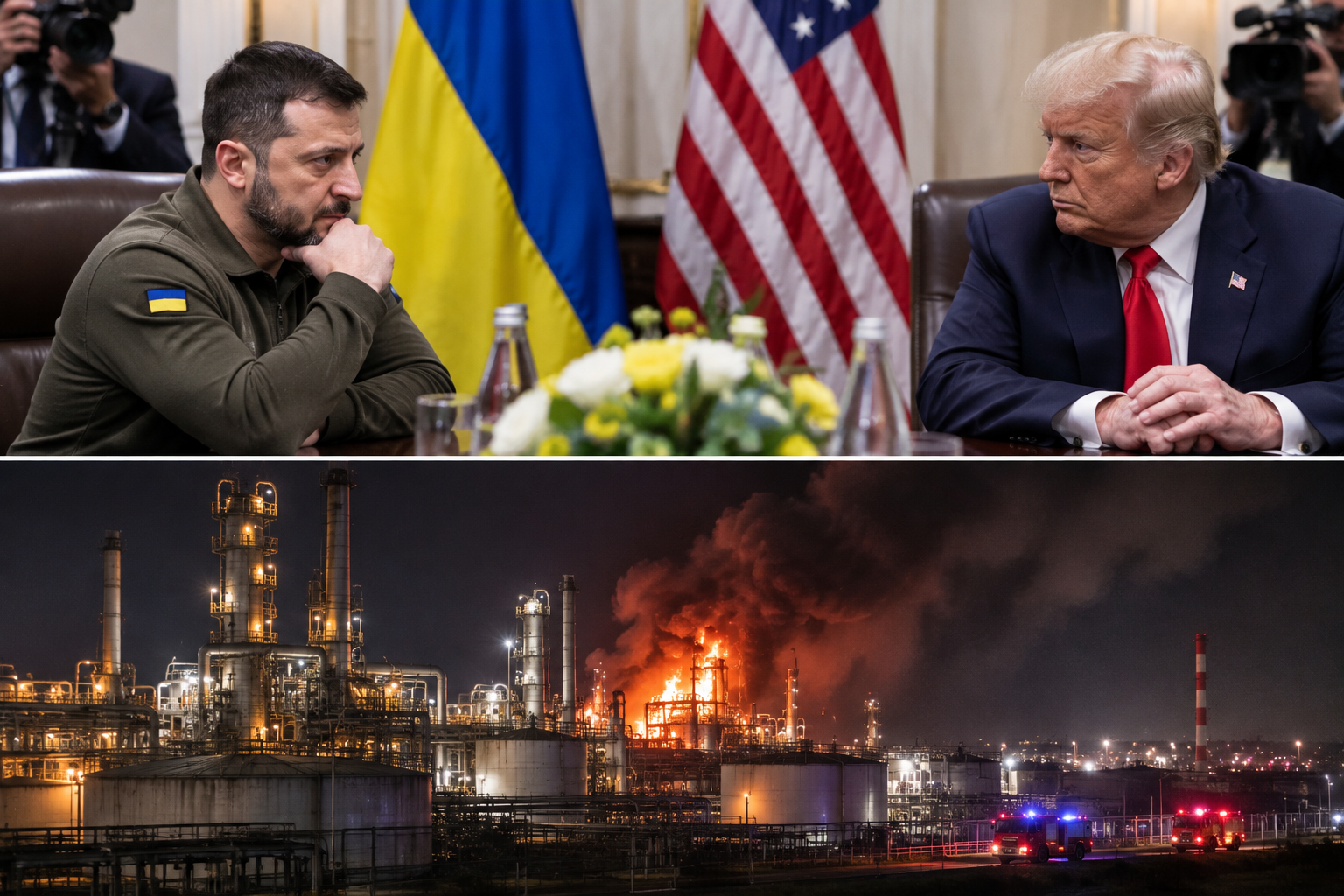
A growing dispute over Russian oil refineries, military intelligence, and satellite communications has placed relations between Ukrainian President Volodymyr Zelenskyy and U.S. President Donald Trump under renewed pressure. What began as an argument over attacks on Russian energy infrastructure has developed into a broader disagreement over how the war should be fought—and what Ukraine must accept in exchange for continued American support.
The phrase “We’re done” came from Zelenskyy in an October 15 interview with the Financial Times. He was referring specifically to Ukraine’s temporary restraint on attacking Russian oil refineries, not announcing a break in diplomatic relations with Washington.
1. How the Energy Truce Fell Apart
On October 11, Trump announced that Russia and Ukraine had agreed to halt attacks on energy infrastructure. However, neither government publicly confirmed a formal agreement with clearly established terms.
Ukraine temporarily held back some refinery attacks, but Kyiv accused Moscow of continuing strikes against Ukrainian power infrastructure. Ukrainian officials reported that Russian missiles and drones had damaged energy facilities and disrupted electricity supplies.
Zelenskyy told the Financial Times that Ukraine had observed the proposed arrangement for approximately three days, but would not continue doing so without reciprocal restraint from Russia.
“The block [on attacking refineries] is out. We’re done,” he said.
On October 15, Ukraine struck a refinery in Russia’s Ryazan region. Russian regional authorities reported a fire, while a Ukrainian official confirmed the strike to the Associated Press. The incident marked a renewed escalation in the dispute over energy targets.
2. Why Russian Oil Refineries Matter
Ukraine’s long-range drone campaign against Russian oil infrastructure is intended to damage facilities that support Moscow’s energy industry and generate revenue for the Russian state.
Refineries convert crude oil into products including diesel, gasoline, and aviation fuel. Attacks can disrupt processing capacity, create repair costs, and complicate fuel distribution. However, the actual economic effect depends on the extent of damage, how quickly equipment can be repaired, available storage, and the ability to redirect production.
Trump has criticized Ukraine’s refinery attacks, arguing that they contribute to higher fuel prices. His administration has also pursued arrangements intended to increase Russian diesel supplies to international markets and temporarily eased certain Russia-related restrictions.
Kyiv views the campaign differently. Ukrainian officials argue that attacking Russian energy infrastructure is a way to impose costs on Moscow while responding to Russia’s repeated attacks on Ukraine’s electricity system.
3. Intelligence and Starlink Become Part of the Dispute
The disagreement became more serious when Zelenskyy accused Washington of interrupting intelligence-sharing used to warn Ukraine about incoming Russian ballistic missile attacks.
Trump publicly said the United States was continuing to provide intelligence. Zelenskyy later said the exchange had been interrupted but restored.
On October 18, Reuters reported that Zelenskyy confirmed the intelligence-sharing had been “de-blocked.” He thanked Washington for restoring the support, which Ukraine relies on to help detect and prepare for Russian missile attacks.
Ukraine also reported restrictions affecting its military use of Starlink and Starshield satellite communications. Reuters cited officials who said the disruption followed an order originating from the White House. Ukraine subsequently reported that Starlink speeds and intelligence support had been restored, although the precise technical scope of the restrictions has not been fully disclosed publicly.
These developments highlighted how important American-controlled technology and intelligence remain to Ukraine’s defense.
4. The Latest Refinery Strikes Complicate the Picture
On October 29, Reuters reported on a Wall Street Journal account that Ukrainian long-range units had been told to pause refinery strikes after pressure from Washington. Reuters said it could not independently verify that report.
Ukraine subsequently disputed claims that it had agreed to a formal 30-day suspension. On November 1, the Guardian reported that Russian state media had described drone attacks on the Kstovo refinery and a Rosneft facility in Russia’s Samara region.
Reuters separately reported significant damage to an unidentified industrial facility in Russia’s Nizhny Novgorod region after a Ukrainian drone attack. Russian authorities did not identify the facility, and Kyiv did not immediately claim responsibility for that particular attack.
The latest reports suggest the refinery campaign remains active, but the exact operational orders and responsibility for individual incidents are not fully established publicly.
5. Patriot Missiles Become Part of the Negotiation
In another significant development, Zelenskyy said Ukraine would consider stopping refinery attacks for one month if Washington provided additional Patriot air-defense interceptors.
The request reflects Ukraine’s growing concern over Russian ballistic missile attacks and dwindling interceptor supplies.
On Friday, October 30, the Trump administration approved a proposed $2.1 billion sale of 500 Patriot interceptors for Ukraine. The Associated Press reported that Canada, Germany, and Norway would fund the purchase through a U.S. program, with no American funds involved.
The approval is an important development, but it does not mean all 500 missiles have already arrived in Ukraine. Zelenskyy has warned that delivery could take years.
6. Is Ukraine Breaking With Washington?
Despite the public criticism, there is no confirmed diplomatic break between the two governments. Zelenskyy has said he wants to maintain trust with Trump, while Ukrainian officials have continued discussions with American representatives.
The central disagreement is over the conditions for de-escalation. Washington has pressed Kyiv to limit attacks on Russian energy facilities, while Ukraine wants protection against Russian strikes and argues that any restraint must be reciprocal.
The November 1 refinery reports and the Patriot proposal show that the dispute remains unresolved. Ukraine is seeking the ability to defend its energy infrastructure while retaining leverage against Russia’s energy revenues. Washington, meanwhile, is trying to influence the campaign while pursuing negotiations to end the war.
For now, the relationship remains under strain—but the continued intelligence cooperation, diplomatic contacts, and approved Patriot sale show that the two countries have not ended their partnership.



