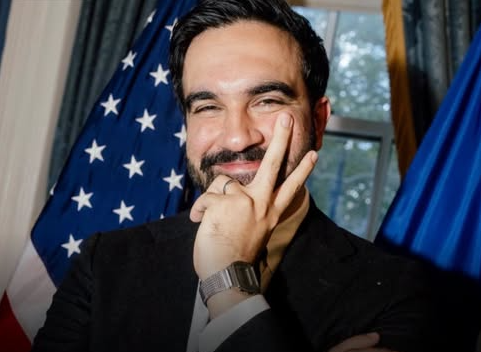
New York City Mayor Zohran Mamdani has ruled out changing the U.S. Constitution to make himself eligible for the presidency, delivering a straightforward answer during a June interview with ABC News.
Asked whether the Constitution should be amended to allow naturalized citizens like him to become president, Mamdani answered “No.” He then added: “I think the Constitution looks good the way it is.”
His response has drawn attention because Mamdani, who was born in Uganda and became a U.S. citizen through naturalization in 2018, does not meet the presidential citizenship qualification under the generally accepted interpretation of Article II.
1. The ABC Interview That Started the Conversation
The exchange took place on June 28, 2026, during an appearance on ABC’s This Week with journalist Jonathan Karl.
Karl noted that Mamdani would soon turn 35, meeting one of the Constitution’s age requirements for the presidency. He then pointed out another requirement: presidential candidates must be natural-born U.S. citizens.
Mamdani acknowledged that he was not born in the United States.
When Karl asked whether the constitutional requirement should be changed, Mamdani responded simply:
“No. I think the Constitution looks good the way it is.”
The mayor then made a lighthearted reference to his upcoming birthday, saying he was excited to focus on New York City and thanking Karl for reminding him of his approaching mortality.
The exchange was notable because Mamdani did not use the opportunity to promote a constitutional amendment or suggest that he was preparing a presidential campaign. Instead, he emphasized his commitment to his current responsibilities as mayor.
2. Why Mamdani Is Not Eligible Under the Current Rules
The relevant constitutional provision appears in Article II, Section 1, Clause 5.
It establishes three principal qualifications for the presidency: a candidate must be a natural-born U.S. citizen, at least 35 years old, and have lived in the United States for at least 14 years.
Mamdani meets the age requirement. He turned 35 in October 2026. He also moved to New York with his family when he was seven, giving him substantially more than the required 14 years of U.S. residency.
The remaining obstacle is citizenship.
Mamdani was born in Kampala, Uganda, in 1991, to Indian parents, filmmaker Mira Nair and Columbia University professor Mahmood Mamdani. He later moved to the United States and became a naturalized American citizen in 2018, shortly after graduating from college.
Under the longstanding and generally accepted legal interpretation, naturalized citizens are not eligible to serve as president because they are not considered natural-born citizens under Article II.
3. What Does “Natural-Born Citizen” Actually Mean?
The phrase has generated constitutional debate for generations.
The Constitution does not explicitly define the term “natural born citizen.” Legal interpretations generally include people who acquire U.S. citizenship at birth, including many individuals born abroad to qualifying American parents.
Naturalized citizens, however, acquire citizenship through a legal process after birth.
A Congressional Research Service report examining presidential eligibility explains that the constitutional distinction between natural-born and naturalized citizens has historically been understood to exclude naturalized citizens from the presidency.
There is an important legal qualification: the Supreme Court has never directly decided a presidential eligibility challenge involving a naturalized citizen. Nevertheless, the prevailing constitutional interpretation is that someone who became a citizen through naturalization cannot serve as president unless the Constitution is amended.
4. Could the Constitution Be Changed?
Technically, yes. But changing the presidential citizenship requirement would be an enormous political undertaking.
Under Article V, an amendment can be proposed with approval from two-thirds of both the House of Representatives and the Senate.
Alternatively, two-thirds of state legislatures can request a constitutional convention to propose amendments.
Once proposed, an amendment must be ratified by three-fourths of the states, currently 38 out of 50.
The process is deliberately demanding because constitutional amendments change the country’s foundational legal framework.
Mamdani’s statement suggests he does not support pursuing that change simply to create another path to the presidency for naturalized citizens.
5. How Mamdani Became a National Political Figure
Mamdani’s presidential eligibility has become a subject of public discussion largely because of his rapid political rise.
He won New York City’s November 2025 mayoral election, defeating former New York Governor Andrew Cuomo and Republican candidate Curtis Sliwa. He became the city’s first Muslim mayor and one of the most nationally recognized progressive political figures in the country.
His campaign focused on affordability, housing, public transportation, childcare, and economic conditions facing working-class New Yorkers.
His national profile has continued to grow through interviews, political debates, and his role in shaping discussions within the Democratic Party.
However, during the ABC interview, Mamdani made clear that his immediate focus remained governing New York rather than pursuing national office.
6. A Clear Answer About America’s Constitutional Rules
Mamdani’s response was notable because he could have used the interview to criticize the presidential eligibility requirement or call for reform. Instead, he declined to support an amendment.
His answer also highlights an important distinction in American citizenship: naturalized Americans enjoy the rights and responsibilities of U.S. citizenship, but the Constitution reserves eligibility for the presidency to natural-born citizens and the small historical exception for citizens at the time the Constitution was adopted.
For now, Mamdani’s political future remains centered on New York City. His June answer was direct: he does not want the Constitution changed to create a presidential path for himself.



