Speculation about a possible nationwide ban on cultivated meat is raising questions about Trump’s agricultural agenda. While several states have already restricted the emerging technology, no federal executive order banning lab-grown meat has been announced.
WASHINGTON, D.C.
A growing political battle over America’s food supply is raising a significant question: Could President Donald Trump eventually move to restrict lab-grown meat across the entire country?
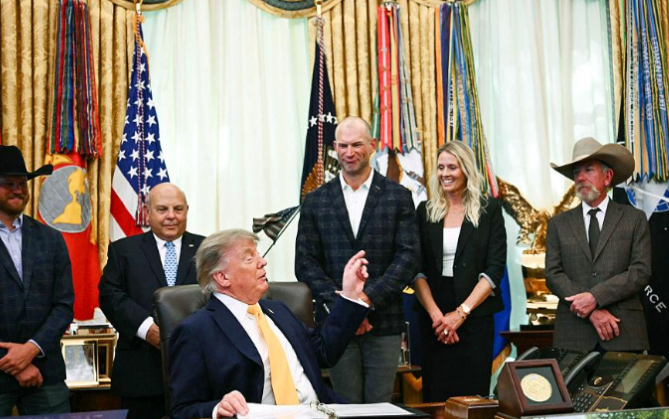
The speculation comes after Trump signed new executive orders on September 4 aimed at supporting American ranchers, strengthening traditional livestock markets, and expanding opportunities for domestic meat producers.
However, an examination of the actual orders reveals an important distinction: Neither order establishes a nationwide ban on cultivated meat or prohibits its production and sale.
Instead, the administration is focusing on competition in conventional livestock markets and reducing regulatory barriers for American ranchers and meat processors.
A Federal Framework Still Allows Cultivated Meat
Cultivated meat, sometimes called cell-cultured or lab-grown meat, is produced by growing animal cells in controlled facilities rather than raising and slaughtering an entire animal.
The technology already operates under a federal regulatory framework established jointly by the Food and Drug Administration and the Department of Agriculture.
The FDA oversees cell collection, cell banking, and cellular growth, while USDA’s Food Safety and Inspection Service oversees harvesting, processing, inspection, and labeling for covered meat and poultry products.
Several cultivated chicken, pork, and seafood products have completed applicable federal regulatory reviews, allowing limited commercial sales under existing requirements.
A nationwide prohibition would therefore represent a substantial change to the current regulatory environment.
Eight States Have Already Adopted Restrictions
While Washington has not established a nationwide ban, state governments have moved aggressively.
By October 2026, eight states had adopted laws banning or heavily restricting some aspects of cultivated meat production, sales, distribution, or public support.
These include Alabama, Florida, Indiana, Mississippi, Montana, Nebraska, Texas, and South Dakota.
The restrictions differ considerably.
Florida enacted a broad prohibition in 2024, while Texas and Indiana adopted temporary restrictions extending into 2027. South Dakota introduced a five-year moratorium affecting state-supported cultivated-protein activities.
The measures have prompted legal challenges from food technology companies seeking access to American markets.
New Court Battle Puts Texas Ban Under Pressure
The legal conflict reached another important stage on November 4.
California-based companies Wildtype and UPSIDE Foods appeared before the U.S. Court of Appeals for the Fifth Circuit, challenging Texas legislation restricting the sale of cultivated meat.
The companies argue that the law unfairly interferes with interstate commerce and protects traditional agricultural producers from competition.
Texas officials argue that the restrictions apply equally to products regardless of where they are manufactured.
The appeals court has not yet issued its decision.
Earlier, in March 2026, the Eleventh Circuit upheld Florida’s ban against a federal preemption challenge involving poultry regulations. However, separate constitutional arguments concerning interstate commerce remain part of the broader litigation.
What Would a Nationwide Trump Ban Mean?
An executive order attempting to prohibit cultivated meat nationwide would face substantial legal questions.
The FDA and USDA already possess statutory authority to regulate these products, and their existing regulatory framework cannot simply be ignored without considering applicable federal laws.
Food technology companies would likely challenge a sweeping federal prohibition, potentially raising administrative-law, statutory-authority, and constitutional arguments.
Traditional ranchers, meanwhile, argue that government policies should protect domestic agricultural industries and prevent emerging technologies from undermining established producers.
Technology companies counter that excessive restrictions could discourage American investment and weaken the country’s position in biotechnology and food innovation.
The Battle Over America’s Future Food Supply
For now, there is no confirmed nationwide federal ban, and Trump’s September livestock-market executive order does not establish one.
But the growing number of state restrictions and the continuing court battles demonstrate how politically sensitive cultivated meat has become.
The coming legal decisions could influence whether companies can sell these products across state borders and how much authority individual states have to restrict emerging food technologies.
The bigger question is whether America will embrace cultivated meat as another food innovation or allow political and regulatory battles to limit its future before the industry has an opportunity to develop.



