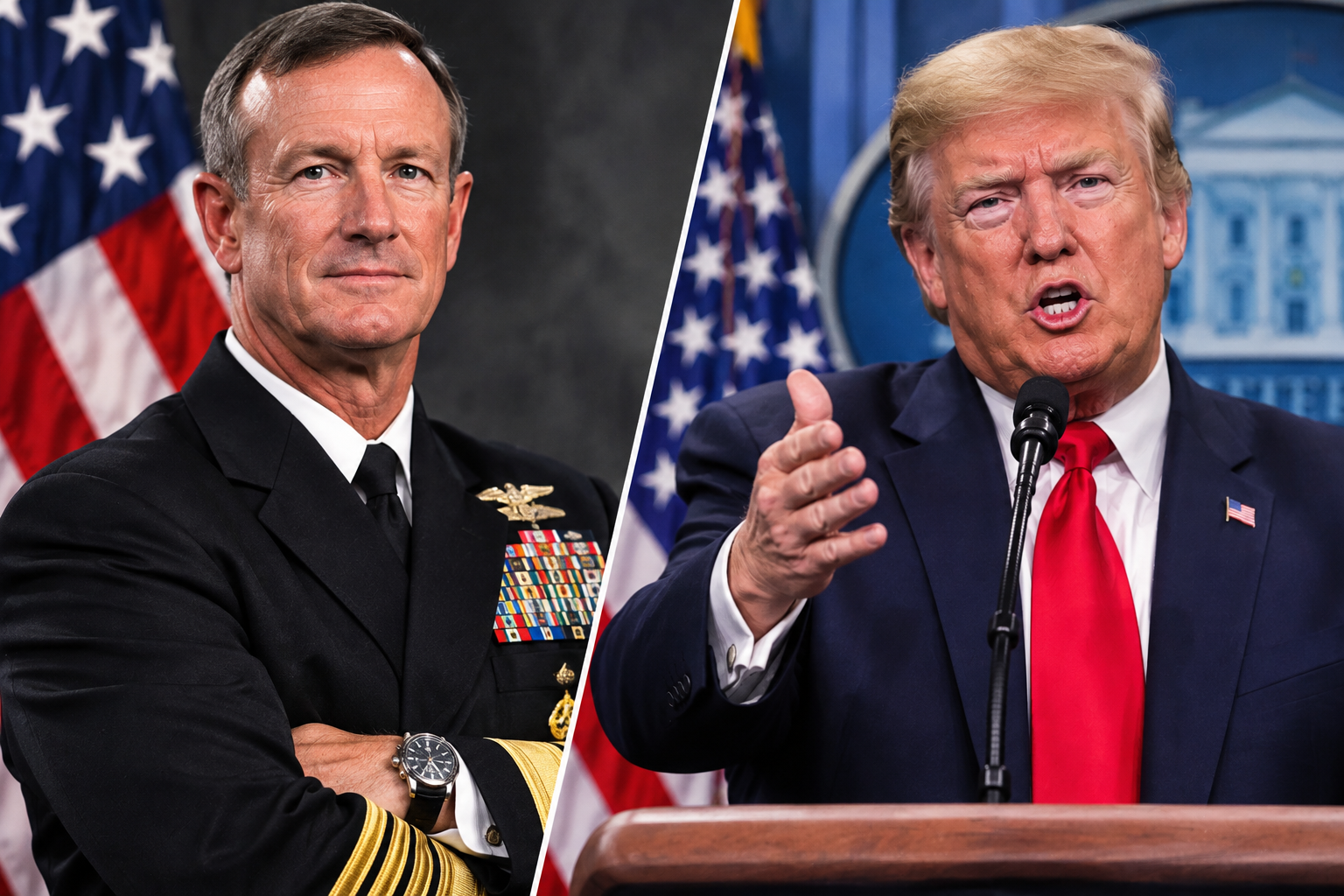
Retired Admiral William McRaven publicly challenged Donald Trump after the president revoked former CIA Director John Brennan’s security clearance. His message triggered a political confrontation that later saw Trump attack the former military commander over his role in the operation that killed Osama bin Laden.
WASHINGTON, D.C.
Few moments in the political relationship between Donald Trump and America’s former military leaders attracted as much attention as the public confrontation involving retired Navy Admiral William H. McRaven.
The former special operations commander, who oversaw the 2011 mission that killed al-Qaeda leader Osama bin Laden, directly challenged Trump in a powerful August 2018 opinion article published by The Washington Post.
His message was simple: if the president believed security clearances should be revoked from former officials who criticized his administration, McRaven was willing to lose his own.
Why McRaven Challenged Trump
The confrontation began on August 15, 2018, when the Trump administration revoked former CIA Director John Brennan’s security clearance.
Brennan had become an outspoken critic of the president, particularly over his comments concerning intelligence agencies and the investigation into Russian interference in the 2016 election.
The following day, McRaven published an opinion article titled “Revoke My Security Clearance, Too, Mr. President.”
In it, he defended Brennan’s reputation and questioned the administration’s treatment of former intelligence officials.
McRaven wrote that Trump’s actions had embarrassed the United States internationally and deepened divisions within the country.
He also warned that attempting to silence criticism would not prevent experienced public servants from speaking out.
The article quickly attracted national attention because McRaven was not simply another political commentator. He was a retired four-star admiral with decades of military service.
The Commander Behind the Bin Laden Mission
McRaven served as commander of the Joint Special Operations Command from 2008 to 2011.
In that role, he oversaw the operation that sent Navy SEALs into Abbottabad, Pakistan, on May 2, 2011, to kill Osama bin Laden.
He subsequently commanded U.S. Special Operations Command from 2011 to 2014.
During his 37-year Navy career, McRaven became one of America’s most prominent special operations leaders.
His military experience gave his criticism particular significance, especially among former military and intelligence officials concerned about the relationship between political leadership and national security institutions.
Trump Fires Back at the Retired Admiral
The disagreement intensified in November 2018.
During a November 18 interview with Fox News host Chris Wallace, Trump dismissed McRaven as a “Hillary Clinton fan” and an Obama supporter.
The president also questioned why bin Laden had not been captured sooner.
McRaven subsequently rejected the partisan characterization, explaining that he had not supported Hillary Clinton or any other presidential candidate.
He said he admired presidents from both parties with whom he had worked, including George W. Bush and Barack Obama, and emphasized the importance of presidential leadership and respect for democratic institutions.
The exchange generated renewed discussion about the relationship between military leadership, political independence, and the responsibility of former commanders to speak publicly.
McRaven Leaves Pentagon Advisory Board
The confrontation also coincided with McRaven’s departure from the Pentagon’s Defense Innovation Board.
Defense News reported on September 13, 2018, that McRaven had resigned from the advisory board on August 20, four days after publishing his Washington Post article.
The board advises the Defense Department on technology, innovation, and military modernization.
His departure added another dimension to an already significant confrontation between a respected former military commander and the president.
A Debate About Leadership and Institutional Independence
McRaven’s 2018 message raised a question that continues to matter in American public life: should former military and intelligence officials remain silent when they believe presidential actions threaten important national institutions?
Some Americans viewed his intervention as an example of public-service independence. Others believed retired military leaders should avoid becoming involved in partisan political disputes.
Whatever their political perspectives, the episode demonstrated how disagreements between presidents and former senior military officials can become national controversies.
McRaven’s confrontation with Trump remains a notable chapter in the relationship between the White House, the intelligence community, and America’s military leadership.
His central message was that loyalty to the country and its institutions does not necessarily mean agreement with every president.
For a former commander who helped oversee one of the most consequential military operations in modern American history, speaking out carried considerable public significance.



