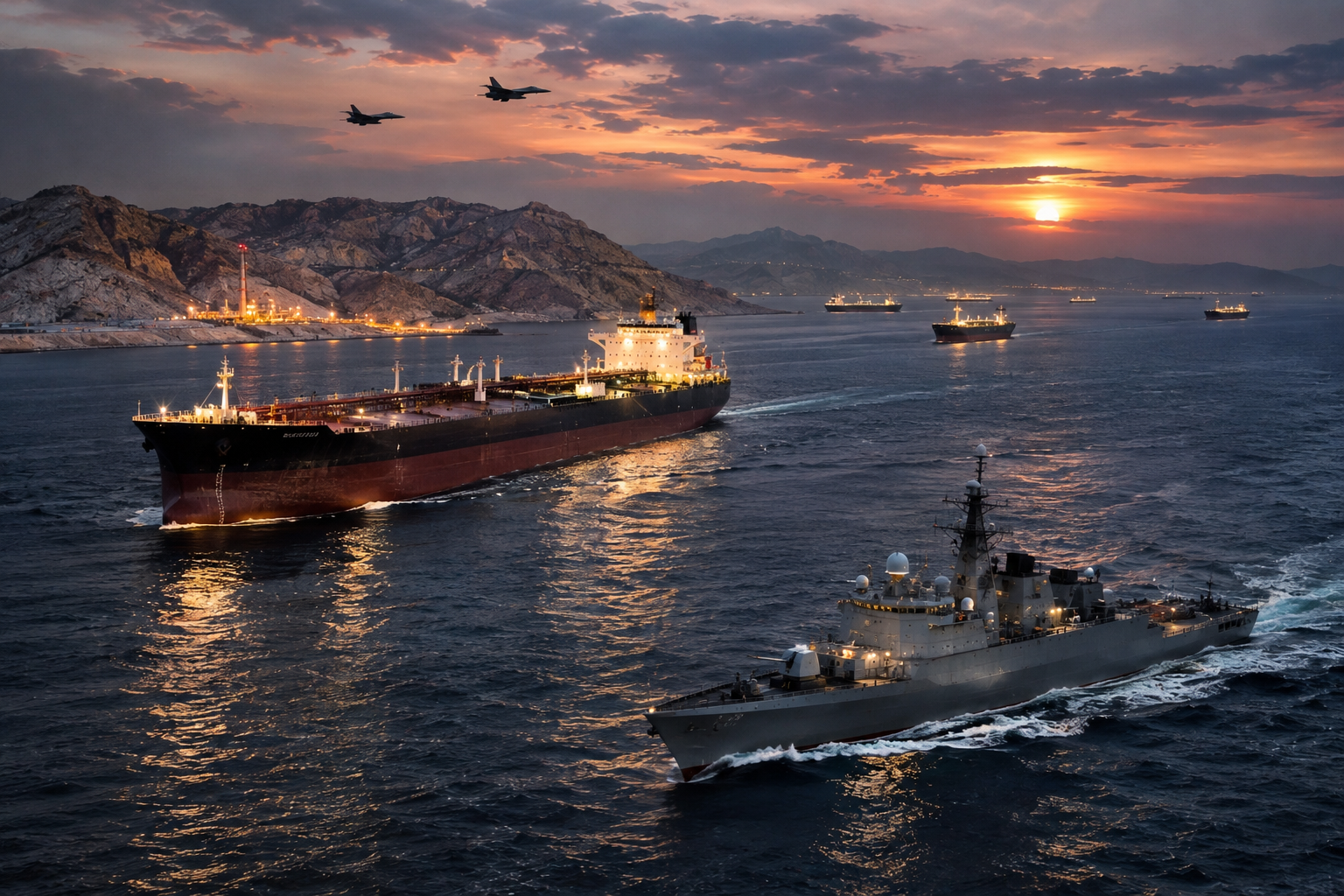
DUBAI — Tensions across the Persian Gulf are rising again after Iran targeted U.S.-linked military installations in Kuwait and Bahrain, prompting fresh air-defense interceptions and increasing fears that the conflict could spread further across the Middle East.
The latest escalation followed a U.S. airstrike on Qeshm Island in the Strait of Hormuz on Tuesday, November 17. American officials said the operation targeted an Iranian missile launch site after Iranian forces attacked a U.S. radar installation in Bahrain.
Despite the military exchanges, regional governments are also working to prevent the confrontation from turning into another full-scale war.
Iran Targets U.S.-Linked Facilities in Kuwait and Bahrain
On Wednesday, November 18, Iran said its forces targeted American drone and missile installations at Ali Al Salem Air Base in Kuwait.
Kuwaiti authorities confirmed that their air-defense systems were responding to incoming drone attacks. Bahrain also reported intercepting several Iranian aerial attacks, marking the third time in a week that the kingdom had faced such threats, according to Reuters.
Bahrain is strategically important because it hosts the headquarters of the U.S. Navy’s Fifth Fleet. Kuwait’s Ali Al Salem base is also an important installation supporting American military operations in the region.
The Pentagon said no U.S. personnel had been injured in attempted Iranian attacks during that week and that American service members were safe and accounted for.
Four Countries Joining an Attack? What Reports Actually Show
A dramatic headline circulating online suggests that four countries have joined forces to attack Iran. That specific claim has not been substantiated by the reliable reporting reviewed.
In fact, the latest Associated Press reporting describes a different development: Persian Gulf governments, along with Pakistan and Turkey, have intensified diplomatic contacts with Washington to prevent renewed large-scale fighting.
The effort reportedly includes calls with senior U.S. officials as regional governments worry that another military campaign could threaten oil facilities, power plants, desalination infrastructure and international shipping routes.
UAE-Linked Tanker Attack Raises Shipping Fears
The threat is not limited to military bases.
Reuters reported that a vessel operated by UAE-based ADNOC Logistics & Services was attacked in the Strait of Hormuz on Tuesday. Eleven crew members were injured, and one remained missing as search-and-rescue operations continued.
Omani authorities said they rescued 24 crew members from the tanker while efforts to control a fire aboard the vessel continued.
The Strait of Hormuz is a critical global energy route that previously carried approximately one-fifth of the world’s oil and gas supplies. Continued disruption could increase shipping costs and put further pressure on international energy markets.
The Risk of a Much Wider Conflict
The latest attacks demonstrate how quickly military exchanges can threaten neighboring countries and international commerce.
For now, the newest confirmed reports focus on attacks and interceptions involving Kuwait and Bahrain, alongside the tanker incident near Oman. They do not establish that Qatar, the UAE, Bahrain and Kuwait have launched a coordinated offensive against Iran.
Diplomatic efforts involving regional governments, Qatar and Oman continue, but the situation remains volatile. The next military decision by Washington or Tehran could determine whether the Gulf moves closer to negotiations—or another dangerous round of retaliation.



