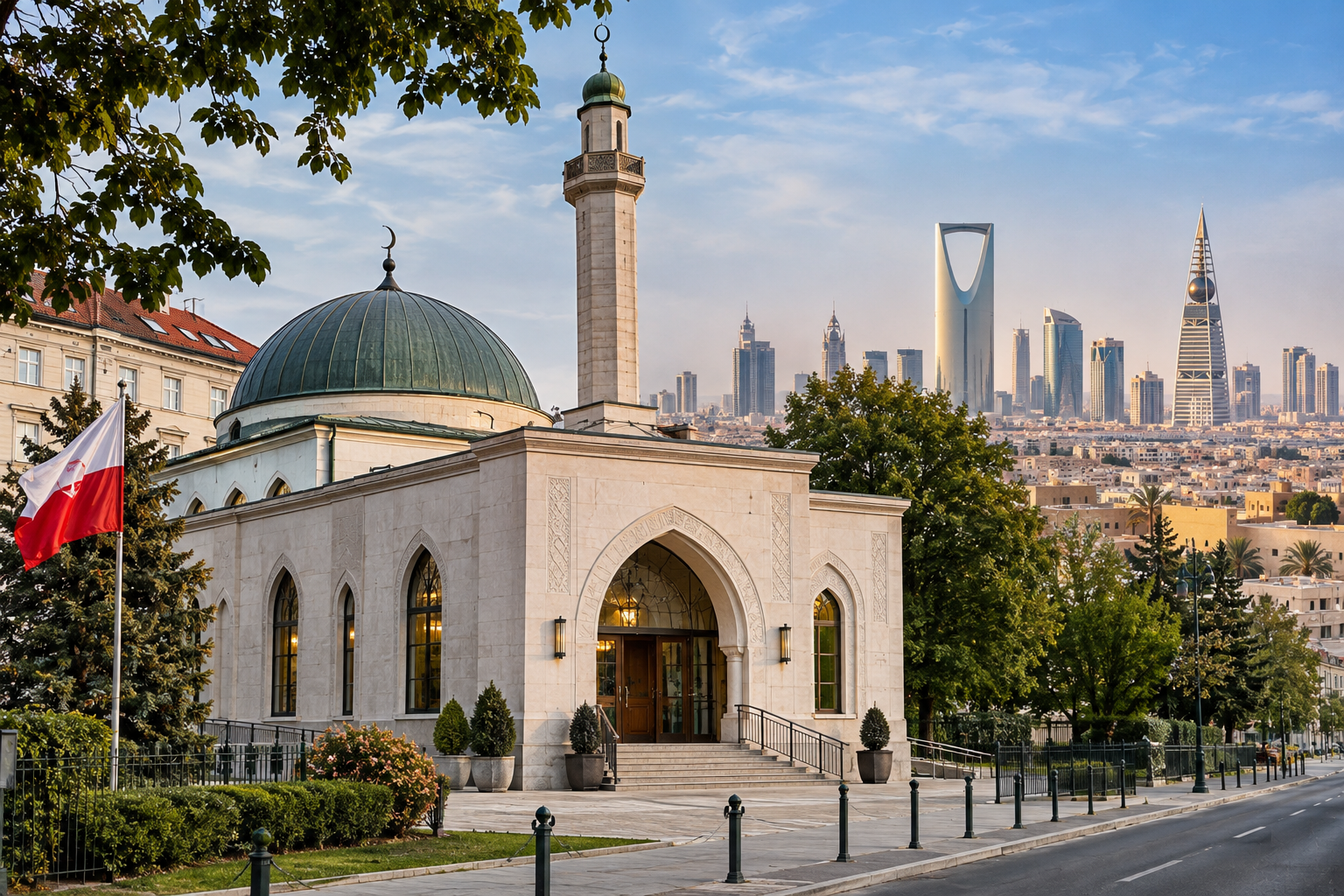
WARSAW, Poland — A controversial claim suggesting that Poland refuses to allow mosques unless Saudi Arabia permits Christian churches has circulated repeatedly online. The story is based on real comments from a Polish conservative politician—but the alleged government policy does not exist.
The distinction is important: Polish politicians have discussed religious reciprocity, but Poland has never officially adopted a ban on mosque construction linked to Saudi Arabia.
The claim dates back to 2018, when Polish politician Dominik Tarczyński publicly argued that Saudi Arabia should allow a Christian cathedral if it wanted to support the construction of a mosque in Poland.
His comments later became the basis for misleading social media posts suggesting that the Polish government had already prohibited new mosques.
The 2018 Comments That Started the Controversy
In January 2018, Tarczyński argued that if Saudi Arabia wanted to finance a mosque in Poland, Poland should be allowed to finance a cathedral in Saudi Arabia.
He repeated the reciprocity argument in August of that year, linking religious freedom with what he described as equal treatment between countries.
The comments attracted attention because Saudi Arabia maintains significant restrictions on the public practice of non-Muslim religions.
However, a politician expressing a position is not the same as a government passing legislation.
In August 2019, British fact-checking organization Full Fact investigated the viral claim. The Polish Embassy in London told the organization that refusing mosque construction until Saudi Arabia allowed a church was not Polish government policy. The embassy also confirmed that mosques existed in Poland.
Poland’s Constitution Protects Religious Freedom
Poland’s Constitution provides a clear legal framework for religious rights.
Article 53 guarantees everyone freedom of faith and religion, including the right to practice publicly or privately and to possess places of worship.
The constitutional protection applies to religious communities and is not conditional on whether another country provides equivalent religious freedoms.
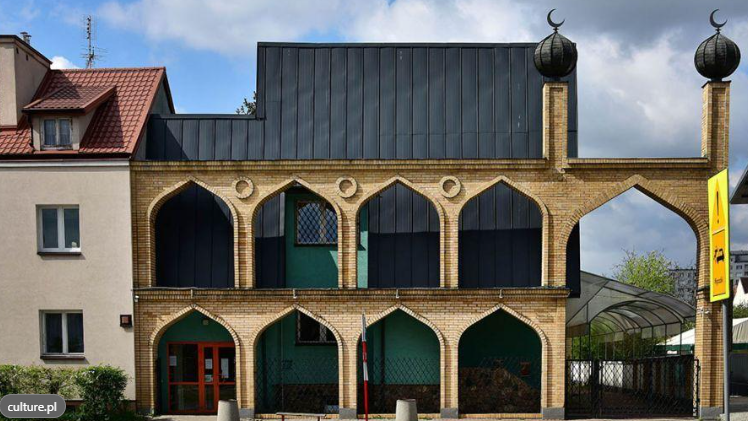
Mosques operate in Poland, including in Warsaw, where Muslim communities have established places of worship.
Saudi Arabia’s Restrictions Are Real
Although the claim about Poland is false, the underlying issue of religious reciprocity concerns genuine differences between the two countries.
Saudi Arabia does not permit the public practice of religions other than Islam and does not allow non-Muslim houses of worship, according to the U.S. Commission on International Religious Freedom.
Its May 2026 report also documented restrictions affecting Christian communities, including the lack of a legal pathway for non-Muslim religious groups to register as organized communities. Some private worship services have been permitted under strict government conditions.
The U.S. State Department similarly warns that public non-Muslim worship is prohibited and that religious activities can lead to detention or deportation.
Poland and Saudi Arabia Continue Diplomatic Cooperation
Despite differences over religious freedom, the countries continue to maintain diplomatic and economic relations.
In January 2026, Polish and Saudi foreign ministers met in Warsaw and signed a memorandum establishing a Polish-Saudi Coordination Council.
Further political consultations took place on September 11, 2026, demonstrating that bilateral cooperation continues.
The bottom line: Tarczyński’s proposal was real, and Saudi Arabia’s restrictions on public non-Muslim worship are documented. But Poland has not turned his proposal into government policy or prohibited mosques on the basis of religious reciprocity.



