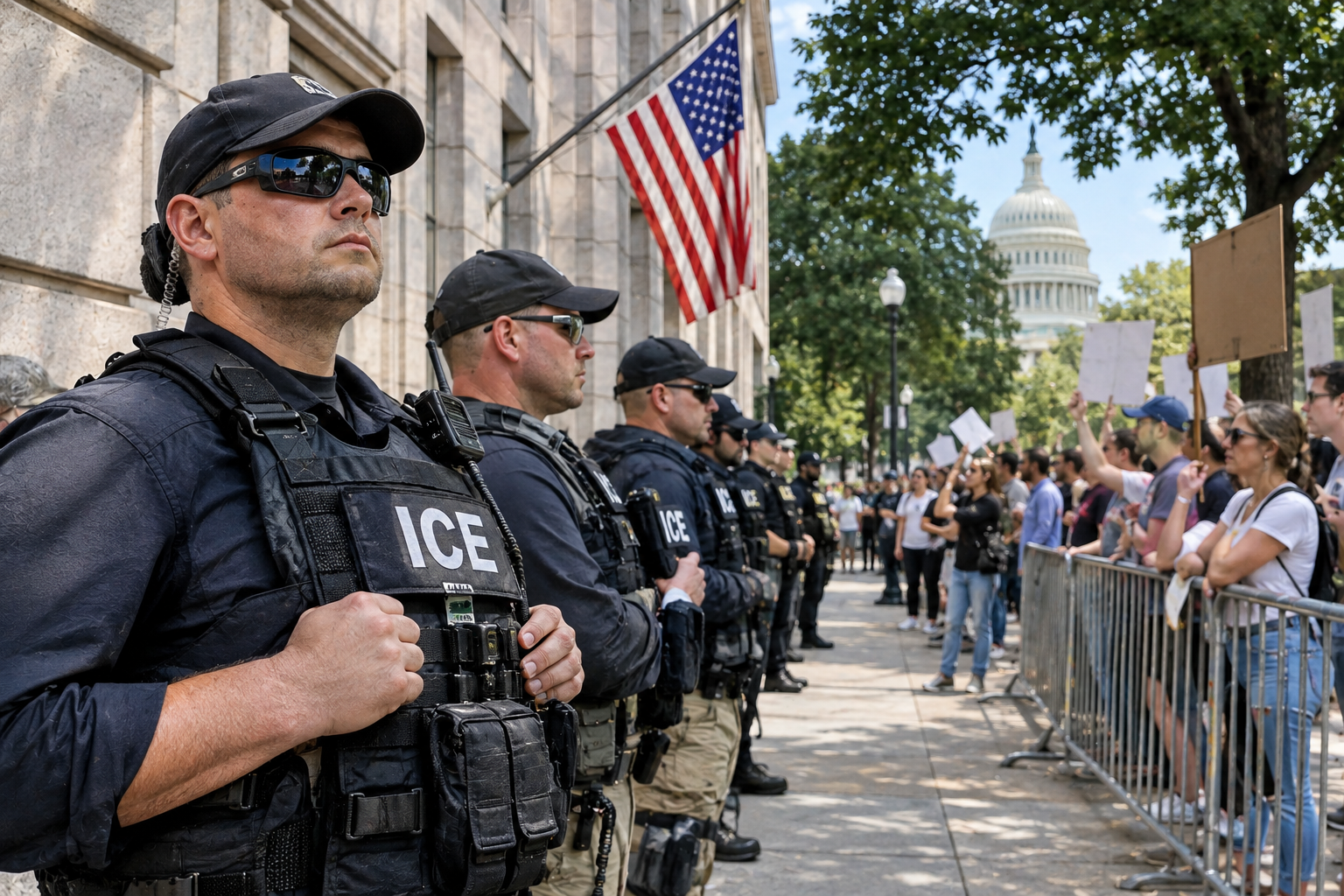
WASHINGTON — Republican lawmakers are calling for federal investigations into the financial networks behind anti-Immigration and Customs Enforcement (ICE) activism, arguing that outside funding and alleged foreign influence may be helping coordinate efforts to obstruct immigration enforcement.
The demands come amid a sharp increase in assaults reported by the Department of Homeland Security. The issue has intensified a national debate over officer safety, political protest and the limits of government investigations into advocacy organizations.
DHS Reports 647 Assaults Against ICE Personnel
In a September 24 statement, DHS reported 647 assaults against ICE personnel between January 20, 2025, and September 20, 2026. The department compared that figure with 37 reported assaults during the same period of the previous administration, calculating an increase of 1,649%.
The figures reflect DHS’s own reporting. They have not been independently audited in the cited release, and the statistic alone does not establish that every incident was connected to organized protests.
The broader enforcement debate has also included allegations involving vehicle attacks, threats and attempts to interfere with federal operations.
Hawley and Banks Ask DOJ to Investigate Funding Networks
Senator Josh Hawley (R-Mo.) sent Attorney General Pam Bondi a letter on February 3, 2026, requesting a comprehensive investigation into what he described as financially supported and professionally coordinated anti-ICE campaigns.
Hawley argued that nonprofit intermediaries and possible foreign-linked funding could be concealing the extent of coordination. He also suggested that proven illegal activity could raise questions under federal racketeering laws.
On February 18, Senator Jim Banks (R-Ind.) sent a separate letter urging an investigation into possible foreign influence behind anti-ICE activism. Banks specifically raised questions involving wealthy donor networks, including Swiss businessman Hansjörg Wyss and businessman Neville Roy Singham. These were allegations and investigative questions, not findings that either individual financed violence.
Separately, CBS News reported in July that Singham was under a federal grand jury investigation involving possible Foreign Agents Registration Act and tax violations. That investigation does not itself establish that he financed attacks on ICE officers.
Federal Charges Target Specific Alleged Conduct
The Justice Department announced in June that 15 people associated with Direct Action Minnesota had been charged with offenses including conspiracy to impede or injure federal officers, stalking, threats and assaults.
Prosecutors alleged that the defendants coordinated efforts to interfere with immigration operations. The charges are not RICO convictions, and defendants are entitled to the presumption of innocence.
Civil Liberties Concerns Complicate the Debate
Civil liberties advocates warn that investigations targeting organizations because of their political positions could threaten constitutionally protected speech and peaceful assembly.
PolitiFact’s review of Minnesota demonstrations found that thousands of residents participated voluntarily and that experts did not find evidence that the broader protest crowds were generally paid.
The central question facing federal investigators is whether specific individuals or organizations crossed the line from lawful advocacy into criminal conduct.
Protecting federal officers and preserving Americans’ constitutional right to protest are both essential. Any investigation must establish criminal behavior through evidence rather than treating donations, political opposition or peaceful demonstrations as proof of wrongdoing.



