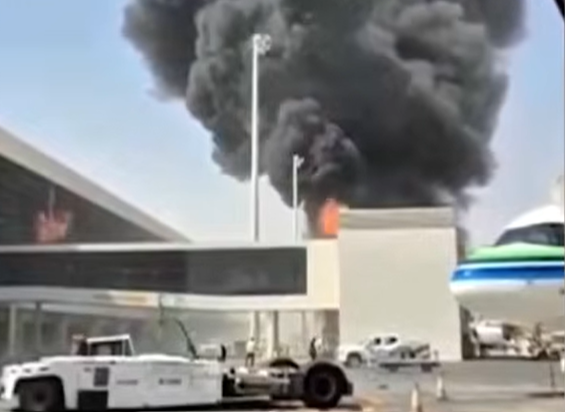
Subheadline: Yemen’s Houthi movement has warned airlines, airport workers and travelers to avoid Saudi airports after a deadly strike at Riyadh’s main international airport. A second projectile hit the airport on Sunday, deepening concerns about aviation safety, regional retaliation and global energy supplies.
RIYADH, Saudi Arabia — October 11, 2026 — Yemen’s Iran-aligned Houthi movement has renewed its threats against Saudi Arabia’s airports and airspace following a devastating attack at King Khalid International Airport in Riyadh that killed at least 12 people and injured more than 300 others.
In a statement published Sunday, the Houthis warned airlines, airport employees and travelers against using Saudi airports, saying the kingdom’s aviation infrastructure could face further attacks. The group also accused Saudi Arabia of bearing responsibility for what it described as failed interceptions during the deadly strike. (Reuters)
The warning has intensified an already dangerous confrontation between the Houthis and Saudi-backed forces fighting in Yemen. It also raises fresh concerns for international travelers, commercial airlines and energy markets as the conflict increasingly threatens important transportation routes across the Middle East.
Deadly Strike Hits Riyadh’s Main Airport
The attack occurred on Saturday, October 10, when a missile struck a passenger terminal at King Khalid International Airport, Saudi Arabia’s main aviation hub in Riyadh.
Saudi authorities reported that 12 people were killed and more than 300 injured, with some of the wounded in critical condition. The victims included Saudi citizens and foreign nationals, including a U.S. citizen, according to Saudi authorities cited by the Associated Press.
The attack became one of the deadliest assaults on a Gulf Arab country since the wider conflict involving Iran intensified. The scale of the casualties also raised questions about the protection of civilian infrastructure and the effectiveness of Saudi air defenses.
On Sunday, the Indian Embassy in Saudi Arabia reported that one of its citizens had died from injuries sustained in Saturday’s attack, potentially raising the death toll to 13. Saudi authorities had not immediately confirmed the updated figure in the reports available at the time. (Associated Press)
Second Projectile Hits Airport as Threats Continue
The crisis deepened on Sunday when another projectile struck the same Riyadh airport terminal, according to the Saudi-led coalition fighting the Houthis. Saudi authorities reported injuries in the latest incident, while the airport remained closed.
The Houthis claimed responsibility for the attacks and other strikes targeting Saudi facilities. Their warnings singled out Saudi airports and airspace, with the group making an exception for airports in the holy cities of Mecca and Medina.
The group also claimed attacks on King Fahd International Airport in Dammam and oil and gas facilities in eastern Saudi Arabia. These claims underline the expanding scope of the confrontation, although individual operational claims should be distinguished from independently verified damage and casualties. (Associated Press)
The renewed warning has prompted several international airlines to suspend or alter flights for varying periods. Travelers face uncertainty as carriers reassess security risks, airport access and possible disruptions to regional connections.
Why Are the Houthis Threatening Saudi Arabia?
The escalation is linked to the renewed fighting in Yemen, where the Houthis have battled the internationally recognized government and its regional supporters for years.
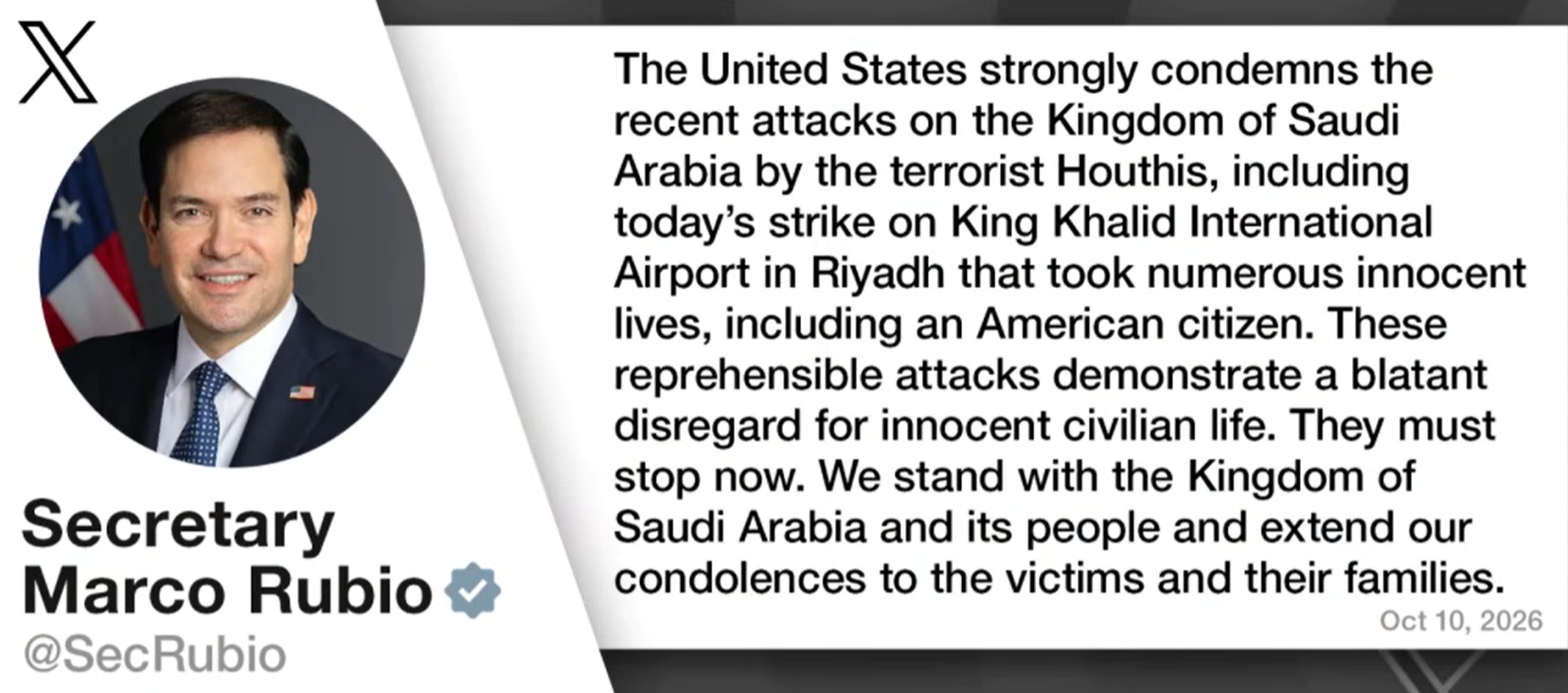
Saudi Arabia intervened in Yemen’s civil war in 2015, backing the internationally recognized government against the Houthi movement. A period of relative calm following a 2022 truce ended in July 2026, when hostilities resumed and both sides began intensifying attacks.
The Houthis say their latest actions are retaliation for Saudi military operations and other measures affecting territory under their control. Saudi-backed Yemeni forces, meanwhile, have launched offensives aimed at reversing Houthi gains near the strategically important Bab el-Mandeb Strait.
The narrow waterway connects the Red Sea with the Gulf of Aden and is a major route for international commercial shipping. Any prolonged disruption could force vessels to change routes, increasing transportation costs and adding pressure to already strained supply chains. (The Guardian)
Oil Supplies and Global Trade Face New Risks
The latest threats extend beyond aviation.
The Houthis have also claimed attacks against Saudi oil and gas infrastructure. If attacks disrupt production facilities, export terminals or shipping routes, the consequences could spread into international energy markets.
The Bab el-Mandeb Strait has become particularly important as shipping risks have increased elsewhere in the region, including around the Strait of Hormuz. Together, these waterways are central to maritime trade and the movement of oil and other goods between the Middle East, Europe and Asia.
Saudi Arabia was already under pressure to protect its infrastructure as it hosted a major international energy conference in Riyadh. The airport attacks have intensified concerns about the security environment surrounding business travel, international investment and major public events.
A Wider Regional Conflict Could Follow
The airport attack places additional pressure on Saudi Arabia to respond while increasing the risk of a broader confrontation involving the United States.
President Donald Trump has said he is considering whether the United States should participate in military action against the Houthis, according to the Associated Press. Any American intervention could trigger further retaliation and put additional pressure on regional shipping.
Analysts have also warned that attacks on major Saudi infrastructure could harden Riyadh’s position rather than force it to reduce military operations. The Houthis’ strategy could therefore deepen the conflict instead of creating an opening for negotiations.
What Happens Next?
For now, the immediate priorities are protecting civilians, restoring safe airport operations and preventing further attacks.
The Houthis have issued a clear warning, but the scale and timing of any additional attacks remain uncertain. The continuing strikes, travel warnings and military operations have left airlines and regional governments facing difficult security decisions.
The crisis has also exposed how quickly fighting in Yemen can threaten aviation, energy infrastructure and international trade far beyond the country’s borders.
As Saudi Arabia assesses its response and international airlines review their operations, the next developments could determine whether the airport attacks remain part of the existing conflict or trigger a more extensive regional military confrontation.



