Subheadline: Treasury Secretary Scott Bessent is escalating Washington’s economic campaign against Tehran, targeting oil networks, financial institutions and sanctions evasion. But despite mounting pressure on Iran’s currency and trade, analysts warn that economic pain does not automatically mean the government is close to collapse.
WASHINGTON — October 11, 2026 — The Trump administration is intensifying its economic pressure on Iran, with Treasury Secretary Scott Bessent warning that Tehran is running out of options to stabilize its struggling economy as American sanctions and a naval blockade restrict the country’s access to oil revenue and international financial networks.
The latest escalation came on October 8, when the U.S. Department of the Treasury announced new measures targeting what it described as the remnants of Iran’s shadow fleet—the network of tankers used to transport petroleum and petroleum products through channels designed to evade sanctions.
The operation, known as Operation Economic Outcast, is intended to cut off revenue that Washington says helps finance Iran’s military operations and regional activities. Treasury officials said the latest action targets the networks and intermediaries that Iran relies on to move oil and money internationally. (U.S. Treasury Department)
The campaign has raised a critical question: Is Iran’s economy approaching collapse, or is Tehran still capable of absorbing severe economic pressure?
Iran’s Currency Is Under Severe Pressure
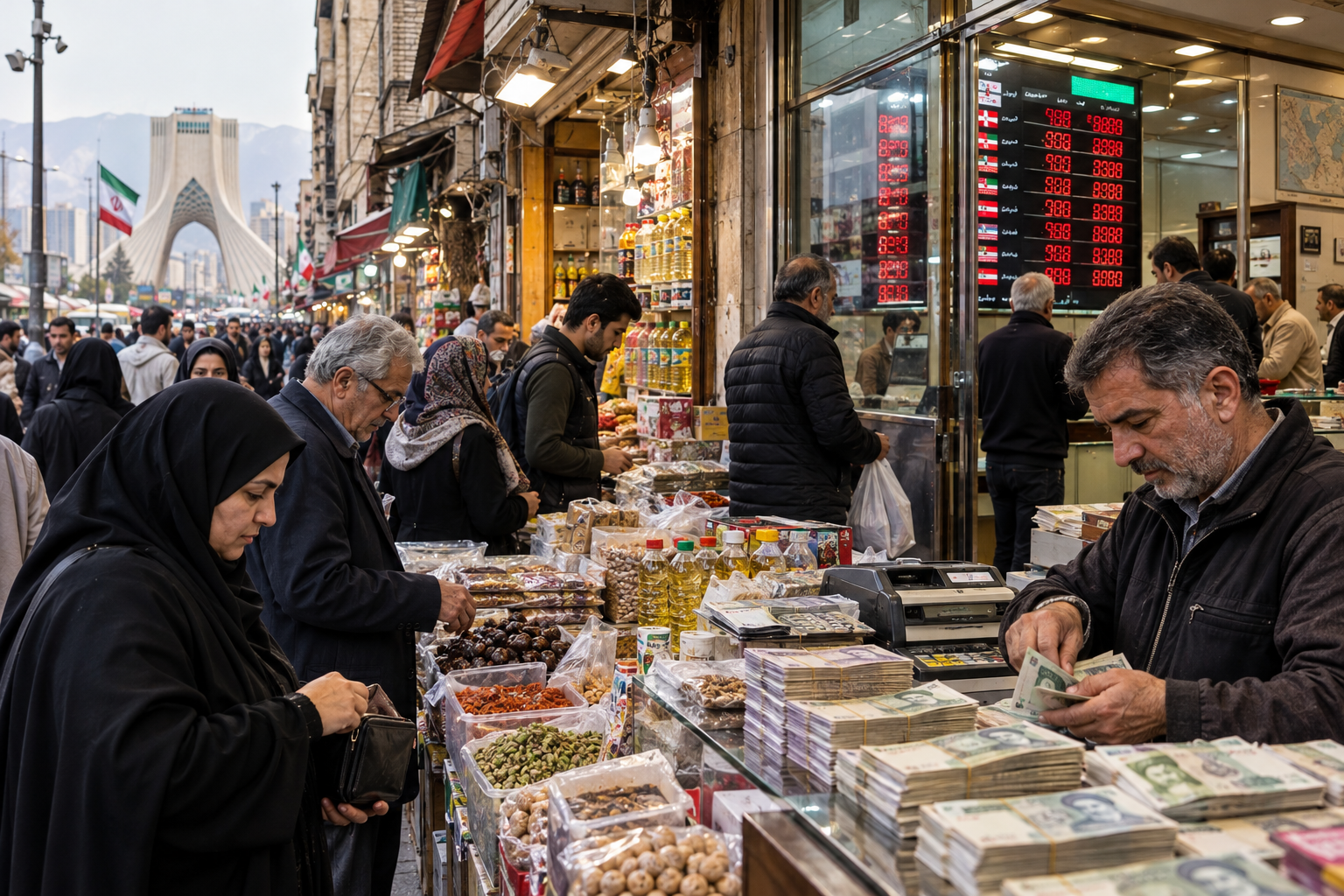
One of the clearest signs of Iran’s economic difficulties is the rapid decline in the value of its national currency, the rial.
According to Reuters, the rial traded at approximately 2.688 million per U.S. dollar on the Iranian free market on October 3, marking another record low. The currency had lost more than half its value over the preceding year, while inflation exceeded 70%, increasing the cost of food, housing and other necessities.
Iran’s central bank responded by announcing that state banks would sell up to $2 billion in foreign currency to support the rial. Many households have turned to dollars, other foreign currencies and gold in an effort to protect their savings. (Reuters)
The impact extends far beyond financial markets. When a currency loses value rapidly, imported goods become more expensive, businesses struggle to obtain foreign currency, and household purchasing power deteriorates.
For ordinary Iranians, those pressures can translate into higher prices and greater uncertainty about employment, savings and access to essential goods.
Washington Targets Iran’s Oil Revenue
The U.S. strategy centers on restricting the revenue Tehran earns from petroleum exports.
Oil sales have long provided a major source of foreign currency for Iran, allowing the government to finance public spending, purchase imports and support state institutions.
In September, Reuters reported that Iranian crude oil loadings had fallen to approximately 260,000 barrels per day, compared with around 1.7 million barrels per day a year earlier, according to data from commodity analytics firm Kpler. Those figures reflected the situation at that time, rather than a verified measure of current daily exports. (Reuters)
Washington has also expanded secondary sanctions, increasing the risks for foreign banks and businesses that facilitate transactions involving Iran.
The October 8 Treasury announcement specifically targeted the country’s remaining shadow-fleet infrastructure, with officials arguing that the measures would further restrict Iran’s ability to transport oil and receive payment.
The goal is to reduce Tehran’s financial resources sufficiently to increase pressure for negotiations.
Why Economic Pressure Has Not Yet Forced a Breakthrough
Despite the growing pressure, Iran has not stopped all oil sales or surrendered its ability to resist the campaign.
A Washington Post report published October 9 found that Iran continued selling oil from previously accumulated stocks and moving some petroleum overland. The newspaper cited estimates from the energy intelligence firm Kpler indicating that approximately 250,000 barrels of oil per day were still being transported out of the country by land.
The report also noted that international flights to and from Iran continued despite earlier U.S. predictions that sanctions would largely ground Iranian airlines. (The Washington Post)
These developments illustrate a central challenge for sanctions policy: restrictions can make trade more expensive and reduce revenue without necessarily eliminating a government’s ability to function.
Analysts cited by the Washington Post said economic pressure campaigns often require months or years of sustained enforcement to produce major political changes. One former Treasury official cautioned that measures damaging Iran’s economy do not automatically constitute a decisive blow.
That distinction is important when assessing claims that the country is on the verge of collapse.
Bessent’s Strategy: Cut Off Financial Lifelines
Bessent has framed the campaign as an effort to deprive the Iranian government of the resources it needs to sustain its military activities and avoid international restrictions.
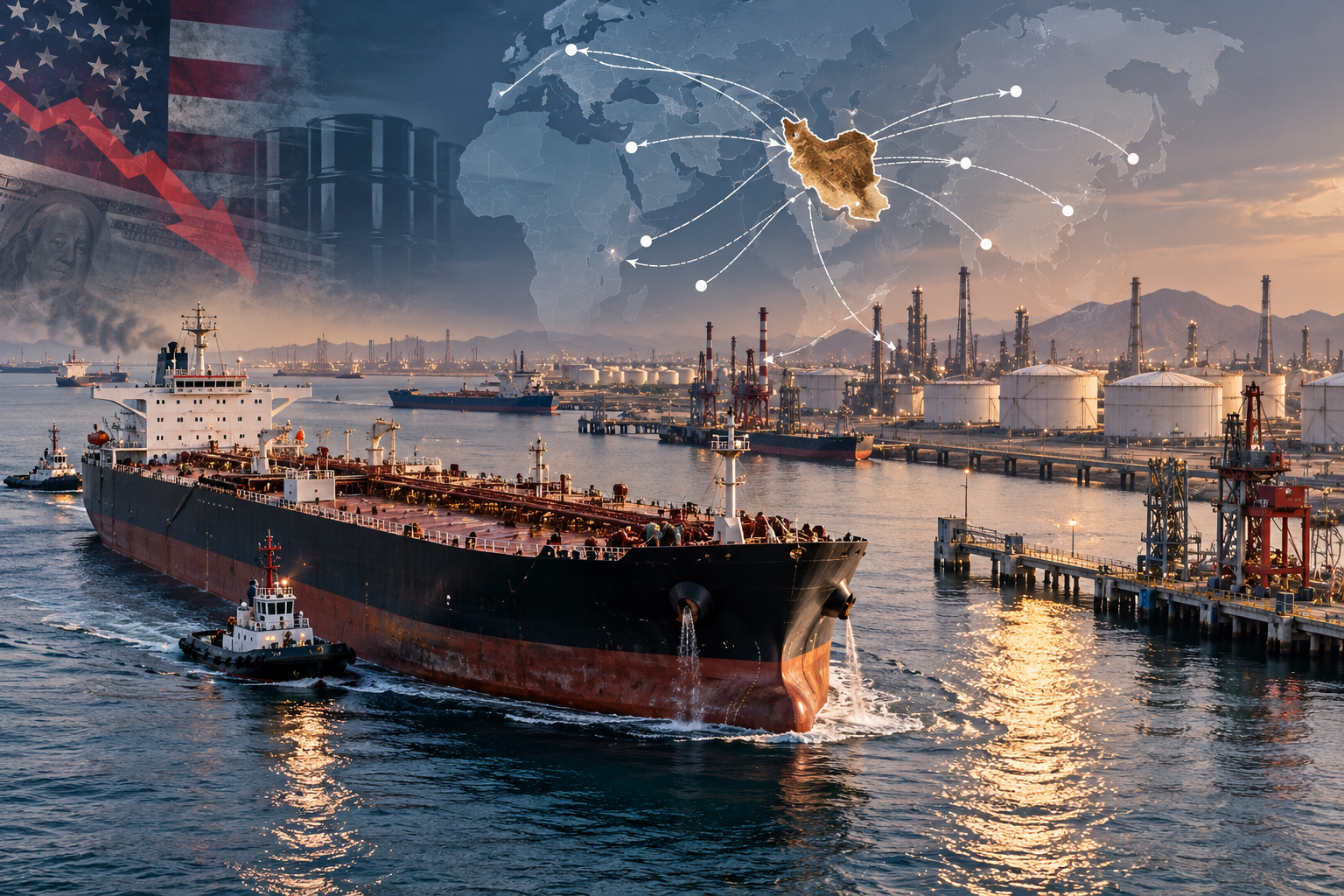
Treasury’s latest actions target not only oil shipments but also financial intermediaries, industrial networks and companies accused of helping Iran evade sanctions.
The administration has warned that foreign institutions facilitating prohibited transactions could face penalties, including restrictions on access to the U.S. financial system.
Such measures can have consequences well beyond Iran because dollar transactions and American financial services are deeply integrated into international commerce.
However, the strategy also carries risks. Tighter restrictions can increase pressure on Iranian businesses and households, while disruptions to energy supplies and shipping can contribute to wider economic uncertainty.
Tehran Continues to Resist
Iranian officials have rejected the suggestion that currency weakness proves the country is on the verge of economic collapse.
After the rial reached a new low, an adviser to Iran’s central bank governor told state television that the currency’s decline was temporary and partly driven by negative expectations about the economy. (Reuters)
The government’s ability to withstand pressure depends on several factors, including its remaining oil inventories, alternative trade routes, access to foreign currency and willingness to impose further economic hardship on the population.
The longer restrictions remain in place, the more difficult these workarounds may become. But the country’s continued exports and resistance demonstrate that the outcome remains uncertain.
Is Iran Actually Collapsing?
Iran’s economy is under severe strain, but an economic crisis is not the same as the collapse of a state or government.
The declining rial, high inflation, reduced oil shipments and tighter financial restrictions provide evidence of substantial economic pressure. Yet the government continues to operate, trade continues through alternative channels, and no independently verified evidence establishes that the Iranian state is on the verge of imminent collapse.
For Washington, the key question is whether sustained economic pressure can produce concessions in negotiations without triggering further military escalation or worsening conditions for civilians.
For ordinary Iranians, the immediate concern is more direct: rising living costs, reduced purchasing power and uncertainty about the future.
The Trump administration is betting that increasing economic pressure will eventually force Tehran to reconsider its position. Whether that strategy succeeds remains uncertain—and the distinction between an economy in crisis and a government on the verge of collapse remains crucial.



