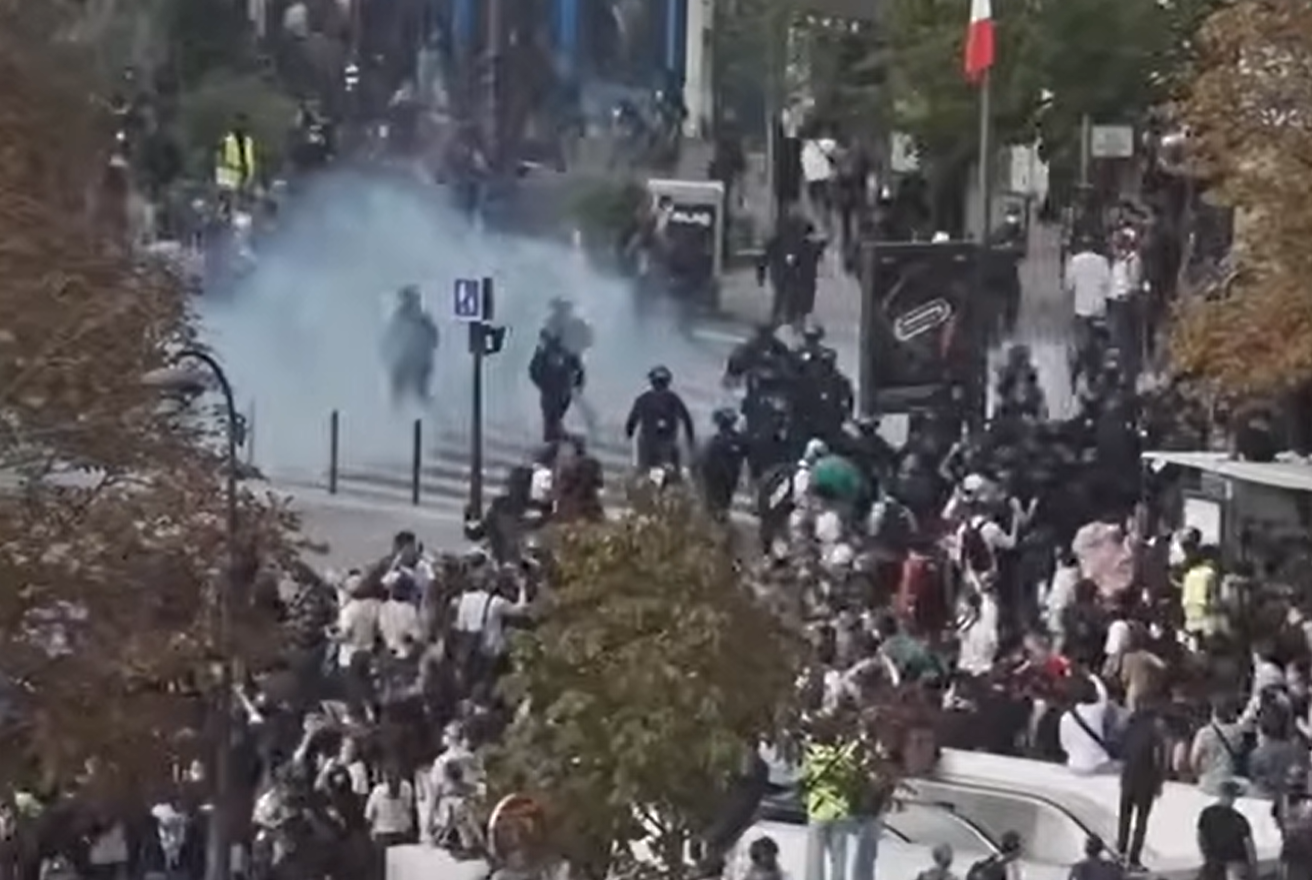
Subheadline: Thousands of demonstrators gathered in Paris as France’s student-led protest movement spread nationwide. Growing anger over deteriorating school facilities, teacher shortages and police tactics is putting President Emmanuel Macron’s government under mounting pressure.
PARIS, France — October 6, 2026 — French riot police fired tear gas at demonstrators in Paris on Tuesday as students, teachers, parents and labor union members joined nationwide protests demanding better school funding and improved learning conditions.
The demonstrations marked a major escalation in a student-led movement that began in the Paris suburbs in mid-September and has since spread across France. According to the country’s Interior Ministry, 266,000 people participated in demonstrations nationwide, including approximately 56,000 in Paris. Nearly 500 people were detained on Tuesday alone. (Associated Press)
The protests have intensified pressure on the government of President Emmanuel Macron, with demonstrators accusing authorities of neglecting public education while imposing budgetary restrictions that could further strain schools already struggling with inadequate resources.
Although the main Paris march was largely peaceful, small groups of protesters clashed with riot police near the end of the demonstration. Officers deployed tear gas as tensions increased, while students continued blocking school entrances and demanding action from the government.
Why Are Students Taking to the Streets?
At the center of the demonstrations is a growing frustration with overcrowded classrooms, teacher shortages and deteriorating school buildings.
Students have reported classrooms lacking basic equipment, uncomfortable temperatures during summer and insufficient support staff. Some say they have been forced to prepare for examinations without receiving consistent instruction in essential subjects because teaching positions remain unfilled.
The movement began at a high school in Créteil, southeast of Paris, before spreading to disadvantaged suburbs and other French cities. Students from areas such as Seine-Saint-Denis have argued that their schools receive insufficient resources compared with those in wealthier neighborhoods.
Reuters reported that the nationwide movement had expanded to more than 1,200 high schools by early October, with students demanding additional resources, more substitute teachers and better learning conditions. (Reuters)
For many demonstrators, the problem goes beyond individual school buildings. They say chronic staffing shortages and unequal investment threaten students’ opportunities and reinforce existing social inequalities.
Some protest organizers are demanding €10 billion in additional education investment, arguing that meaningful improvements will require sustained financial commitments rather than temporary measures.
Police Response Draws Growing Criticism
The use of force against young demonstrators has become a second major source of controversy.
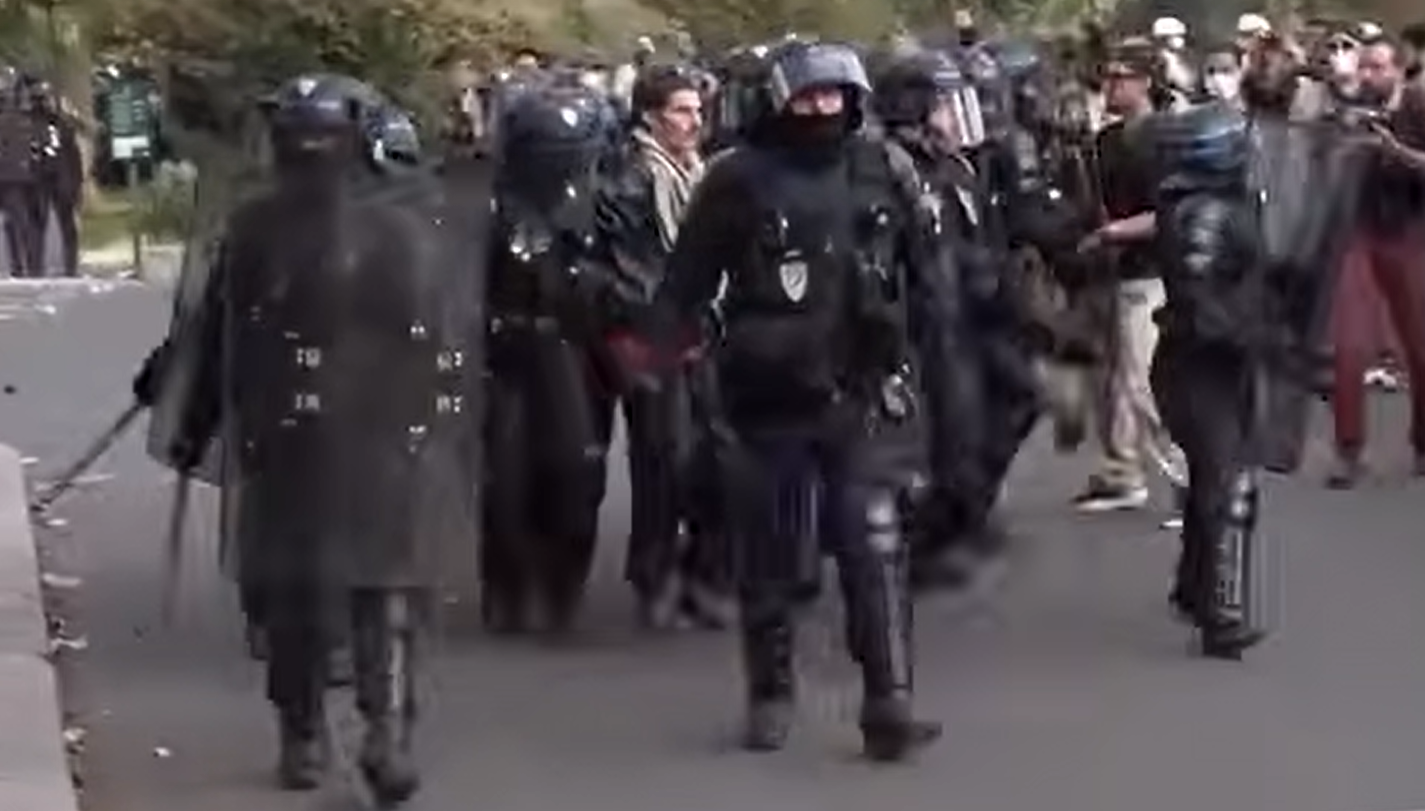
During Tuesday’s demonstrations, police used tear gas in Paris and other French cities as officers attempted to control crowds and respond to confrontations. Images from the capital showed protesters kicking a tear-gas canister away during clashes.
The Interior Ministry said officers were injured during the unrest, while officials defended the police response as necessary to maintain public order.
However, the deployment of riot-control equipment against teenage demonstrators has angered some parents, teachers and rights advocates.
The controversy intensified after a 15-year-old boy lost a hand and part of his lower arm in an incident involving a police dispersal grenade in Lens on October 5. The precise circumstances surrounding the incident remained under investigation, according to Reuters. (Reuters)
The injury has sharpened questions about how police handle demonstrations involving minors and whether existing crowd-control tactics are appropriate for student protests.
French authorities have reported thousands of arrests since the movement began, with most of those detained being minors. The widespread use of arrests and riot-control weapons has contributed to anger among demonstrators who say their education concerns are being overshadowed by confrontations with police.
Government Faces Pressure Over Education Spending
The demonstrations come as France confronts difficult budget decisions.
The government’s proposed 2027 education budget would increase by 1.7% to €65.53 billion, excluding teacher pensions, a rise below the rate of inflation. Critics say that increase will not adequately address deteriorating facilities, unfilled teaching positions and shortages of support staff. (Reuters)
Education Minister Édouard Geffray has acknowledged students’ concerns and announced plans for an online portal where high school students can describe problems at their schools and suggest improvements.
The government has also discussed an action plan targeting schools with particularly serious difficulties.
Prime Minister Sébastien Lecornu said authorities must listen to students and find solutions, while condemning what he described as violence directed at schools and public institutions. He also promised investigations into incidents involving police conduct.
Student organizers, however, remain skeptical. They argue that online complaints and future consultations will not solve immediate problems unless the government commits money to concrete improvements.
Hundreds of Schools Affected by the Unrest
The demonstrations have disrupted education across the country.
According to the French Education Ministry, 891 schools were fully or partially affected by closures on October 6. Some schools were blockaded by students, while others suspended classes because of security concerns or damage to school property. (Associated Press)
Teachers and parents have expressed concern that prolonged disruptions could further affect students whose learning has already been interrupted by staffing shortages.
At the same time, some parents have joined demonstrations to show support for students’ demands while urging authorities and protesters to prevent violence and keep schools safe.
The government’s challenge is to restore normal classroom operations without ignoring the complaints that have fueled the movement.
Could the Protests Grow Further?
The unrest is unfolding during a politically sensitive period, with France approaching another presidential election cycle and public dissatisfaction extending beyond education.
Rising living costs, concerns over inequality and disputes about government spending have contributed to a broader climate of frustration. The student demonstrations have become a visible expression of those pressures, particularly in disadvantaged communities where residents say public services have deteriorated.
The coming weeks will test whether the government can turn its promises into meaningful reforms or whether the protests will continue to expand.
For now, demonstrators are demanding improved school conditions, additional staff and greater financial support, while the government is defending its efforts to maintain public order and manage limited public resources.
The events in Paris illustrate a growing dilemma for France: how to restore calm and keep schools operating while addressing the education inequalities that brought thousands of people into the streets.



