Subheadline: A New York federal judge has temporarily blocked government-funded television advertisements featuring President Donald Trump. The ruling comes after Trump promised to shift future advertising costs to his political fundraising group, while his administration maintains that the commercials were legitimate public service announcements.
NEW YORK — October 12, 2026 — A federal judge has ordered the Trump administration to stop airing remaining television advertisements funded with taxpayer money, escalating a legal dispute over whether the government improperly used public funds to promote President Donald Trump and his political message.
U.S. District Judge Jennifer L. Rochon, based in Manhattan, issued a temporary restraining order on Sunday, October 11, directing the administration to cancel any remaining commercials covered by the lawsuit, including advertisements scheduled to air that evening.
The order came after a coalition led by government watchdog group Common Cause challenged the advertising campaign, arguing that it amounted to political propaganda rather than legitimate public service messaging. The coalition includes a public-sector union and an Alabama state legislative candidate. (Reuters)
The ruling adds a new complication for an administration already facing criticism over how federal money was used to finance the advertisements during the weeks leading up to the November 3, 2026, midterm elections.
Why the Judge Ordered the Ads to Stop
The advertisements began airing in late September and were financed through the Department of Homeland Security (DHS), which allocated $20 million in taxpayer funds for the campaign.
Critics say the commercials went beyond explaining government programs and instead highlighted Trump’s image, political priorities and preferred campaign themes. Some advertisements featured language about national security and communism, while others echoed messaging associated with Trump’s political brand.
The lawsuit argues that federal agencies cannot use congressional appropriations for unauthorized publicity or propaganda designed to promote a president’s political interests.
Judge Rochon granted the temporary restraining order after finding that the plaintiffs had demonstrated, at this preliminary stage, that their legal claims were likely to succeed, that they could suffer irreparable harm without an injunction, and that the order served the public interest. (Axios)
The ruling is temporary, not a final judgment that the administration violated the law. It restricts the challenged advertising while the case continues through the courts.
Trump Promised to Shift Future Costs to MAGA Inc.
The legal battle intensified after Trump said on October 5 that future advertisements would be paid for by MAGA Inc., his political fundraising organization, rather than taxpayer money.
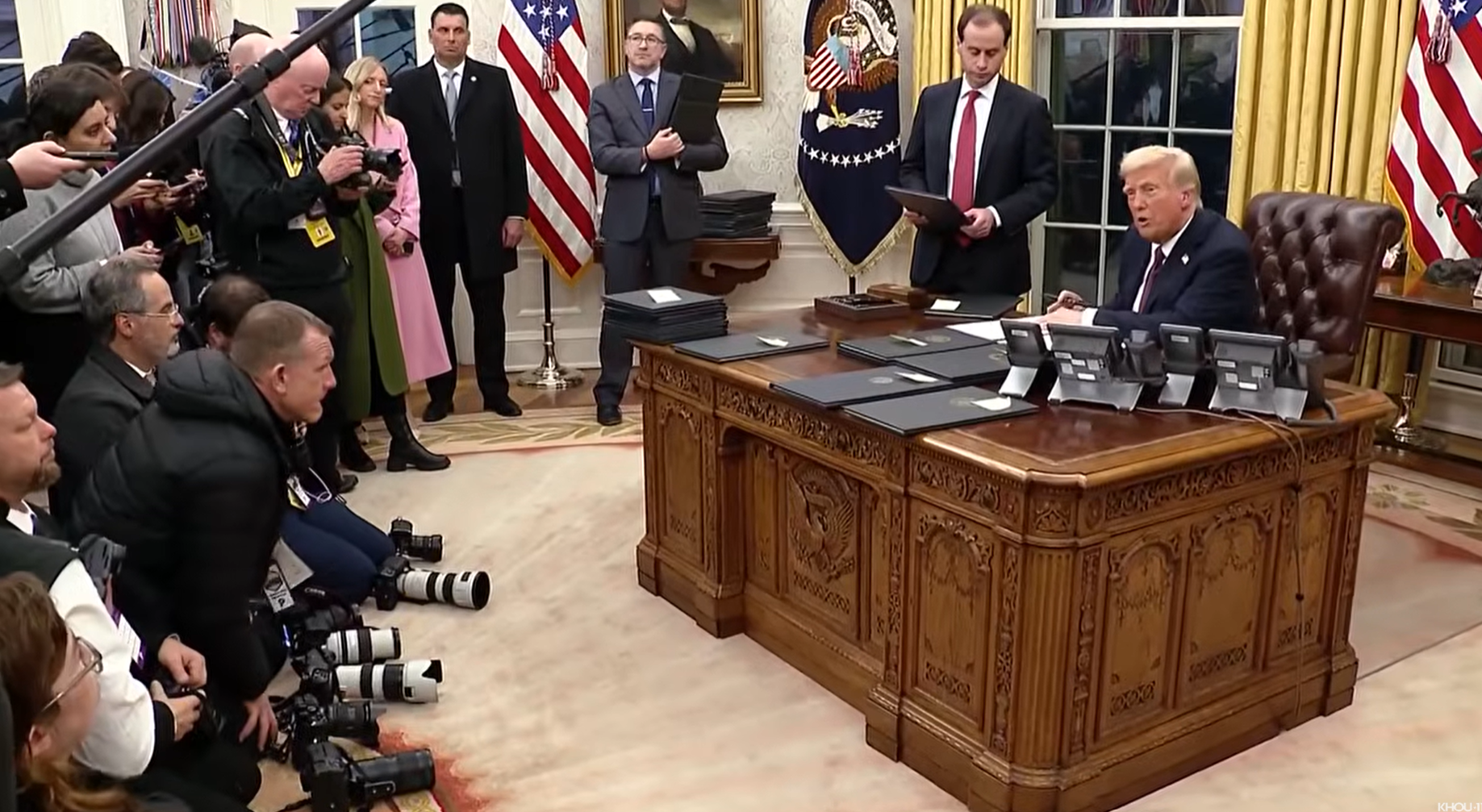
In a social media post, Trump defended the campaign as a “positive promotion” for the United States and described government-funded advertisements as a relatively standard practice.
The announcement followed criticism from Democrats, government watchdogs and some Republicans, who questioned why public funds were being used for commercials featuring the president so prominently. (Reuters)
However, the decision to shift future costs did not resolve the dispute over advertisements that had already aired.
The White House has said MAGA Inc. will not reimburse taxpayers for the money already spent on the campaign. The commercials included disclaimers stating that they were paid for by the U.S. government, according to Reuters.
That distinction became central to the controversy: paying for future advertisements with private political funds would not automatically return the public money previously used.
Administration Said the Campaign Was Already Ending
In court filings submitted on Saturday, the Justice Department argued that the restraining order was unnecessary because the advertising campaign was already scheduled to end on Sunday.
But the judge still ordered the administration to cancel any remaining advertisements and barred officials from entering into, renewing or expanding agreements covering the challenged commercials for the two-week duration of the order. (Associated Press)
The court’s action means the administration cannot simply rely on its statement that the campaign was ending. The temporary order places a legal restriction on further activity involving the challenged advertisements.
A hearing was scheduled for Tuesday, October 13, to discuss the next steps in the case. The proceedings could clarify how the order will be enforced and what arguments the administration will present in response. (Axios)
White House Defends the Ads as Public Service Announcements
The Trump administration maintains that the advertisements were legitimate government communications designed to promote policy priorities, not campaign advertisements.
The White House has argued that previous Republican and Democratic administrations have used taxpayer-funded advertising to explain government programs and promote public policy.
Critics counter that the content, tone and timing of the commercials made them different from traditional public service announcements, particularly because they prominently featured Trump so close to the midterm elections.
The case could therefore turn on questions about what the advertisements were intended to accomplish, how the money was appropriated and whether the spending exceeded the authority granted by Congress.
The dispute is not limited to one lawsuit. The Democratic National Committee has filed a separate case in federal court in Washington, challenging the administration’s use of public money for the campaign. (Reuters)
What Happens Next?
The immediate effect of the ruling is clear: the Trump administration must halt any remaining taxpayer-funded advertisements covered by the order.
The broader legal question remains unresolved. The court will need to consider the plaintiffs’ claims, the government’s defense and the applicable restrictions on federal spending before a final determination can be made.
The reimbursement question also remains open politically, although the White House has said there are no plans to return the funds already spent.
For taxpayers, the case raises questions about how government advertising budgets should be used and what safeguards prevent public money from being directed toward political promotion.
For the administration, it is another legal challenge unfolding just weeks before the midterm elections.
Trump’s promise to use political funds for future advertising has not ended the dispute over taxpayer money already spent. The court’s temporary order now places that campaign under judicial scrutiny, with further proceedings expected to determine how the case will move forward.



