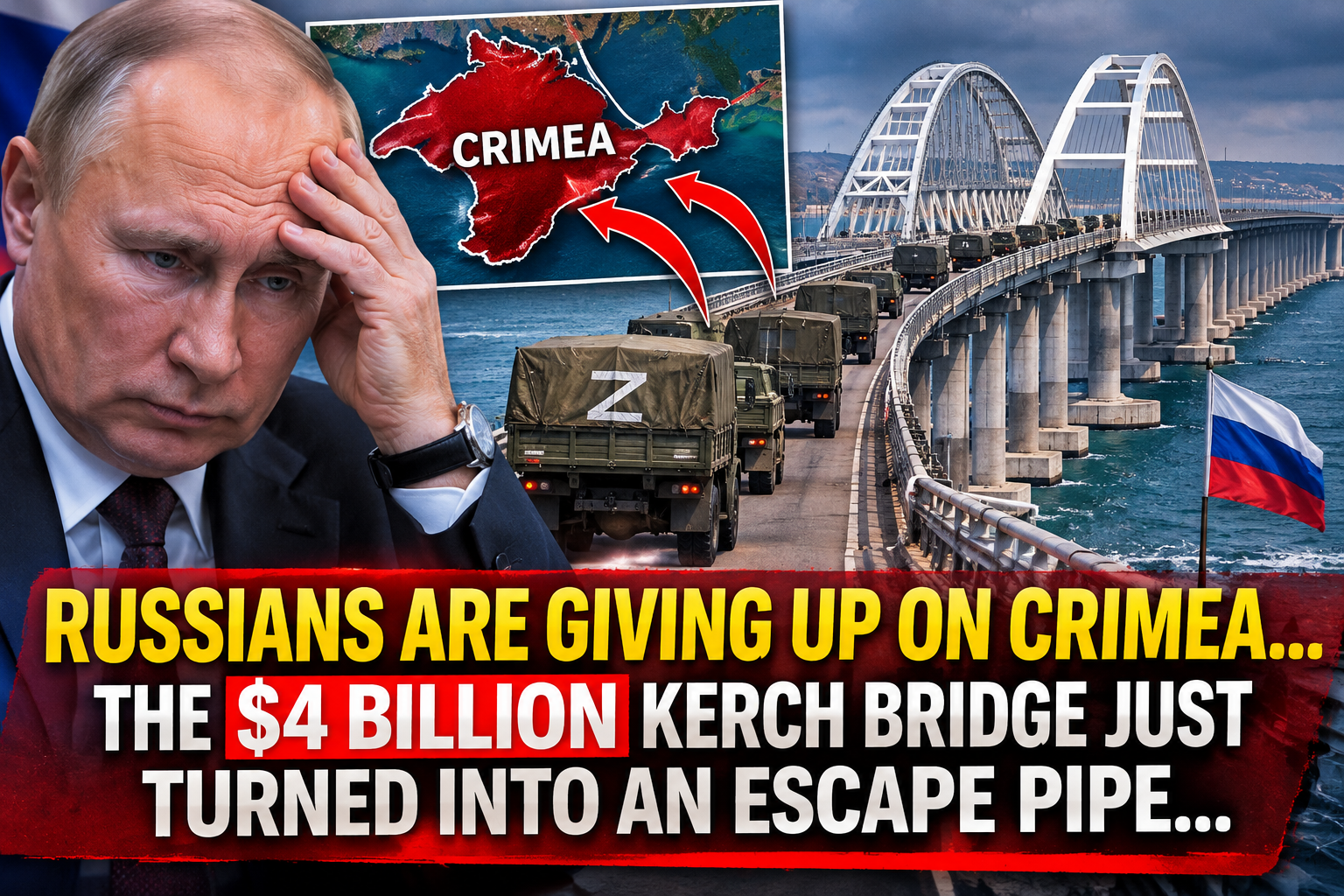
Russia’s $4 billion Kerch Bridge, once a powerful symbol of Moscow’s control over occupied Crimea, is facing growing logistical pressure as Ukrainian forces intensify attacks on roads, railways, ports and military supply facilities. With commercial transport disrupted, fuel shortages reported and Russian warships relocated from Sevastopol, questions are emerging about how long Moscow can maintain its military infrastructure on the peninsula.
But is Crimea experiencing a mass Russian exodus? The evidence tells a more complicated story.
The Kerch Bridge Is Becoming a Strategic Bottleneck
Opened in 2018, the Kerch Bridge connects Russia’s mainland with occupied Crimea through a combination of road and railway infrastructure. Estimated construction costs exceeded $4 billion, making it one of the Kremlin’s most expensive symbolic infrastructure projects.
However, repeated Ukrainian attacks, security inspections and transportation restrictions have complicated its operation.
In June 2026, satellite imagery from Planet Labs showed a traffic queue stretching more than 10 kilometers, involving approximately 1,500 vehicles, near the bridge’s Crimean approach. The delays occurred amid repeated security closures, air-defense activity and concerns about Ukrainian drone attacks. Reports also described fuel shortages and residents discussing plans to leave Crimea.
Nevertheless, this does not establish a mass exodus or prove that the bridge has become a one-way escape route. A separate viral video claiming to show Russians fleeing Crimea was actually filmed in Armenia.
Ukraine Is Targeting the Entire Supply Network
The bigger problem for Moscow may be the growing pressure on alternative supply routes.
Ukraine has increasingly targeted the R-280 coastal highway, which connects Russia’s Rostov region with occupied Crimea through Mariupol, Berdiansk and Melitopol.
An analysis published by the Armed Conflict Location & Event Data project (ACLED) found that Ukrainian forces conducted 361 attacks within the monitored road corridor and connecting crossings between January and June 2026.
Targets included military vehicles, fuel trucks, bridges, railway infrastructure and logistics facilities. Russian forces responded by restricting military traffic, introducing convoy escorts and using alternative routes.
The Royal United Services Institute (RUSI) also reported that heavy-duty freight faced restrictions on the Kerch Bridge, forcing more supplies onto vulnerable mainland routes.
Russia’s Black Sea Fleet Has Already Moved
Naval pressure adds another challenge.
For years, Sevastopol served as the principal headquarters of Russia’s Black Sea Fleet. However, Ukrainian missile and maritime-drone attacks forced much of the fleet to relocate toward Novorossiysk, on Russia’s mainland, beginning in 2023.
In August 2026, Ukraine struck Novorossiysk itself, demonstrating that relocating Russian warships does not necessarily place them beyond Ukrainian reach.
Is Russia Actually Abandoning Crimea?
Not yet.
The evidence points to growing logistical difficulties rather than a confirmed Russian withdrawal. Moscow still has alternative road, rail and maritime connections, although Ukrainian attacks have made those routes increasingly difficult and expensive to operate.
The real strategic question is whether Russia can continue supplying and defending Crimea while Ukraine systematically targets the infrastructure that keeps the peninsula connected to the mainland.
The Kerch Bridge remains important, but its symbolism cannot guarantee security. For Moscow, protecting Crimea is becoming an increasingly complicated military and logistical challenge.



