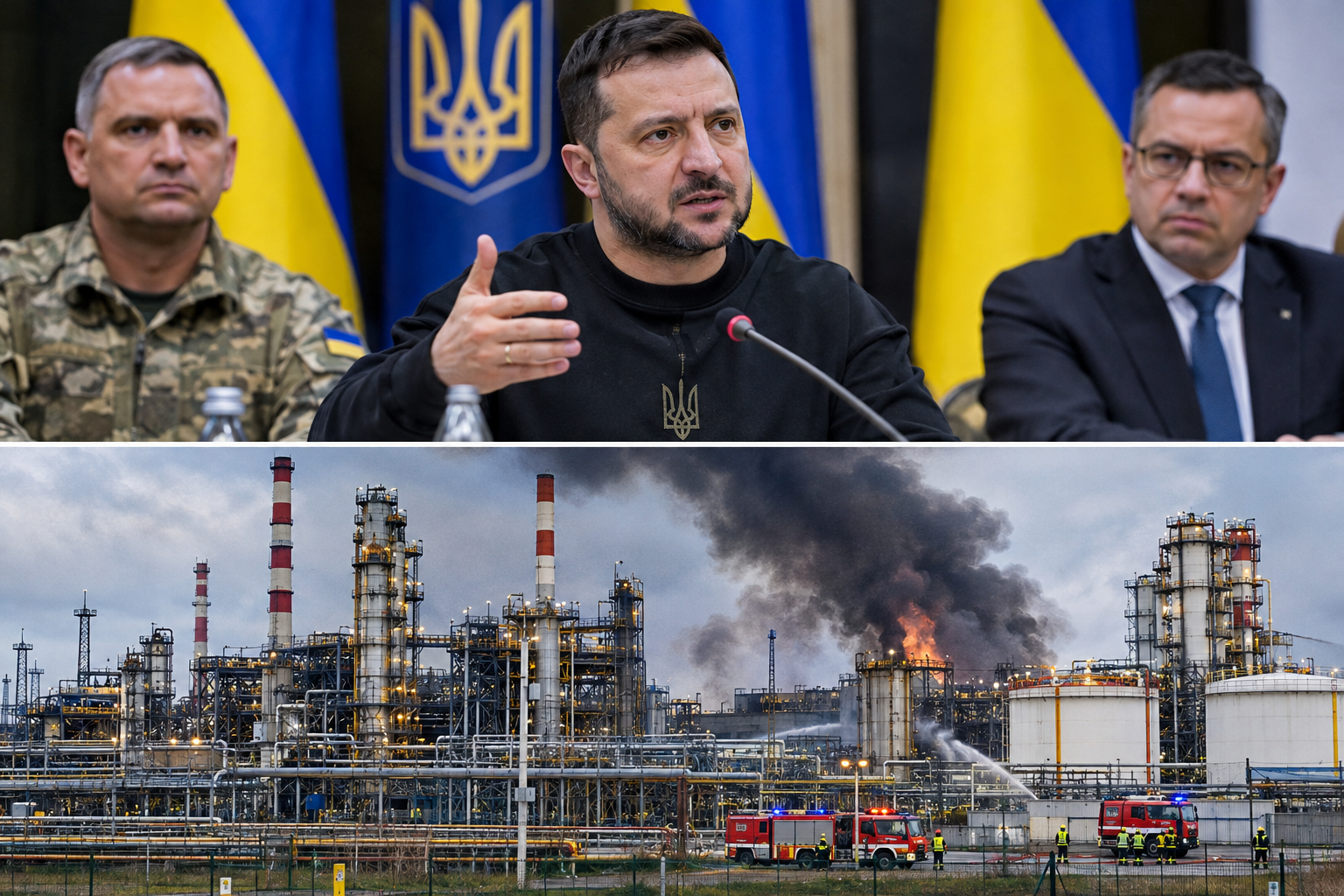
Ukrainian President Volodymyr Zelenskyy has declared an end to Kyiv’s temporary pause on attacks against Russian oil refineries after accusing Moscow of continuing to strike Ukraine’s energy infrastructure. The announcement followed a Ukrainian drone attack on the Ryazan oil refinery on October 15, creating another serious disagreement between Zelenskyy and U.S. President Donald Trump over how to pursue an end to Russia’s war.
The confrontation exposed a growing divide between Washington and Kyiv over military strategy, energy security and negotiations with Russian President Vladimir Putin.
At the center of the dispute was Trump’s announcement of an energy ceasefire on October 11, which was supposed to stop both countries from attacking energy infrastructure. But the announcement quickly became controversial because neither side had publicly established clear terms for monitoring or enforcing the proposed pause.
Zelenskyy Sends a Direct Message to Washington
In an interview with the Financial Times published October 15, Zelenskyy made clear that Ukraine would no longer continue holding back its attacks indefinitely.
“The block (on attacking refineries) is out. We’re done,” he told the newspaper.
Zelenskyy explained that Ukraine had temporarily suspended attacks against Russian energy facilities for approximately three days to accommodate Washington’s request.
However, he argued that Russia had continued launching missiles and drones against Ukrainian infrastructure during that period, including power stations and facilities supplying energy to civilians. He said Russian attacks had left approximately 600,000 people without electricity.
For Ukraine, the problem was straightforward: accepting restrictions on attacks against Russian energy facilities while Russian forces continued targeting Ukrainian energy infrastructure would create an unequal arrangement.
Zelenskyy argued that any meaningful pause needed to apply to both countries.
Ukrainian Drones Strike Russia’s Ryazan Refinery
The disagreement became more serious when Ukrainian drones struck the Ryazan oil refinery, approximately 200 kilometers southeast of Moscow.
On October 15, regional governor Pavel Malkov confirmed that a major Ukrainian drone attack had caused a fire at the facility. He said emergency crews were responding and that authorities were assessing the damage.
The refinery belongs to Russian state-controlled oil company Rosneft and is one of the country’s major processing facilities. Reuters reported that it accounts for nearly 5% of Russia’s total oil-refining capacity and helps supply fuel to Moscow.
A senior Ukrainian official also confirmed to Reuters that Ukraine had attacked the refinery.
The strike represented the first confirmed Ukrainian attack on a Russian energy facility after Trump’s October 11 announcement.
The attack demonstrated that Kyiv was prepared to resume its campaign against Russian energy infrastructure despite pressure from Washington.
Trump and Putin Disagree With Kyiv’s Position
Trump had promoted the energy pause as an opportunity to reduce pressure on fuel markets and create momentum toward negotiations.
His administration argued that attacks on refineries could contribute to higher fuel prices, particularly as international energy markets were already under pressure.
However, Zelenskyy criticized Washington’s willingness to negotiate business arrangements with Moscow while Ukraine continued facing Russian attacks.
The disagreement became increasingly personal.
Trump criticized Zelenskyy during an interview with Newsmax, describing the Ukrainian president as difficult to negotiate with and saying he was less difficult to deal with Putin.
Zelenskyy, meanwhile, said he felt betrayed by Washington’s recent decisions, including the proposed Russian diesel arrangement and reported restrictions affecting Ukraine’s military communications.
AP News+1
The Kremlin also criticized Ukraine’s decision to resume refinery attacks. Spokesman Dmitry Peskov argued that the strikes contradicted American diplomatic efforts. Russian officials additionally claimed that Kyiv had never fully observed the energy pause.
Why the Disagreement Matters for the War
The dispute goes beyond the destruction of a single refinery.
Ukraine relies heavily on American intelligence, military equipment and communications capabilities. Washington, meanwhile, has significant influence over Kyiv’s ability to sustain its military operations.
Zelenskyy also warned that restrictions affecting Starlink and reduced access to certain intelligence information were weakening Ukraine’s defenses. The Trump administration disputed claims that it had stopped intelligence sharing, making the circumstances surrounding those concerns contested.
AP News+1
As tensions increased, Zelenskyy traveled to Brussels to meet European leaders and seek additional military and diplomatic support.
EU foreign policy chief Kaja Kallas defended Ukraine’s position, arguing that pressure should be directed at the aggressor rather than forcing the victim to surrender.
Can Trump Still Negotiate an Energy Agreement?
The October confrontation exposed a major obstacle facing American diplomacy: Russia and Ukraine have fundamentally different expectations about what an energy ceasefire should involve.
For Kyiv, stopping attacks on Russian refineries without receiving protection from Russian strikes would offer little security.
For Moscow, Ukrainian attacks on energy infrastructure undermine its economic and industrial capabilities.
For Trump, the challenge is to persuade both governments to accept restrictions while preventing disagreements from destroying the broader diplomatic process.
The Ryazan refinery strike did not officially end all negotiations, but it demonstrated that Ukraine was unwilling to maintain a one-sided restraint on its military operations.
The larger question remains whether Washington can negotiate an agreement that both Moscow and Kyiv consider fair—or whether disagreements over energy infrastructure will continue weakening diplomatic efforts to end the war.



