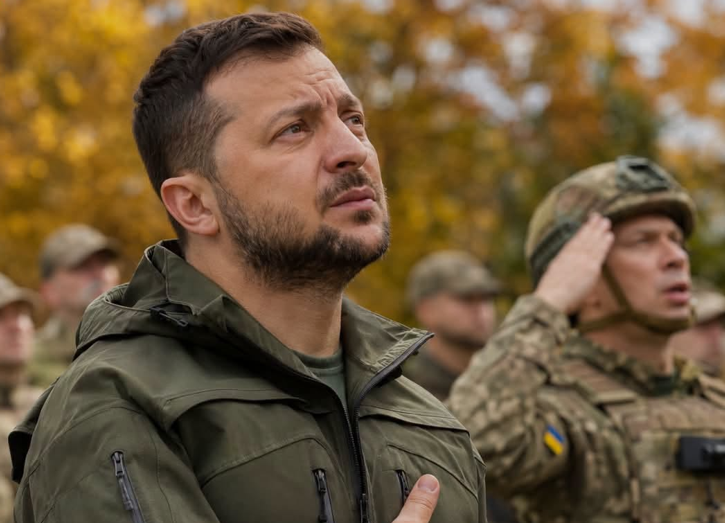
Ukrainian President Volodymyr Zelensky rejected evacuation offers during the opening days of Russia’s invasion. Now, as his country approaches another critical winter, he is demanding stronger international security guarantees and preparing for another round of peace negotiations.
KYIV, UKRAINE — November 7, 2026
When Russian forces launched their full-scale invasion of Ukraine on February 24, 2022, Ukrainian President Volodymyr Zelensky faced one of the most consequential decisions of his political career: leave the capital for safety or remain in Kyiv as Russian troops advanced toward the city.
He chose to stay.
According to reporting by the Associated Press at the time, Zelensky rejected an American evacuation offer. His reported response became one of the most widely remembered statements of the early days of the war: “I need ammunition, not a ride.”
That decision helped establish the image of a wartime president determined to remain with his government and his people during an existential national crisis.
Nearly five years later, Zelensky remains at the center of Ukraine’s struggle for independence, facing military pressure, difficult diplomatic negotiations, and questions about the country’s long-term security.
A Leader Who Stayed When His Country Needed Him
In February 2022, Russian troops advanced toward Kyiv as missile attacks struck Ukrainian cities and military installations.
The possibility that Ukraine’s government could collapse was a serious concern for international observers.
Zelensky’s decision to remain in the capital sent a powerful political message. Rather than allow the invasion to create a leadership vacuum, he continued communicating with Ukrainians and international partners while coordinating the country’s response.
His wartime leadership also became an important part of Ukraine’s international diplomacy, as he repeatedly appealed to Western governments for military equipment, financial assistance, and diplomatic support.
For many Ukrainians and international supporters, his decision to remain in Kyiv became a symbol of national resistance.
Zelensky Faces Another Critical Test
The challenges facing Ukraine remain substantial.
On November 6, Zelensky warned that Ukrainian intelligence indicated Russia was preparing additional attacks against energy facilities, bridges across the Dnipro River, and civilian infrastructure.
He said Ukraine’s armed forces were preparing to defend the country and again urged Western allies to deliver air-defense missiles without delays.
The appeal comes as Ukrainian cities continue facing repeated missile and drone attacks.
Reuters reported that the United States had approved the sale of 500 Patriot PAC-3 interceptor missiles to Ukraine for approximately $2.1 billion. However, deliveries are not expected until the early 2030s, highlighting the immediate difficulties facing Ukraine’s air defenses.
A New Push for Peace — But With Guarantees
Despite the continuing fighting, Zelensky is also preparing for another diplomatic effort.
On November 6, the Ukrainian president said his government wants clear, written security commitments from Western allies before agreeing to any potential postwar arrangement.
His central concern is straightforward: what happens if Russia attacks Ukraine again after a peace agreement?
He wants specific answers about which countries would respond, what assistance they would provide, and how quickly that support would arrive.
The announcement followed two days of discussions in Brussels involving representatives from the United States, United Kingdom, France, Germany, and the European Union.
Meanwhile, U.S.-mediated negotiations involving Ukraine, Russia, and the United States are scheduled for November 10–11 in Abu Dhabi.
Whether the discussions produce meaningful progress remains uncertain.
A Legacy Still Being Written
Zelensky’s leadership has attracted international admiration, particularly because of his decision to remain in Kyiv during the invasion’s opening days.
His presidency has also faced difficult political, military, and diplomatic decisions. Ultimately, the future of Ukraine will depend on more than one individual.
It will depend on the resilience of Ukrainian society, the strength of its institutions, the sacrifices of its armed forces, and the commitments made by international partners.
But one part of Zelensky’s wartime story is already established: when Russian forces approached Kyiv in February 2022, he chose not to accept evacuation.
Today, he continues to demand the security arrangements he believes Ukraine needs to protect its independence.
For millions of Ukrainians, the struggle is about more than territory. It is about sovereignty, national identity, and the right to determine their country’s future.
Slava Ukraini. Glory to Ukraine.



